The driving engine to any story is the moral message. The writer always has a reason behind expressing their original idea. If you think there’s no rhyme or reason behind your writing, you probably just haven’t articulated it with yourself yet.
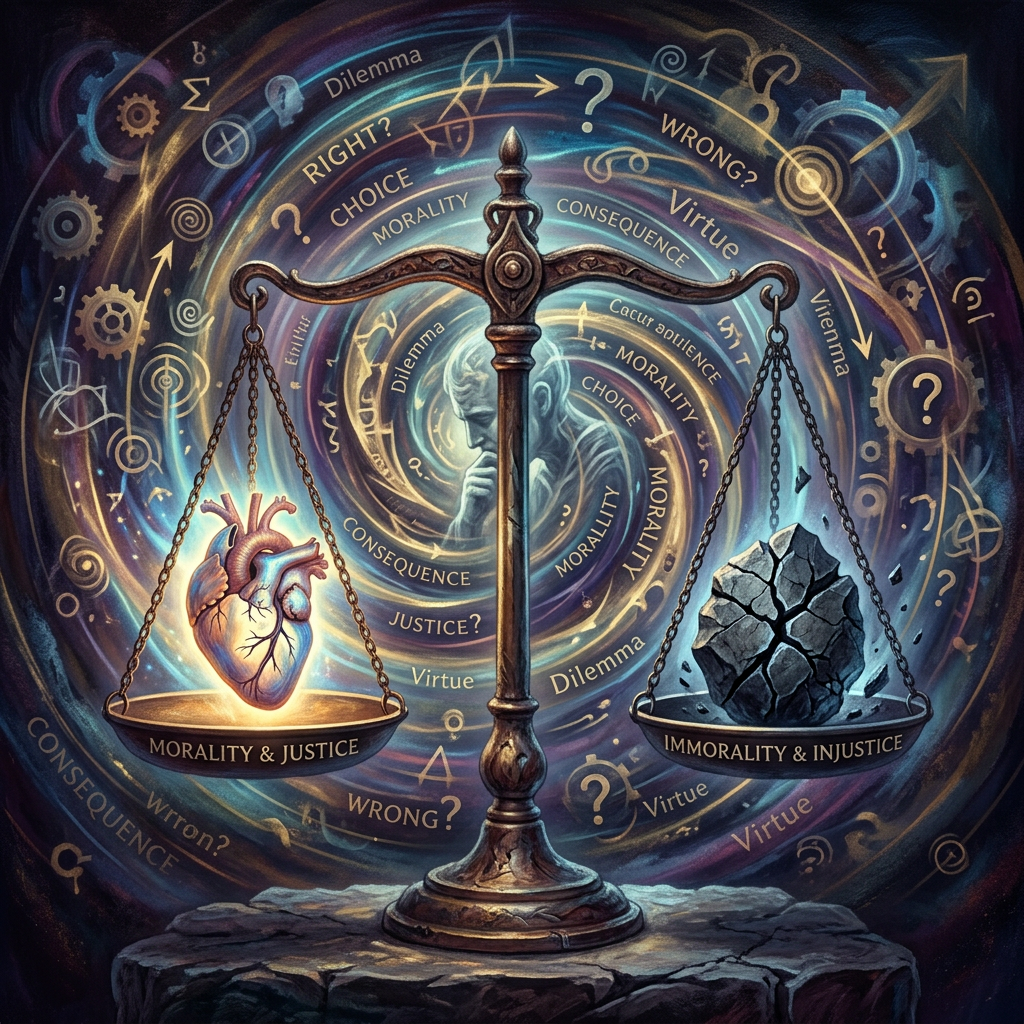
For example, all of your characters look at the world in a different way, their choices dictate the story’s path, but it is all centered around one major message (ex. Is it better to run away and stay safe or stay and fight and risk you, and potentially other’s, safety?)
- Take the premise of your story:
- Premise: When a boy discovers that he’s a wizard, he is enrolled in a school of magic and discovers there are many in the world like him. He soon discovers strange and dark happenings at the school that have the potential to threaten him and his friends, so ultimately he must decide if he is going to fight the force that wants to capture him or not.
Use your premise (idea) to bring out themes.
- Boy (wizard) – he’s magical, different, unique. He represents a hidden population in society.
- School of magic – A place to call home. A place to make connections. A place to make friends (and enemies). A place to choose which group to belong to and how to handle adversity. A place to understand dynamics.
- Strange and dark happenings – Forces to alienate and destroy others. Anger and pain against misunderstood or perceived inadequate groups.
- Fight or be captured – Exploitation, greed, freedom, destruction, control, purpose, self-actualization, humanity.
- Identify the question that the book is posing about those themes.
Your rough moral question: When our given abilities and outlook on life are threatened by forces meant to harm not love, will we rally our strength to defend ourself and fight for those we care about or will we succumb to false prophets and promises?
What’s your answer to this? (It should be clear and contain as little ambiguity as possible. Take your stance, if you will.)
By recognizing the powers we carry and the choices possible with them, we must choose to stay and fight when our friends and family need it the most, in order to save them and keep our soul pure to the values we hold as we pursue living a happy and healthy life.
This is your moral message!
(Note: The moral message of a story is abstract. 10 out of 10 writers will have a different answer to a question, and that is okay. Your message is why you are writing this story, not anyone else, so, whether your moral message is positive or negative, write it with conviction.)
You moral message is the foundation for every incident and plot point in your work (even if it’s subtle).
Caution: Avoid preaching or flat-out stating your viewpoint. Show it. Simply saying it or continuously repeating it will alienate your readers and feel like a lecture. Instead, think of your moral message as a discussion that will provide opportunities for different perspectives and angles to be shown and for the reader to debate, before settling on the defined message.
How do you start discussing your moral message without preaching it?
The structure looks a little bit like this.
- The beginning of your story poses the question. Examples: Can we defy destiny? Are people inherently good, or bad? When is it right to forgive somebody? Can we fall in love again after significant betrayal and heartbreak? Can our learned behaviors be changed?
- The middle of your story goes back and forth on different ways of answering that question and shows different ways of life. The middle of your story prompts the reader to think and debate.
- The end of your story sees your answer win and shows the reader your moral message.
Here’s Lord of the Flies as an example. The story, for those unfamiliar, is about a group of boys stranded on a desert island after their plane crashes.
Question: Is it better to prioritize immediate pleasure and fun or look out for long-term wellbeing?
One side of the coin: Keeping a fair and democratic social structure is the most sensible pursuit in long-term well being and a healthy existence. Sacrifices and tough decisions may need to be made, but when done as a group everyone flourishes and survives.
The other side: Prioritizing immediate and animalistic pleasures with no guardrails or restrictions and believing your way is always right brings you instant gratification and ensures your individual survival.
Answer: If you take people outside of a modern, structured society, they revert to being animals – so, humans are savage beasts by nature, who when pushed to the limits will succumb to their most antagonizing elements.
You want your protagonist to have one of these views and your antagonist to have the other. That creates the conflict that is the story’s engine and leads to the final battle clash.
Character vs Character = side of the coin vs other side of the coin.
Suggested Books with Strong World Building
- The City We Became by NK Jemisin
- A Man Called Ove by Frederik Bachman
- Lord of the Flies by William Golding
- To Kill a Mockingbird by Harper Lee
- The Great Gatsby by F. Scott Fitzgerald
- White Fang by Jack London
- The Alchemist by Paulo Coelho
- A Christmas Carol by Charles Dickens
Hit subscribe to get weekly updates on posts from the Hoboken Public Library!
Written by:
Sean Willey
Information and Digital Services Assistant
General Writing Craft Titles (To get inspired and immerse yourself, whether your pursuits are authorship or to better understand good storytelling.)
Book: Save the Cat! Writes a Novel by Jessica Brody
Book: Mastering the Process: From Idea to Novel by Elizabeth George
Book: On Writing: A Memoir of the Craft by Stephen King
Book: Bird by Bird: Some Instructions on Writing and Life by Anne Lamott
Book: A Long Game: Notes on Writing Fiction by Elizabeth McCracken
TV: The Great Courses Writing Great Fiction
Audiobook: The Writing Life by Annie Dillard
Audiobook: Structuring Your Novel: Essential Keys to Writing an Outstanding Story
Audiobook: The Anatomy of Genre by John Truby
Audiobook: The Business of Being a Writer by Jane Friedman
Audiobook: Writing Series from Sandy Marsh (multiple step-by-step titles through the writing process)
Audiobook: Writing Fiction: A Guide to the Narrative Craft
Writing Workshops and Program Options at the Hoboken Public Library
1. Write and Share: Prompts and Projects
Whether you’re drafting a novel, developing a short story, exploring a new idea, or simply hoping to practice your writing skills, this space offers the chance to put words on the page alongside fellow writers.
Prompts for each meetup are themed and sent to registrants the morning of, so that they can develop ideas and thoughts for the evening’s gathering. These prompts are optional for those looking for a creative spark. Writers are more than welcome to focus on their own projects, too. This is time set aside to help us all get closer to reaching our writing goals.
To join us or if you have questions, please email reference@hobokenlibrary.org.
2. Writers Group
Get input and constructive feedback on your writing project in a friendly and supportive environment! Meets once a month.
If you are working on your next project—whether it is a novel, short story, memoir or poetry—our Writers Group is a great place to get input and constructive feedback on your work! Our supportive group of fellow writers can help give you insights you need into shaping your work for self or traditional publication.
Email hplwriters@gmail.com for more information.

