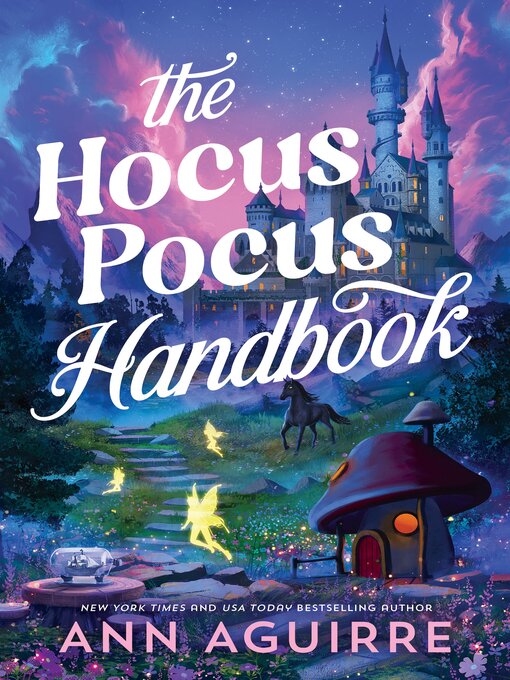
The Hocus Pocus Handbook by Ann Aguirre I’ve enjoyed some of Ann Aguirre’s previous contemporary fantasy novels set in the modern world including Witch Please and The Only Purple House in Town. The Hocus Pocus Handbook, however, although it focus on Thea, a changeling who was snatched from a world similar to our own as a baby, is set in the realm of the world of fairies. It was amusing to see Thea talk about things in our modern world that she read about in fiction, the way in which we often see the reverse where people speak of the fantasy creatures and magic in fantasy tales. The story alternates perspectives between Thea and her love interest Kerboros who have been tasked with hunting down a fairy from another fairy court, who Thea was forced into an arranged marriage with. Each of Thea’s chapter starts with an excerpt from the spellbook aka The Hocus Pocus Handbook, that was given to her by a hobgoblin who had acted as an adoptive father, and object descriptions of the artwork that Kerboros created for his chapters, which is an interesting way to include their backstories. Fans of A Court of Thorns and Roses should check this one out.
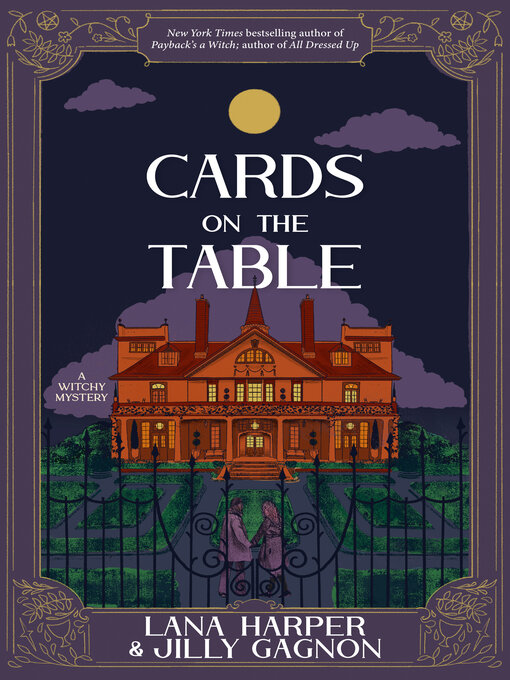
Cards on the Table by Lana Harper and Jilly Gagnon Cards on the Tableis a gothic novel by Lana Harper and Jilly Gagnon about two sisters who find themselves lured to the isolated estate of a wealthy occultist. The sister’s are descendants of one of the women who was executed during the Salem witch trials; Cassie believes they have inherited psychic powers, but her older sister Tori thinks they are just skilled at doing cold readings like their con-artist mom. I was a fan of Harper’s Witches of Thistle Grove series and enjoyed this novel as well, though it has a much darker and spookier tone. It kept me guessing whether the sister’s had real powers and when a death and a theft occur, who might be the responsible culprit. Gagnon is the author of several mysteries and romances including her debut #famous. I enjoyed this story a lot so hope we see more collaborations between the two authors in the future.
Written by: Aimee Harris Information and Digital Services Manager
Character development is the art of making a character feel real and complex – to humanize them through the page with motivations, weakness, fears, quirks, backstory, and growth. Excellent character development is achieved when reader understands and empathizes with why a character acts the way they do, not just what they do. Chances are, any character you love (or hate) is because the author took careful consideration into their arc (or tragic fall).
Every character you love (or hate) is because the author took careful consideration into their arc or their tragic fall. Perhaps the most powerful, universal examples are Ebenezer Scrooge or Darth Vader. We see the wounds both hold and how he became the way he did. In Ebenezer’s case, his hatred of Christmas is rooted in Dickens’ revealing and careful transformation of the character, layer by layer and interaction by interaction. In Darth Vader’s case, his manipulated and mechanized evil, is tragically shown to be eating away and what little sanity and will Anakin has left in him, holding onto his guilt and grief as the only remaining strings to his humanity.
That groundwork involves these building blocks:
Core: Their personality. What are they like?
Weakness: What’s their flaw, some part of their approach to life that could be their downfall?
Personal Need: What does the character need to learn/do to overcome their demons?
Interpersonal Need: What does the character need to learn/do to heal their relationships with others?
Goal: What is the character trying to accomplish in this story? This needs to be concrete and measurable. To be happy is vague and undefinable. To take the ring to Mordor and destroy it is measurable and something we can root for.
Desires: Abstract things the character may want in their life in general. What they wish for, what they dream of, what they think would make them happy if they had it.
Fears: What the character is afraid of, either general or specific.
Interests: What fascinates your character. How do they spend their free time?
Quirks: Small details that make the character more human. (Perhaps a habit, hobby, catchphrase, or peculiarity.)
Values: The character’s principles. What matters to them.
Skills and abilities: What your character can do, from small skills to, if relevant, magical abilities, combat skills, negotiation tactics, etc.
Circumstances: The situation when we first meet them. Example: Harry is living under the stairs with his horrible aunt and uncle.
Social Standing: Rank or position this character has in the social environment they belong to.
Background summary: Where did the character come from and how did it shape them?
Run a character through these (doesn’t have to be all) and you’ll find your characters become more rounded and someone you can care for and root for.
But what story only has one character in it? Not many.
Stories with multiple characters tend to have a character development craft issue creep in, and you should be aware of it so that you know how to spot it and avoid it.
Head hopping is a POV shift violation—drifting between different characters’ thoughts, feelings, or internal experiences within the same scene without a clear break, which distracts the reader from “getting to know” a particular character and staying focused on their development.
Further clarity on how the two can collide: character development makes head hopping tempting because, if you have more than one character in a scene, the thought process can be to develop all those characters at once. Three characters, for example – John, James, and Susie – rightfully deserve their due time and right to develop on the page because each deserves their own development.
Our instinct is to show the reader everything. In the example below, you’ll see that Jack is mad, Susie is excited, and James is exhausted.
But your job as an author is not to show everything, but what is most relevant to the reader and your story at that moment. And what is most relevant is how your point-of-view character is seeing the world and developing in a given scene/chapter. Strong character development is rooted in what the POV character can actually see, hear, smell, taste, and touch. Other characters develop and are revealed through action and dialogue of whomever your POV character is
Non-negotiable rule: One POV character per scene or chapter. Want to change POV? Move to a new chapter or insert a clear chapter/section break. You need to make it clear to the reader.
Where head-hopping is allowed depends on your POV:
First person (I/We): head hopping is a no-go.
Third person limited (He/She/They, tied to one character): head hopping is a no-go.
Third person omniscient (an all-knowing, floating-above narrator): head hopping is okay — readers already expect it if you’ve established that narrative voice from the start.
How to Spot Head Hopping
James’s eyelids grew heavy. He was desperate to sleep. Jack glared from the chair, his chest burning with anger because the night was being cut short. But Susie’s mind…oh, hers raced with excitement at the thought of movies and ice cream all night long.
Why this is head hopping:
James’s POV: the reader experiences his physical sensation (eyelids grew heavy)
Then Jack’s POV: the perspective shifts to Jack’s emotions
Then Susie’s POV: the perspective shifts into Susie’s head (mind raced with excitement)
What fixing this might look like:
James’s eyelids grew heavy, and he was desperate for sleep after three hard hours of practicing baseball. Across the room, Jack glared at him, eyes narrow and nostrils flared.
“But we need to practice,” Jack said, stretching the last word with a groan. “The big game is in one week. Let’s just turn on the yard lights. We can get a few more drills in. You’re being lazy!”
Susie jumped in quickly. “How about we watch Disney movies and eat ice cream? We’re a great team and deserve a night of relaxation. Working ourselves to the bone isn’t a good thing.”
James’s eyes sprung. “My mom just bought mint chocolate chip. I’ll go grab it.”
Jack’s anger and Susie’s excitement are still there, but we are staying in James’s head the whole time, which creates a much more cohesive experience for the reader.
Best Practices & Self-Editing Checklist
Run through these thoughts while writing.
Is it possible for my POV character to actually know this?
Are they assuming something they’d need to ask about or hear directly?
Are they stating a fact it’s not possible for them to know?
Do your best to avoid head hopping, but don’t let it slow down a first draft. When ideas are flowing, plot points are boiling, and your characters are taking you down unfamiliar side roads… just write. Save this level of vigilance for editing and revisions.
Prompts to Practice:
1. Two strangers are stuck waiting for their appointments (you chose). One is nervous and trying to hide it. The other is impatient and has somewhere else to be. Pick one of them as your POV character. Through dialogue or observation, bring out your POV character’s development and also let the other’s nervousness and impatience come through
2. Two siblings meet to discuss a family secret. Give each character a different desire, goal, and want going into the conversation. Perhaps one wants to protect the family and the other wants to destroy it. Write a scene from just one of their perspectives, and let the other’s motivation reveal itself only through how the other character sees/hears it.
3. Three classmates are trying to divide tasks on a class project. Expose each character’s weakness that is highlighted by the tasks needed to be done. Write the scene so the reader can see the other two characters’ weaknesses from their behavior alone as witnessed by your POV character
After any of these, run the self-editing checklist for what you’ve written.
Suggested Books with Strong Character Development and POV
POV: Gone Girl by Gillian Flynn – alternating POV chapters give readers full character perspectives. (Also, recently named the best thriller of the 21st Century by the New York Times.)
Comment below your thoughts on if this post was helpful or if there is anything you’d like to see in future posts on writing best practices and the craft.
Hit subscribe to get weekly updates on posts from the Hoboken Public Library!
Written by: Sean Willey Information and Digital Services Assistant
General Writing Craft Titles (To get inspired and immerse yourself, whether your pursuits are authorship or to better understand good storytelling.)
Writing Workshops and Program Options at the Hoboken Public Library
1. Write and Share: Prompts and Projects
Whether you’re drafting a novel, developing a short story, exploring a new idea, or simply hoping to practice your writing skills, this space offers the chance to put words on the page alongside fellow writers.
Prompts for each meetup are themed and sent to registrants the morning of, so that they can develop ideas and thoughts for the evening’s gathering. These prompts are optional for those looking for a creative spark. Writers are more than welcome to focus on their own projects, too. This is time set aside to help us all get closer to reaching our writing goals.
Get input and constructive feedback on your writing project in a friendly and supportive environment! Meets once a month.
If you are working on your next project—whether it is a novel, short story, memoir or poetry—our Writers Group is a great place to get input and constructive feedback on your work! Our supportive group of fellow writers can help give you insights you need into shaping your work for self or traditional publication.