Sunday, September 13th is Grandparents Day this year! Take a look at these picturebooks from our BCCLS catalog that highlight the special connection between a grandparent and grandchild.
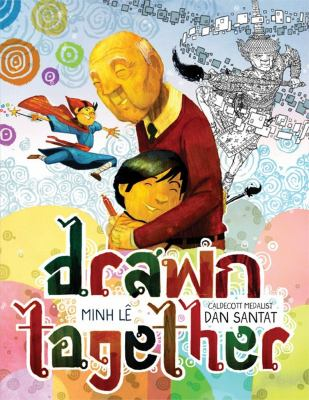
Drawn Together by Minh Lê (physical) A grandfather and grandson struggle to communicate until they discover a shared love of art and adventure that transcends words.
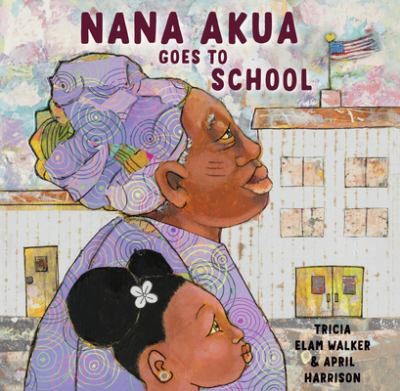
Nana Akua Goes to School by Tricia Elam Walker (physical) Zura is worried about how her classmates will react to Nana Akua’s traditional facial scars on Grandparents’ Day. Nana Akua isn’t worried, though. She thinks up a clever way to show Zura’s classmates the beauty in her markings.
Grandma in Blue with Red Hat by Scott Menchin (physical) A child visits an art museum with his class and thinks his grandma would make a fine exhibit. When the curator says that they don’t accept grandmas, he creates an entire gallery just for her.
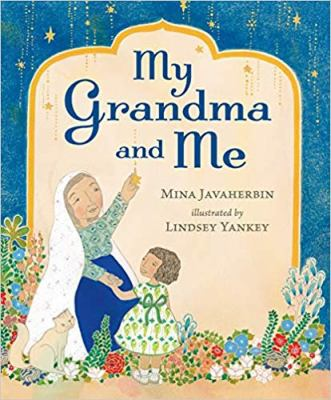
My Grandma and Me by Mina Javaherbin (physical, physical audiobook) Growing up in Iran, Mina’s grandma is her best friend. They spend all day together, often visiting with Mina’s best friend Annette and her grandmother. Both grandmothers show others how to be compassionate and caring.
The Grandpa Book by Todd Parr (physical,Hoopla eBook) Grandpas show their love in all different kinds of ways. Todd Parr explores some of them, like how they love making you laugh or add extra marshmallows to your hot chocolate. Check out his accompanying title on grandmas, too.
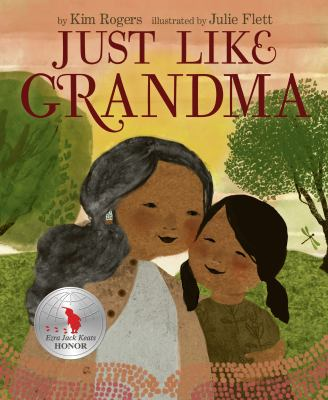
Just Like Grandma by Kim Rogers (physical, physical audiobook) More than anything, Becca wants to be just like her grandma. They paint together, bead moccasins, and dance at the weekend powwow until Grandpa calls them in for dinner. Little does Becca know that Grandma wants to be just like her.
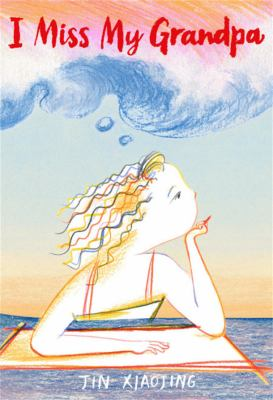
I Miss My Grandpa by Xiaojing Jin (physical, eBook) Through memories and traits Grandpa passed down to his children and grandchildren, a grandchild learns what he was like, growing to miss him even though they’ve never gotten the chance to meet.
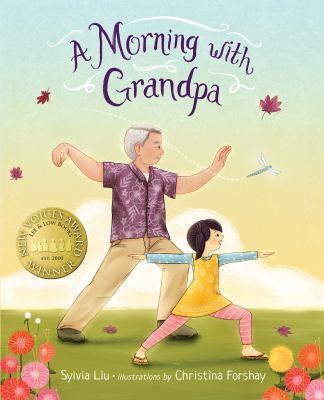
A Morning with Grandpa by Sylvia Liu (physical) Mei Mei’s grandpa, Gong Gong, is calm and steady as he does tai chi. Mei Mei, on the other hand, is full of energy! Together, they practice tai chi and yoga and see how much they can learn from one another.
One, Two, Grandpa Loves You by Shelly Becker (physical) A grandpa and granddaughter go on a fun camping trip. One, Two, Grandpa Loves You is a perfect bedtime story for early readers. And if you enjoy this title, we have One, Two, Grandma Loves You and One, Two, Daddy Loves You by the same author.
Written by: Allison Woodley Information and Digital Service Assistant
Going back to school can bring a slew of emotions: anxiety, excitement, nervousness and more. The following titles show young readers that those feelings are normal and to be expected. And if you’re like any of these protagonists from our BCCLS catalog, back to school season could mean solving mysteries or going on adventures, too.
Picturebooks
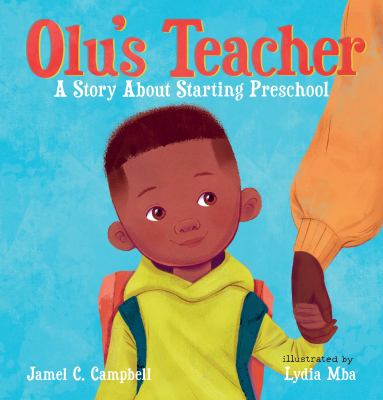
Olu’s Teacher: A Story about Starting Preschool by Jamel Carly Campbell (physical) Olu is excited to see his friends at school but he’s not so sure about his teacher. What does a teacher even look like? What do they eat? Where do they live? This story by an early childhood educator will help to calm both children’s and adults’ nerves ahead of school starting.
Olivia Wrapped in Vines by Maude Nepveu-Villenueve(physical) Lots of situations make Olivia feel wrapped in vines: a line behind her when it’s her turn at the big slide, going to the dentist, and seeing a spider. But with the help of her teacher, she’s able to see herself without vines and realize maybe there isn’t so much to be afraid of.
The Queen of Kindergarten by Derrick Barnes(physical, eBook) With her tiara in tow, MJ Malone is ready for her first day of kindergarten. At school, she helps her teacher and classmates have a great day. Check out the accompanying King of Kindergarten, too.
Your Name is a Song by Jamilah Thompkins-Bigelow(physical, ebook, physical audiobook) This book celebrates the beauty and history behind names from around the world. These names deserve to be respected and celebrated.
Truman by Jean Reidy(physical) Told from the perspective of a tortoise on his owner’s first day of school, Truman explores all the excited and nervous feelings that come from big changes.
Mr. S by Monica Arnaldo(physical) The students in Baloney Elementary School’s class 2B are in for a surprise for their first day. Instead of finding a teacher, they see nothing at the front of the room but a sandwich.
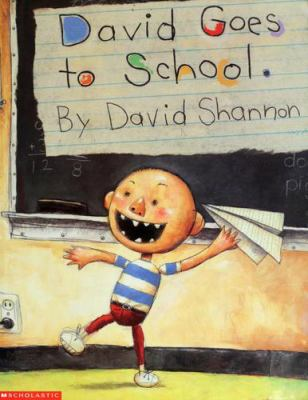
David Goes to School by David Shannon(physical, ebook) Up to his usual antics, David shows newcomers how not to act on their first day at school .
Middle Grade
One Time by Sharon Creech(physical, Hoopla eBook, Hoopla e-audiobook) Gina Filomena has always felt different from other kids. That changes when she meets her new neighbor, Antonio. With the help of their new teacher, Miss Gladstone, Gina hopes to find out more about herself.
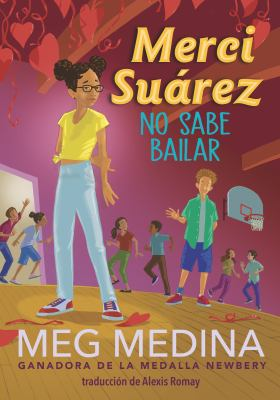
Merci Suárez Can’t Dance by Meg Medina(physical,disponible en español) Merci is about to begin her seventh grade year. She’s got a new crush, a strict science teacher, and a new job at the school store. One thing’s for certain: Merci still can’t dance.
Falling Short by Ernesto Cisneros(physical, ebook) Entering sixth grade, Isaac is a basketball star who wants to improve his grades. His best friend, straight A-student Marco, wants to win his father’s approval by getting on the basketball team. They can’t risk falling short on their lofty goals.
Diary of a Fifth Grade Outlaw by Gina Loveless(physical) Robin Loxley is ready to rebel. The school bully’s already on a rampage and Robin still has to win back her best friend, Mary Ann. But there’s nothing this fifth grade outlaw can’t do.
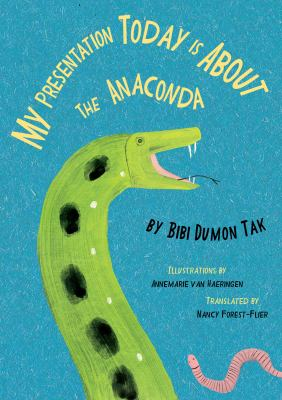
My Presentation Today is About the Anaconda by Bibi Dumon Tak (physical, ebook) School will almost certainly be full of presentations by humans for other humans, even when they’re talking about animals. This book flips the script, letting a zebra present on all black and white animals, and the mole tell you all about a daddy longlegs. Prepare to be entertained.
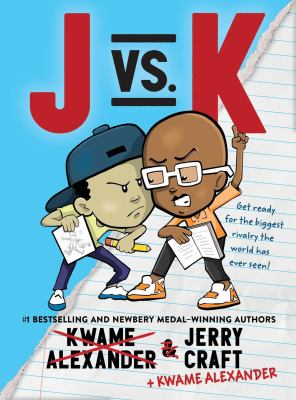
J vs K by Kwame Alexander and Jerry Craft(physical, ebook) Created by two real-life rivals, J vs K tells the story of two talented ten year olds who must decide whether to join forces or go head-to-head in their school’s annual storytelling contest.
Return to Sender by Vera Brosgol(physical) Oliver isn’t a big fan of his new school. That is, until he finds a mysterious mail slot that grants his wishes after he slips them in. He soon discovers that the wishes don’t come for free and adventure ensues.
Young Adult
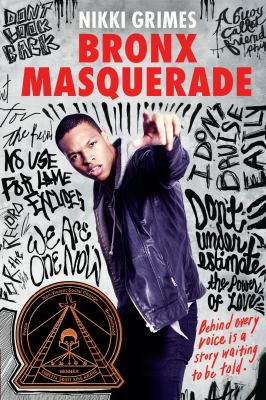
Bronx Masquerade by Nikki Grimes(physical,Hoopla e-audiobook) Told by 18 different students, Bronx Masquerade highlights the diversity of Mr. Ward’s English class. In studying the Harlem Renaissance, the classmates learn more about one another. Check out the book’s companion Between the Lines by the same author.
Like Ability: The Truth about Popularity by Lori Getz (physical) Perfect for high school, Like Ability breaks down the science of what makes people popular. This workbook encourages self-reflection and personal insight so teens can explore the role popularity plays in their lives.
Truly Devious by Maureen Johnson (physical,ebook,e-audiobook) Stevie Bell is an amateur detective who may have a new case on her hands. After starting at a new private school, she learns that the founder’s wife and daughter were both kidnapped shortly after the school’s opening. Truly Devious is the first of five mysteries in a series by Mauren Johnson with a new book launching this fall. If you enjoy this, check out book 2, The Vanishing Stair, next.
The Henna Wars by Adiba Jaigirdar (physical, ebook, e-audiobook) Life is getting complicated for Nishat, a Bangladeshi-Irish girl attending a Catholic school in Dublin. She comes out to her parents as a lesbian, and after that doesn’t go over well, she develops a crush on her childhood friend, Flávia, who just started attending her school. Their feelings become more complicated when they both enter a school contest as henna artists.
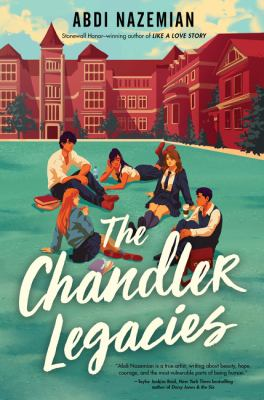
The Chandler Legacies by Abdi Nazemian(physical,Hoopla ebook, Hoopla e-audiobook) At the elite boarding school, Chandler, five teens from very different backgrounds join the Circle, a coveted writing group. There, friendships are born…and secrets are revealed.
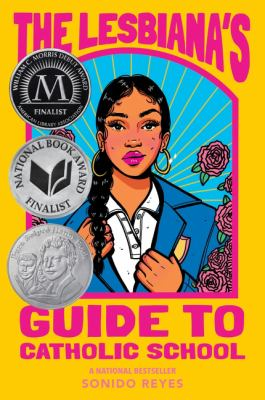
The Lesbiana’s Guide to Catholic School by Sonora Reyes(physical, ebook,Hoopla e-audiobook) A lot is new for Yami Flores. She and her younger brother just started Catholic school. She’s still trying to get over her crush on her best friend. And now her new, openly gay classmate has caught her eye.
Throwback by Maurene Goo(physical, e-audiobook) After a huge fight with her mom, Priscilla, Sam finds herself in the 1990s as her mother’s high school classmate. Sam has to figure out how to settle things with Priscilla before she ends up stuck in the past for good. Along the way, she has the chance to learn more about the both of them.
Written by: Allison Woodley Information and Digital Services Assistant