What do composer Wolfgang Mozart, actress Daryl Hannah, comedian Dan Aykroyd, director Tim Burton, artist Andy Warhol, and animal scientist Temple Grandin all have in common? All of these creative and famous people have been identified as being on the autism spectrum. In the United States, 1 in 68 children are identified as having autism. The disorder is 4 to 5 times more common in boys than in girls.
As with any disability, a child with autism is not an island unto themselves. Parents, siblings, and extended family members are all involved when a diagnosis of autism is given. It is for this reason that the majority of children’s books about people with autism are aimed at family members, especially siblings. Any sibling of a child with disabilities has different expectations placed upon them. They are asked to be patient, mature beyond their years, and understanding, not just of their sibling’s limitations, but also of the extra attention that a sibling with special needs demands. It’s a significant burden for any child and any family. The following books are aimed at helping family members deal with the needs of a family member with ASD (Autism Spectrum Disorder):
Ian’s Walk: A Story About Autism, by Laurie Lears.

Although having a brother like Ian is challenging to his sister, she loves him and is very concerned when Ian gets lost in the park. (Picture book)
My Brother Charlie: A Sister’s Story of Autism, by Holly Robinson Peete.

Author Peete is an actress and television personality who has also become a strong advocate for autism awareness. This book, co-written with her daughter whose twin has autism, describes what it’s like to love a brother who can’t always verbalize that he loves her back. The book describes Charlie’s strengths and the barriers he faces, every day, and how his sister tries hard to help him. (Picture book)
Owen Has Burgers and Drum: Helping to Understand and Befriend Kids with Asperger’s Syndrome, by Christine M. Sheils.

Calvin has a new classmate. His name is Owen and Calvin overhears his teacher say that Owen has something called “burgers and drum.” Calvin is puzzled because he doesn’t see a drum or a burger in Owen’s backpack. Owen acts differently than Calvin’s other friends and, while Calvin wants to be friends, Owen’s peculiar behavior makes it difficult. Then, in an emergency situation, Owen’s ability to focus on rules makes him a hero and Calvin better understands what makes his friend special. (Ages 4 to 7)
Russell’s World: A Story for Kids About Autism, by Charles Amenta.

This book was first published in 1992. It has been updated to show how Russell has grown and changed. The book is illustrated with photos, collage, and appropriately child-like artwork. The author describes some of the behaviors associated with autism, however he relates it to Russell rather than making broad generalizations. Back matter offers help to parents as to where to find services that can benefit a child on the autism spectrum. (Ages 5 and above)
The Survival Guide for Kids with Autism Spectrum Disorders (and Their Parents), by Elizabeth Verdick and Elizabeth Reeve.
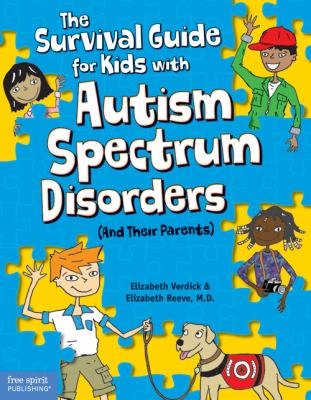
Two mothers of children with ASD combine their knowledge on how to deal with family situations when a sibling has autism. The book is colorful, engaging, and represents a range of ethnicities supporting the fact that autism occurs across the spectrum. The book is actually meant to be used by a parent to share with a child, and is helpful in showing the child how to accept themselves and help families explain the disorder to other people. The authors skillfully weave biographical entries about different children with different degrees of autism to show how the disorder presents in different cases. (Ages 8 to 13)
Temple Grandin: How the Girl Who Loved Cows Embraced Autism and Changed the World, by Sy Montgomery.

Grandin, for many, has become the face of autism and how high-functioning people with autism can become successful. Grandin worked within the barriers of her disorder and used her uncanny focus and ability to identify with cows to make major changes in the way penned animals were handled more humanely. Grandin also managed to overcome gender barriers to become a professor of Animal Sciences at Colorado State University. A remarkable life and career, and an outstanding biography for children. (Ages 9 to 12)
Understanding Sam and Asperger Syndrome, by Clarabelle Van Niekirk and Liezl Venter.

Sam is a giggling, happy boy who can’t deal well with change, is afraid of loud noises, and has trouble making friends. When he is diagnosed with Asperger’s Syndrome, his parents assemble a team of teachers and therapists to help Sam make progress and discover his musical talent, as well. Bright pictures and helpful tips for kids who have a friend with Asperger’s Syndrome. (Ages 5 to 7)
Waiting for Benjamin: A Story About Autism, by Alexandra Jessup Altman.
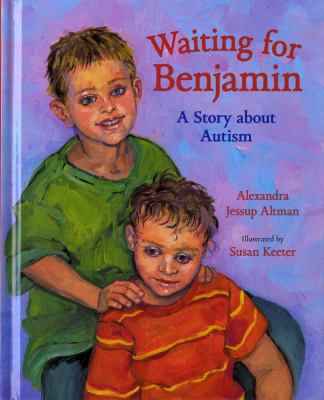
Alexander, a young boy, talks about his two-year-old brother’s diagnosis of ASD. At first, he is embarrassed by his sibling, and jealous of the extra attention that he gets from two itinerant teachers who visit to help Benjamin learn. But as his brother acquires language skills and is better able to play with him, Alexander becomes more accepting of his brother’s disability. (Ages 7 to 9)
These books are all available from The Hoboken Public Library. The staff will be happy to help you locate these and other titles through the BCCLS Library system.
-Written by Lois Rubin Gross, Senior Children’s Librarian





 Hoboken Library Staff Picks