Film versus Broadway: Hedwig and the Angry Inch, Cabaret, and Once

18 Feb

IMG_2610

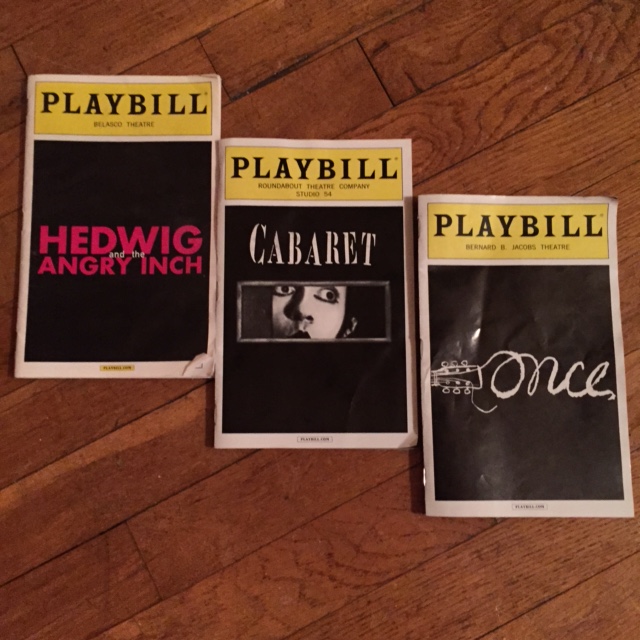
I had the opportunity to see three Broadway shows in the past few months: Hedwig and the Angry Inch, Cabaret, and Once. After seeing the live shows, I watched the film adaptations, or the origin film in the case of Once, to relive the music, the stories, and the characters. While the films can’t recreate the experience of live theater, I enjoyed them all. All three films are available to borrow from BCCLS libraries. I also include catalog links to the soundtracks if you’re more interested in the music.

Hedwig and the Angry Inch
hedwig

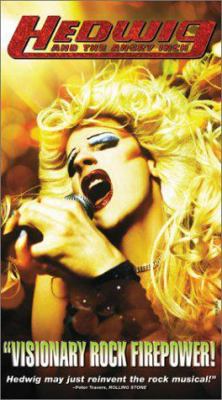
Hedwig and the Angry Inch (both film and stage show versions) is primarily a story about of a lover scorned, with a killer rock and roll score. The action follows Hedwig (born Hansel), a transgender woman from East Berlin, as she follows her former lover, rock star Tommy Gnosis, on his American tour. Hedwig, who has her own band called The Angry Inch, is responsible for many of Tommy’s hits and is angry she never received credit. Love, finding your “other half”, power, and gender are other themes explored in Hedwig.

The music is mostly the same in both versions, but the film has some plot differences. Hedwig and her band perform in a fictional chain restaurant called Bilgewater’s as she follows Tommy’s tour. Character actress Andrea Martin (author of a Funny Lady Memoir called Lady Parts) plays Hedwig’s manager, a role that does not exist in the stage show.

The film was released in 2001 and has some references that may seem dated now. Yitzhak, Hedwig’s husband and a member of The Angry Inch who has aspirations of his own, quits to perform in a touring production of Rent. These details in no way will diminish a viewer’s enjoyment of the film. Just try not to sing along to “Wig In a Box”, which Hedwig invites the viewer to do as the lyrics of the song appear on the screen. This film is so much fun to watch.

John Cameron Mitchell, who played Hedwig in the film, is currently starring in the stage show. How cool would it be to see him on stage, then watch the film?

Cabaret
cabaret

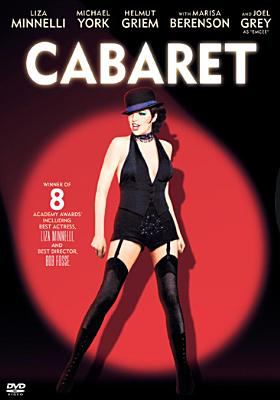
Cabaret is set in 1931 Berlin, when the Nazi party was gaining power. The action is centered at the Kit Kat Club, a sexy but seedy place where the Emcee (Joel Grey) is the host and Sally Bowles (Liza Minnelli) is the headliner. Joel Grey and Liza Minnelli both won Oscars for their roles in the movie, and Bob Fosse won for Best Director. However, the movie could not beat The Godfather for Best Picture that year.

To me, Liza Minnelli is the ultimate Sally Bowles. My first exposure to this show was hearing a recording of “Cabaret” sung by Minnelli on a CD compilation of great Broadway songs called Ultimate Broadway. I was enthralled and persuaded my parents to let me see the 1990s Broadway revival at Studio 54, which starred Gina Gershon as Sally Bowles and Alan Cumming as the Emcee.

Seeing the musical reminded me how dark the story is, and the movie definitely captured that tone. There is just a sense of foreboding throughout the film, and the final image confirms that dread. Listening to the song “Cabaret” on its own makes the show seem lighthearted and fun, with upbeat chords and lyrics like “Life is cabaret old chum, so come to the cabaret!” But that performance comes toward the end of the film, when Sally sings it in desperation to save the career she wants and has sacrificed for. Perhaps Cabaret feels ominous because history documents the results of the Nazi regime.

Cabaret is soon ending its run on Broadway, but the movie and soundtracks are available.

Once
once

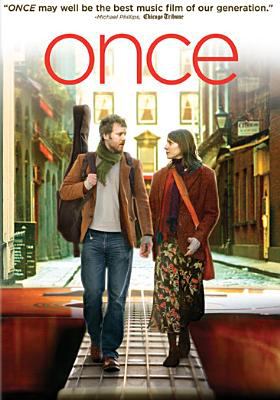
Once is an anomaly here. The stage show, which made its Broadway debut in 2012 and ended its run this past January, was adapted from the 2007 Irish film. Glen Hansard and Marketa Irglova star as Guy and Girl, respectively, who connect over music and spend a creative week together writing and recording original songs. The film was a hit and won a Best Original Song Academy Award for “Falling Slowly” in 2007. While “Falling Slowly” is certainly a gorgeous composition, I have to say “Gold” is my favorite song from both versions.

Girl meets Guy as he is singing on the street. They chat, and he tells her that he fixes vacuums for a living. She announces that her vacuum “doesn’t suck” and the next day she brings the vacuum to him for repair. The vacuum becomes a comic gag, as Girl drags it along with her as she and Guy go for lunch, ride the bus, and get to know each other.

The movie feels more like a musical performed in the theater, as the songs the characters sing express their thoughts, feelings, and experiences. In “Broken Hearted Hoover Fixer Sucker Guy”, Guy explains to Girl how his ex-girlfriend broke his heart and left him behind. Girl is estranged from her husband, with whom she has a young daughter. This pair has so much in common and there is definitely chemistry, which their music captures.

I saw one of the last performances on New Year’s Day, and was glad to experience this show (and hear “Gold”) live.

What are your favorite Broadway shows or film adaptations of musicals?

-Written by Kerry Weinstein, Reference Librarian

The End of Your Life Book Club, by Will Schwalbe

11 Feb

When Mary Ann Schwalbe got pancreatic cancer, it barely slowed her down, initially.  Used to a life of travel, service, and involvement, Schwalbe was intent on fighting her disease with the same fervor she had previously shown when visiting refugee camps is Asia and building libraries in Afghanistan.  Added to her arsenal of top-flight New York doctors and hospitals, Mary Ann had the love and unflagging support of her husband, Sid; and her three children, Will, Doug, and Nina.

end-of-your-life-book-club

Each child, in their own way, brought love and care to their ailing mother but Will’s backing took a unique turn.  Sharing a lifelong love of books and reading with his mother, the two formed perhaps the world’s most exclusive book club.  Each doctor’s visit, each chemotherapy appointment, each hospital stay, and each vacation in Florida or Europe was highlighted by the sharing of new books chosen by the pair for each other, and extensive discussions of the plot, subject, and – as happens in book clubs – application of the book to each person’s life and history.

Learning Mary Ann’s history is one of the joys of this book because Will is a loving and admiring son who has been blessed with an utterly unique mother.  One of the most remarkable (in the sense that I must remark upon it) is that, despite the appearance and practice of WASP privilege, the Schwalbe family comes from Jewish roots on both sides and adopted Protestantism with fervor.  Jewish conversion in the 1940s and 1950s would have been unusual enough, but Mary Ann is devout, with a strong belief in salvation and an afterlife.  She prays, daily, for her children and those around the world that she works to enrich and hopes that her children will, as well.  Will writes of being given the option of attending any Sunday school of his choice, as a child, so long as he attended.  He based his choice of the quality of store bought cookies and ended up with the Christian Scientists to his mother’s consternation.  Will and Doug both attended Protestant-based boarding schools and, after years of required chapel attendance, Will became his mother’s worst nightmare, a Pagan.  Still, Mary Ann’s spirituality informs her life and, one would speculate, contributes to her long term endurance in the fight against her cancer.

Mary Ann was a girl in an era when most women still married and mothered, but she added a third tier and worked in academia as an administrator.  At the behest of an inspiring teacher, Mary Ann believed that she could have it all although she missed the memo that you need “help” to do it all.  As a trailblazer, Mary Ann was frequently the first female chair of Admissions at Radcliffe and Harvard and, later, head of school at upper crust New York private schools.  With a husband who was a manager of arts institutions, two gay children, and endless causes to support, the Schwalbes are the poster family for East Coast elite liberalism.

However, cancer is not selective in its victimization and, while Mary Ann is a formidable fighter, she knows she is engaged in a no-win battle and the only mystery is how long she can keep up her fight given, as she admits, enough money to fill the Medicare “donut hole” without a problem.  Her awareness that others are not as fortunate is admirable and her last words to her friends and family involve asking them to continue the fight for universal medical coverage in the U.S.

One of the things of which one becomes very aware, when reading this book, is that being well read is relative and few people are as well read as Mary Ann and Will.  The appended list of books and authors that the two read and/or discussed runs to six closely spaced pages.  I, for one, have some catching up to do!

In addition to some insightful book discussions, this is a book that deals with the issues of illness and death better than any book I’ve ever read.  In fact, this should be required reading for anyone who gets a cancer diagnosis or has a family member with a terminal illness.  Mary Ann’s level of acceptance is awe-inspiring.  There is no dueling or bargaining with G-d.  She merely says, “Thy will be done,” and proceeds to launch the most amazing fight for her life that has ever been fought.  No trial, no experimental treatment, no traditional route is passed up.  Although Mary Ann says she will choose quality over quantity of life, she nevertheless lasts almost two years beyond predicted diagnoses.

Will admits to insomnia but, other than that, he and his siblings buy into his mother’s wishes that they go about their lives, uninterrupted, until almost the end of Mary Ann’s life.  Only at the very end does Will understand that the ongoing discussions of books and life that he and his mother carry on have revealed a Mary Ann that he did not know.  In fact, when filling out a final “do not resuscitate” form for his mother, he discovers that he has been using her name incorrectly for his whole life.

Much as Randy Pausch and Jeff Zaslow’s The Last Lecture inspired conversations about death and dying a decade ago, this book should restart the discussion now and make us realize that death, even with those we love and think we know well, is often the whispered conversation that we do not want to talk about.  In all of her visits to her numerous doctors, Mary Ann Schwalbe asks about treatment and procedure, but cannot bring herself to verbalize the big question: how long?

I dearly wish I had known Will Schwalbe’s mother.  Actually, in the form of my husband’s aunt, I did know a version of her, but Mary Ann was the “X-treme” version of any highly motivated, extraordinarily committed, capital “L” Liberal that you just have to love.  Mary Ann is the mother I wish I had who tells her children to “go for it” and then goads them into doing the thing that they may not even know that they want to do.

More than anything, however, Mary Ann Schwalbe and her son, Will, share a love of literature and a love of life and an understanding of how books enlighten and enrich our lives in a most exceptional way.  This book should be required reading for just about anyone and should definitely be the beginning of the conversation, not the end.  Highly recommended.

-Written by Lois Rubin Gross, Senior Children’s Librarian