The pride of the LGBTQ+ community can be seen shining bright all year long and all summer long it shines even brighter. From festivals to parades to special events, there are so many different ways to celebrate. We wanted to take the time to highlight some amazing books that are either written by LGBTQ+ authors and/or hold strong LGBTQ+ characters. Check them out the next time you pass by The Hoboken Public Library.
Simon vs. the Homo Sapiens Agenda (Y.A. Fiction)
By: Becky Albertalli
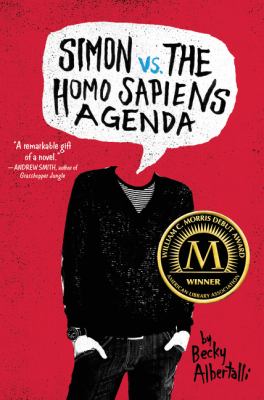
In Simon vs. the Homo Sapiens Agenda, sixteen-year-old and not-so-openly gay Simon Spier prefers to save his drama for the school musical. But when an email falls into the wrong hands, his secret is at risk of being thrust into the spotlight. Now change-averse Simon has to find a way to step out of his comfort zone before he’s pushed out—without alienating his friends, compromising himself, or fumbling a shot at happiness with the most confusing, adorable guy he’s never met. Incredibly funny and poignant, this twenty-first-century coming-of-age, coming out story—wrapped in a geek romance—is a knockout of a debut novel by Becky Albertalli.
Sister Outsider: Essays and Speeches (Essays)
By: Audre Lorde

In Sister Outsider, a charged collection of fifteen essays and speeches, Lorde takes on sexism, racism, ageism, homophobia, and class, and propounds social difference as a vehicle for action and change. Her prose is incisive, unflinching, and lyrical, reflecting struggle but ultimately offering messages of hope. This commemorative edition includes a new foreword by Lorde-scholar and poet Cheryl Clarke, who celebrates the ways in which Lorde’s philosophies resonate more than twenty years after they were first published.
Love! Valour! Compassion! (Play)
By: Terrence McNally

In Love! Valour! Compassion!, eight gay men spend holiday weekends contemplating relationships, AIDS and mortality. McNally has written numerous successful plays, many of which deal with homosexuality, and touch on AIDS. McNally has had major contributions to the queer theatre community and theater itself.
The Art of Being Normal (Y.A. Fiction)
By: Lisa Williamson

The Art of Being Normal features two boys with two secrets. David Piper has always been an outsider. His parents think he’s gay. The school bully thinks he’s a freak. Only his two best friends know the real truth – David wants to be a girl. On the first day at his new school Leo Denton has one goal – to be invisible. Attracting the attention of the most beautiful girl in year eleven is definitely not part of that plan. When Leo stands up for David in a fight, an unlikely friendship forms. But things are about to get messy; because at Eden Park School secrets have a funny habit of not staying secret for long.
50 Queers that Changed the World: A Celebration of LGBTQ Icons (Biography)
By: Dan Jones and Michele Rosenthal

LGBT people are some of the coolest in history – Freddie Mercury, Divine, Virginia Woolf, Marlene Dietrich, Andy Warhol… the list goes on. Queer subculture has had an enormous impact on style, music, science, art and literature. From Oscar Wilde, who defended his homosexual relationships in court, to RuPaul acting as an ambassador for drag on network television, queer people have fought to express their identities and make a difference. This book celebrates the lives, work, and unique perspectives of the icons who changed the world. Featuring beautifully illustrated portraits and profiles, 50 Queers Who Changed the World is a tribute to some of the most inspirational people of all time.
You can get more great LGBTQ+ books suggestions in some of our previous posts including LGB Memoirs, Lesbian Classics, LGBTQ Favorites, and LGBTQ ebooks.
Written by:
Angelica Cabrera
Library Outreach Assistant

 Hoboken Library Staff Picks