Archive | Nonfiction RSS feed for this section

Behind the Barbed Wire Fence

24 Sep

Some time this year, a new musical will open on Broadway called, “Allegiance.”  It is the story of actor George Takei (Mr. Sulu from Star Trek) and the years his family spent interned in Japanese internment camps during World War II.

The detainment of American citizens based on the country of origin and their race is a dark chapter in our nation’s history.  Fueled by anti-Japanese sentiments after the bombing of Pearl Harbor, nearly 120,000 Americans were sent to camps across the west and in the south purely because they were Japanese.  The conditions in the camps were bad.  Men in the camps were asked to swear loyalty oaths and those that didn’t, the “No-No boys,” were either imprisoned or repatriated to Japan, a country some of them had never even visited.  Many young men, to prove their loyalty to the United States, enlisted in the Army as part of the 100th/442nd.  This unit of the military was the most highly decorated unit in military history

On January 2, 1945, almost seventy years ago, the Supreme Court decided that loyal American citizens could not be imprisoned and, by 1946, the camps were closed.  However, the Japanese-Americans imprisoned during that time lost their dignity and their property.  Only one governor, Colorado Governor Ralph Carr, stood against the Federal government and gave state citizenship to the prisoners in his state.  To quote Governor Carr, “If you harm them, you must harm me. I was brought up in a small town where I knew the shame and dishonor of race hatred. I grew to despise it because it threatened the happiness of you and you and you.”

In the following list, I have included both fact and fiction; adult, young adult, and children’s books.  We learn best by remembering the mistakes that were made in the past.  The following books are an important step in teaching children about this little acknowledged chapter in American history:

Voices from the Camp: Internment of Japanese Americans During World War II, by Larry Dane Brimner.

voicesfromthecamps


Author Brimner details personal testimony of Japanese American survivors of the World War II forced evacuation. The book discusses the actual “relocation” of Japanese Americans, daily life in the camps, and how people were treated upon their return to their former homes.  It also discusses the burden of shame that survivors of the camps carry. (Grades 7 to 12)

Fighting for Honor: Japanese Americans and World War II, by Michael Cooper.

fightingforhonor


Examines the history of the Japanese people in the United States including the mass relocation and the recruitment of Japanese men to the 100th/442nd, the most decorated unit in the U.S. military. (Grades 6 to 12)

The Magic of Ordinary Days, by Ann Howard Creel.

magicofordinarydays


When a young woman in Denver becomes pregnant by a soldier, her father sends her into an arranged marriage to a farmer in Southern Colorado.  Taken from her home and urban lifestyle, the woman is at loose ends until she befriends two young Japanese women in the nearby Amache camp.  This friendship accidentally leads to the escape of German prisoners of war and the prosecution of the Japanese women.  Based on a true story, this is an excellent book club selection.  It was also made into a 2005 Hallmark movie starring Keri Russell and Skeet Ulrich.  (Grades 9+)

Red Berries, White Clouds, Blue Skies, by Sandra Dallas.

redberrieswhiteclouds


When 12 year old Tomi and her family are “relocated” from Southern California to a camp on the Colorado plains, their lives go through upheaval.  Tomi is an optimistic girl and not only makes an adjustment, but helps other people in the camp to adjust, as well.  However, Tomi’s father had been imprisoned without cause and when he finally returns to his family, he is no longer a patriotic American, and his disillusionment spreads to his daughter.  Only after Tomi writes a prize winning essay on Why I Am an American do father and daughter make their peace with the treatment they experienced.  (Grades 4 to 8)

Tallgrass, by Sandra Dallas.
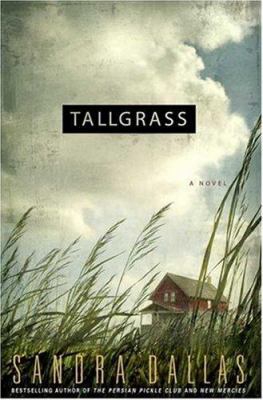
tallgrass


When a young girl is murdered on a Colorado farm, the residents of the nearby Japanese internment camps are suspected.  A local girl observes the presence of prejudice in her community, even as her father displays his ethics by fighting bigotry.  (Grade 9+)

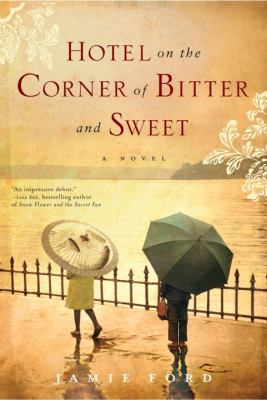
Hotel on the Corner of Bitter and Sweet, by Jamie Ford.
hotelonthecorner


This popular book club selection takes place in Seattle just before the war.  A young Chinese boy who is a jazz aficionado, befriends a Japanese girl and a Black musician.  The two children experience racial discrimination as they are drawn to each other.  (Adult)

Silver Like Dust: One Family’s Story of America’s Japanese Internment, by Kimi Cunningham Grant.

silverlikedust


A young girl in Pennsylvania denies her Japanese heritage until she learns the story of her grandmother’s relocation to the Heart Mountain Camp in Wyoming.  (Adult)

Dash, by Kirby Larson.

dash


When her family is forced into an internment camp, Mitsi Kashino must give her beloved dog, Dash, to a neighbor.  During her imprisonment, it is the ongoing letters about Dash that keep Mitsi connected to the outside world.  (Grades 3 to 7)

Baseball Saved Us, by Ken Mochizuki.

baseballsavedus


A Japanese American boy learns to play baseball as a survival strategy when he is in the relocation camps.  After the war, when he has returned home, playing baseball for his school helps him to survive prejudice.  (Grades 1 to 5)

I Am an American: A True Story of Japanese Internment, by Jerry Stanley.

iamanamerican


A highly personal portrait of Shi Namua, one of the nearly 120,000 Americans of Japanese descent who were evacuated to internment camps.  This book places discriminatory racial laws and segregated California schools in the perspective of wartime jingoism. (Grades 3 and up).

Farewell to Manzanar: A True Story of Japanese American Experience During and After the World War II Internment, by Jeanne Wakatsuki Houston.

farewelltomanzanar


This is a beautifully rendered newer edition of a classic autobiography for younger readers.  Jeanne Wakatsuki was seven years old when her family was sent to Manzanar along with 10,000 other Japanese Americans.  The author describes camp life, an attempt by reluctant prisoners to establish a “normal” day to day life by creating schools, Boy and Girl Scout troops, having “sock hops,” cheerleading squads, and all of the trappings of American life outside of the camps.  (Grades 7 and up)

To the Stars: The Autobiography of George Takei, Star Trek’s Mr. Sulu, by George Takei.

download

Image via Amazon

Before he became an actor and became well-known for the part of Mr. Sulu on Star Trek, Takei was a young California boy who, with his family, was deported to an internment camp in the Arkansas swamps, and later transferred to another camp in California.  Takei, who has always been a political activist, also discusses his early work on California strawberry farms which helped him to understand issues of migrant labor.  For “Trekkies” or “trekkers,” the book touches on well-known conflicts between Takei and actor William Shatner. (Adult)

Several of the books mentioned in this list are fine selections for book discussion groups.  While many (young) Americans are not even aware of this chapter of American history, it is an important lesson in life on the home front during World War II.

-Written by Lois Gross, Senior Children’s Librarian

Don’t Make Me Get My Flying Monkeys!

20 Aug

Scarecrow: I haven’t got a brain… only straw.

Dorothy: How can you talk if you haven’t got a brain?

Scarecrow: I don’t know… But some people without brains do an awful lot of talking… don’t they?

Dorothy: Yes, I guess you’re right.

2014 is the seventy-fifth anniversary of one of the most beloved movies of any generation: The Wizard of Oz.  Come to my house and there will be no doubt that a true Ozophile lives there.  My bookshelves contain copies of Baum’s original book, an amazing pop-up book based on the Oz story, Gregory Maguire’s arch and satirical “spin-off” Wicked, plus the three sequels telling the story of the Emerald City from the viewpoint of each of the major characters.  Since I am first and foremost a self-proclaimed Broadway Baby, you will find Elphaba’s Grimmerie, her magic spell book from the Broadway show, Wicked, and a pop-up book of the set design from the show.  Friends have gifted me with tiny dolls of the Witch, Dorothy, and the Tin Man.  I also own the DVD of the 1939 classic movie and a SYFY channel movie called, Tin Man, in which Zoe Deschanel of New Girl fame plays D.G., a Kansas farm girl who travels to a surreal Oz where she is befriended by Alan Cummings as her half-brained companion, Glitch, and Richard Dreyfuss plays a seriously scurrilous Wizard.

1939, the year that The Wizard of Oz was released, was arguably the most important year in Hollywood’s long history.  During that epic year, six films of note were released by studios: The Wizard of Oz, Gone with the Wind, The Hound of the Baskervilles, Mr. Smith Goes to Washington, The Adventures of Huckleberry Finn, and John Ford’s Stagecoach.

With all that greatness, The Wizard of Oz (which did not win the Oscar for its year) is a TV perennial.  As a child, I waited anxiously for the annual showing of the movie on TV, and marveled as the screen turned from dull black and white to glorious Technicolor.  My sisters, old enough to see the film in the theatre, were taken out when the Wicked Witch appeared, scaring them into tears.  My mother never forgave them the wasted price of admission.

However, it all started with a failed businessman named Lyman Frank Baum, born in the Finger Lakes region of NY who moved to the American prairie where he failed to make his fortune but did create the only genuine American fairy tale for children.  Here is a partial list of books about the Oz, the movie, the author, and more, that you will want to explore from the comfort of your “no place like home.”

The Wonderful Wizard of Oz, by L. Frank Baum with illustrations by W.W. Denslow.

wonderful-wizard-of-oz

This was the first of some forty Oz-related books written by Baum.  If this is the first time you’ve actually read the books, you will be struck by the fact that, while designed as children’s fantasies, they are actually somewhat scary for the youngest readers. The story is somewhat different from the movie that we all know, but the bones are the same.  One iconic item that was changed was Dorothy’s slippers.  In the book they are silver.

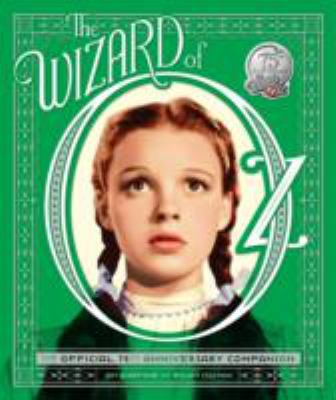
The Wizard of Oz: The Official 75th Anniversary Companion, by William Stillman and Jay Scarfone.

wizard-of-oz-75

All the trivia you ever wanted to know about the movie is encompassed in this coffee table sized volume.  You’ll learn that Shirley Temple was the original choice for Dorothy, but her studio would not lend her out.  So, MGM used Judy Garland, but bound her breasts to make her look younger.  Buddy Ebsen (later made famous in The Beverly Hillbillies) was originally cast as the Tin Man, but developed a severe, life-threatening allergy to the silver make-up he had to wear.  The book includes dialogue, movie cards, and still photography of the original set.  It is a must-have for anyone who treasures the movie.

The Wizard of Oz: A Commemorative Pop-Up Book, illustrated by Robert Sabuda.

wizard-of-oz-popup

Sabuda is the undeniable master of paper engineering and this tribute to the Emerald City is beyond compare.  Included in the book is a pair of green-tinted glasses for viewing the wonders of the Emerald City in its original green.  Open the book to see a tornado rise from the book in all of its three-dimensional glory, as well as a gorgeous pop-up of the Emerald City itself.  The story is abridged, but the illustrations are somewhat faithful to the Denslow originals.  This is a book that is a perfect gift for older children because it is easily destructible.

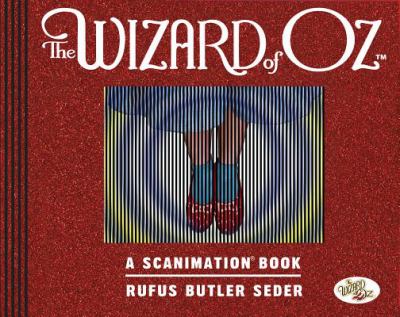
The Wizard of Oz: A Scanimation Book, by Rufus Seder.

wizard-of-oz-scanimation

Another unique interpretation of Oz in another unusual format.  Scanimation books make the pictures move as children open and close the pages.  Seder takes ten memorable scenes from the story and turns them into an amazing, moving volume.

The Wonderful Wizard of Oz, by Eric Shanawer.

wizard-of-oz-graphic

This is one of the newest interpretations of the Oz fantasy.  This time it is done in graphic novel, the updated version of comic books.  Just as Classic Comics introduced another generation to stories that might be beyond their reading levels, graphic novels serve the purpose of engaging “short attention span” readers with the wonderful story in a densely illustrated version.

The Real Wizard of Oz: The Life and Times of L. Frank Baum, by Rebecca Loncraine.

real-wizard-of-oz

This faithful, well-researched biography of the author of the original Oz books traces his origins in the Finger Lakes region of New York, to his adult life as a failed businessman in the Midwest.  In fact, his book was something of a social satire, with the Emerald City imitating the Chicago World’s Fair and the Witches of Oz bowing to his suffragette wife and mother-in-law.  Although his books have had long-lasting success, he was treated as a joke and a failure by the fledgling motion picture industry when they tried to make the book into a movie, the first time.

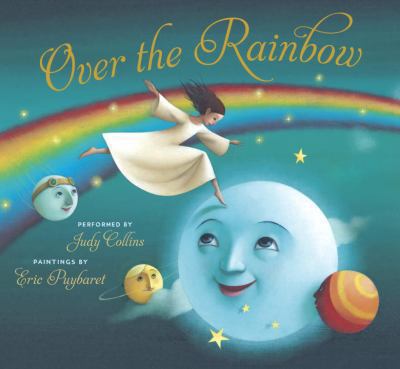
Over the Rainbow, illustrated by Eric Puybaret, based on the song by Harold Arlen and E.Y. (Yip) Harburg.

over-the-rainbow

This book and CD set brings the iconic song to life with folk art and ethereal graphic interpretations of the lyrics.  The CD that accompanies the book includes the song as performed by folk singer, Judy Collins instead of the original Judy Garland version.  It also includes the little sung verse of the song.  A wonderful book for one-on-one sharing with your favorite child.

Wicked, by Gregory Maguire.

wicked

I’ll admit that this fleshed-out, political satire based on Oz is an acquired taste, but it is contemporary fantasy at its very best.  Maguire extends the original story of the denizens of Oz before Dorothy came on the scene, focusing on Galinda (later Glinda) and Elphaba Thropp, the misunderstood daughter of the Governor of Munchkinland.  If you have seen the Broadway show loosely based on this book, you will be surprised by all that was left out to create the on-stage spectacle.  However, the book is a whole different creation as the politics of Oz and the Wizard’s actual evil persona casts Elphaba as a freedom-fighter for the rights of Animals.  This is the first in a series of books by Maguire, each telling the story from a different character’s viewpoint.  IMHO, this is the strongest and best of the series, although the satire in the second book, Son of a Witch, is a nearly undisguised commentary on the presidency of George W. Bush and a bittersweet representation of a gay romance.

This is a short list of all the Oz related books in print and available through the BCCLS library system.  Anyone yearning for the Emerald City need only click their heels and take out their library card to travel beyond the stars and the clouds, over the rainbow.

-Written by Lois Rubin Gross, Senior Children’s Librarian