Archive | Digital Materials RSS feed for this section

Writing Craft Practice: Show vs. Tell

18 Aug

Show vs. Tell is perhaps the most common rule a writer hears when asked how to improve their writing. It’s a rule, rightfully so, that causes angst and confusion. But it shouldn’t. Its common (everyone does it!) and fixable. It’s about training your eye to see it and then how you can fix it.
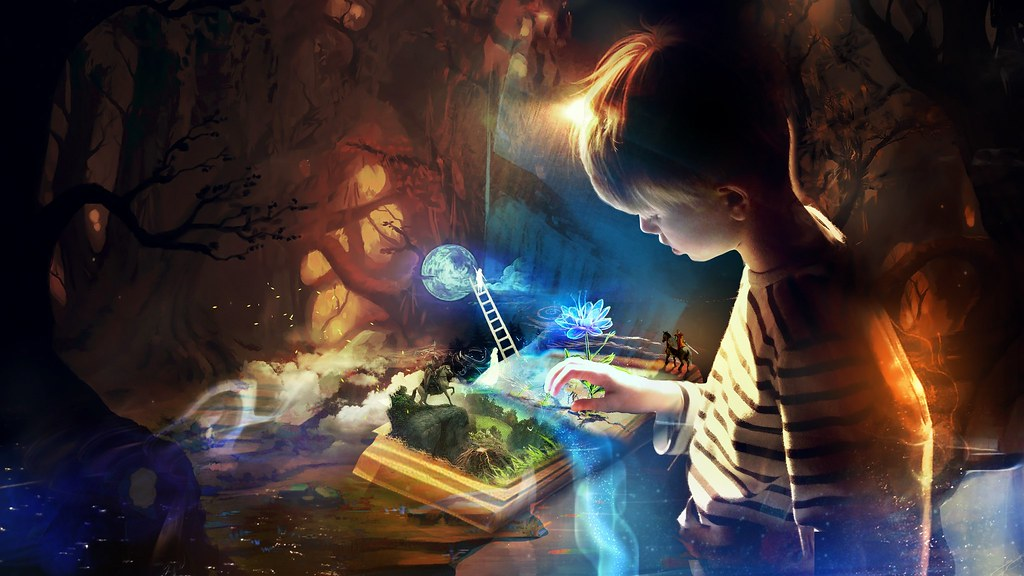
A fantasy illustration of a young child gazing at an open book and a magical is coming to life from it. It shows a blue flower, a tiny ladder leading up to a moon, miniature horse riders, and grass and rocks.  The background is a dark forest with silhouetted gnarled trees and warm amber light glowing.

Question: How can you show everything? You can’t (or shouldn’t).

Question: Why is telling a bad thing? It isn’t, but this is where storytelling moves from chit-chat with your mates to an actual story that exposes morality and emotion.

Telling Definition: Telling is stating information directly (emotions, facts, traits, etc) without letting the reader experience it.

Showing Definition: Showing conveys the same information but through movement – action, dialogue, sensory details, behavioral patterns, etc.

​How do you spot it?

​Example: James threw the ball vs. James reared his arm and launched the new baseball deep into the field. It was the last gift she’d ever given him, and he was glad never to see it ever again.  

“James threw the ball” works, but if the sentence is designed to evoke emotion, let’s say anger, then showing is better here.

Think of it this way: your friend asks, “Tell me about your day,” so you say I did X, Y, and Z. Perfectly fine, and you answered the question, but let’s say it was a really tough day and you want to ensure your friend understands the emotions and psychological development you triumphed over to get through it. Then…you would show your day.

  1. Telling creates distance – the reader is informed rather than immersed.
  2. Showing builds trust and authority with your readers, allowing them to become emotionally invested and drawn in so they can draw their own conclusions and let their “mind’s eye” develop.

Whether you’re writing a short story, novella, or novel, this is ultimately what you want.

Note: Showing is not always better. Sometimes telling is. A character moving from point A to point B is a good place to tell, unless what happens in that transition is important, such as a car crash, flat tire, strange encounter, etc. (This also applies to world-building. You can tell the reader that day turned into night, unless the transition holds something significant in it or you want to set a mood/tone.)

It’s acceptable to say “she drove home” if that’s all she did. No need to bog the reader down with how she started the car, checked her windows, etc.

How do I edit telling into showing?

A few questions to ask:

  • Am I naming an emotion or action directly that could be better shown as movement or dialogue?
  • Would the reader have a better experience if they felt what was going on as opposed to simply informing them?
    • Is this a moment worth slowing down for (show) or a transition I need to move past quickly (tell)?
    • Example: James was mad vs. James’s cheeks went red, the vein in his forehead throbbing, and upon his narrowed eyes stared into the unexpected house guest with laser focus.

Kind Reminder: If you are undertaking a short story, novella, or novel, don’t analysis-paralyze yourself to exhaustion with show vs. tell. In paraphrasing Stephen King, “Write with the door closed and edit with the door open”, meaning first drafts and free-writing are just about getting the story down. Acknowledge the rule as you write, but don’t beat yourself up about it or ache after writing every sentence to make sure it follows this rule.

Save this ‘looking through a microscope’ vigilance for revisions.

Mythbuster: “show, don’t tell” doesn’t mean never tell. For perspective, a novel averaging at 80,000 words (300 pages) should shoot for 70% show and 30% tell. And some genres, such as Fantasy and Sci-Fi, rely more on this rule than others.

Prompts to practice

1. Showing Emotion

A character receives news that makes them anxious. That can be whatever you like, but you are not allowed to use the word anxious, nervous, worried, or rely on sentences that say, for example, John was X (emotion). Instead, your character’s body, actions, and dialogue should carry the scene and show the emotion.

The goal: To train your writer’s mind to not name the feeling but find a physical or behavioral way to show it. (Bonus points if you can find a way for this to create further conflict or tension for your character.

2. Showing Character Traits

Your character is stubborn. Without using the word stubborn (or its synonym) and through action or dialogue, show the character’s stubbornness.

The goal: Your reader should finish the paragraph knowing this is the character’s trait without being told it.

3. Rewriting to Rid Telling in Favor of Showing

Take these three telling sentences and transform them into showing:

“He was exhausted.”

“She didn’t trust him.”

“The room felt heavy and tense.”

A Recommended Show vs. Tell Craft Book

Understanding Show vs. Tell (and really getting it) by Janice Hardy Ebook on Hoopla, Audiobook on Hoopla

General Writing Craft Titles (To get inspired and immerse yourself, whether your pursuits are authorship or to better understand good storytelling.)

Book: Save the Cat! Writes a Novel by Jessica Brody

Book: Mastering the Process: From Idea to Novel by Elizabeth George

Book: On Writing: A Memoir of the Craft by Stephen King

Book: Bird by Bird: Some Instructions on Writing and Life by Anne Lamott

Book: A Long Game: Notes on Writing Fiction by Elizabeth McCracken

TV: The Great Courses Writing Great Fiction

Audiobook: The Writing Life by Annie Dillard

Audiobook: Structuring your Novel: Essential Keys to Writing an Outstanding Story

Audiobook: The Anatomy of Genre by John Truby

Audiobook: The Business of Being a Writer by Jane Friedman

Audiobook: Writing Series from Sandy Marsh (multiple step-by-step titles through the writing process)

Audiobook: Writing Fiction: A Guide to the Narrative Craft

Comment below your thoughts on if this post was helpful or if there is anything you’d like to see in future posts on writing best practices (This post, I admit, is highly focused on fiction writing.)

Hit subscribe to get weekly updates on posts from the Hoboken Public Library!

Written by:
Sean Willey
Information and Digital Services Assistant

Writing Workshops and Program Options at the Hoboken Public Library

1. Write and Share: Prompts and Projects

Whether you’re drafting a novel, developing a short story, exploring a new idea, or simply hoping to practice your writing skills, this space offers the chance to put words on the page alongside fellow writers.

Prompts for each meetup are themed and sent to registrants the morning of, so that they can develop ideas and thoughts for the evening’s gathering. These prompts are optional for those looking for a creative spark. Writers are more than welcome to focus on their own projects, too. This is time set aside to help us all get closer to reaching our writing goals.

To join us or if you have questions, please email sean.willey@hobokenlibrary.org.

2. Writers Group

Get input and constructive feedback on your writing project in a friendly and supportive environment! Meets once a month.

If you are working on your next project—whether it is a novel, short story, memoir or poetry—our Writers Group is a great place to get input and constructive feedback on your work! Our supportive group of fellow writers can help give you insights you need into shaping your work for self or traditional publication.

Email hplwriters@gmail.com for more information.
​

Waitlisted: What’s Behind Your Library Ebook Delay?

9 Jul

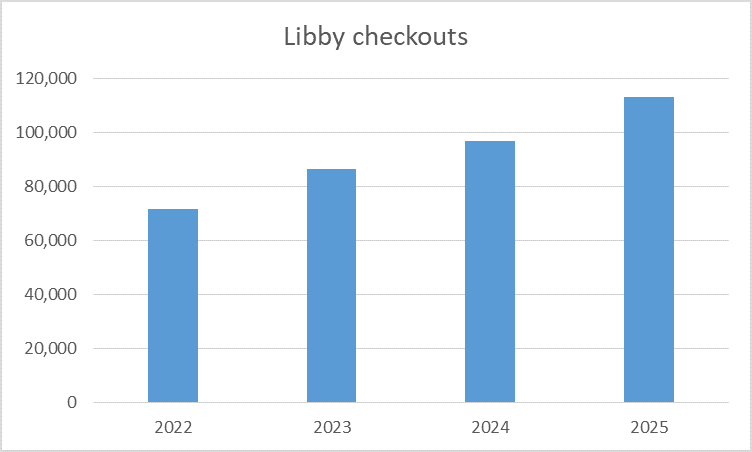
If you’ve placed a hold on a popular ebook or audiobook through Libby and watched the queue stretch out for weeks, you’re in good company. Digital borrowing at Hoboken Public Library has climbed steadily over the past several years, as you can see in the graph above, and for many of you it’s now the main way you read. The wait times that come with that are one of the most common questions we hear, so we wanted to walk through what’s actually going on behind the scenes.

Why does my ebook hold take so long?

A library’s digital collection works differently than the digital copy you buy on your own from a commercial retailer. When you buy an ebook for yourself, you typically keep it on your device indefinitely. When the library makes that same title available to customers, we license a digital copy under terms set by the publisher. Most current popular titles are licensed under “one user at a time” terms, much like a print copy. If the library has three licensed copies and forty-seven people on the hold list, the math works the same way it does for print. Customers move through the queue in the order they joined.

Here’s a concrete example. A recent bestseller like Yesteryear by Caro Claire Burke costs about $15 as a personal ebook purchase. The library’s license for the same title is around $55, and that license expires after two years. A bookstore can restock a popular title from a warehouse, but our digital collection works differently. Each additional copy comes as a separate license at the same per-copy price, and most expire on the same clock.

Why don’t you just license more copies?

We do, especially for high-demand titles. Hoboken Public Library’s digital materials budget has grown substantially over the past five years, and digital now accounts for more than half of what we spend on the collection. We watch hold ratios closely and add licenses where the queue justifies it.

Spending alone leaves the wait in place, though. A growing share of every library’s digital budget goes to buying additional copies of titles that are already in the collection, just to bring down hold lists on popular books. Every license expires on the publisher’s clock, so that spending maintains access for a defined period rather than building a permanent collection. If we doubled the digital budget tomorrow, you’d see shorter waits in the near term and the same waits returning as licenses expired and had to be renewed. It’s a different math than the one that governs print, where a book bought once can stay on the shelf for as long as it’s useful to the community.

Are there different ways to license the same book?

Yes, and the landscape has been shifting in a way worth knowing about. For some titles, the platform now offers more than one type of license for the same book, and the choice we make shapes what the wait looks like.

Take Yesteryear by Caro Claire Burke again. Hoboken’s eBCCLS digital collection runs through BCCLS, the 78-library consortium we belong to, so the copies and holds we’re about to describe are shared across the region. As of July 8, 226 BCCLS copies of Yesteryear are checked out and 1,309 customers are waiting. That’s roughly six customers per copy, with a wait list of at least five months. For that title, the consortium can license a one-year copy at $27.50, a two-year copy at $55, or pay roughly $5.50 each time any customer checks out the title (“cost per circ”), with every customer able to borrow it immediately. The first two options are “one user at a time” licenses, which is what creates the hold list in the first place. The third lets any number of customers borrow the same title at the same moment, which is what gives every customer instant access. The trade is that our cost grows with every checkout, scaling directly with use. With 1,309 customers already waiting and demand likely to continue, the third option would quickly run to several thousand dollars on a single title before the demand even settles.

We make these calls title by title, weighing how long the demand is likely to last, how many copies we’d need, and what we can sustain across the rest of the collection. The right answer varies by title. A title with a sharp spike of interest that fades in three months calls for a different bet than a title with steady demand over years.

Here is how the math breaks down for a single copy of a bestseller like Yesteryear:

FormatCost to ConsumerCost to the LibraryExpiration Terms
Personal eBook~$15NAYours indefinitely
Library eBook (1-Yr License)NA$27.50Expires after one year.  
Library eBook (2-Yr License)NA$55.00Expires after two years.  
Cost Per CircNA~$5.50Two weeks for eBCCLS

Why are some books in a series available but not others?

This one surprises customers more than almost any other. You’ll see books one through five of a series in our digital collection and books six through ten missing entirely. The most common reason is that publishers decide title by title which works to license to libraries and on what terms. Some titles release through commercial retailers only. Others appear in our catalog for a period and then get pulled when an agreement ends. The decision sits with the publisher.

When this happens, we’ll often add the print copy or look for an audiobook edition if the licensing terms differ across formats. If you spot a gap in a series you’re reading, let us know. Sometimes a title becomes available on different terms later, and your interest helps us catch the change.

Is this how it works at every library?

It’s how it works at every U.S. public library that licenses digital content from the major trade publishers, which is essentially all of them. The licensing terms are set by publishers and implemented through digital distribution platforms. Libraries accept the terms as offered – there is no room for negotiation. Each library chooses how many licenses to acquire and which titles to prioritize, but the duration, the one-user-at-a-time format, and the renewal cycle for each title are set by its publisher. Libraries around the country are navigating the same conditions and answering the same customer questions.

Aren’t digital files different? Why does a license “expire”?

A digital file holds up indefinitely, while a print book wears with use. The expiration is a licensing term applied to the file. Publishers and platforms have modeled digital library licensing on print circulation, where physical copies wear down over time and eventually need to be replaced. The licensing terms create a similar replacement cycle on a defined schedule.

The result is that demand for specific titles, the new bestseller, the book club pick, the prize winner, is highly concentrated, while the supply available to libraries is shaped by terms publishers set. And every title is its own work with its own audience. If you want this title, no other title will quite do.

Be a good digital neighbor: ways to find books faster

A few things help, and most of them help your neighbors too.

  • Before taking up a spot in the hold line or checking out an ebook, click “Read Sample” or “Listen to Sample” directly beneath the hold link. Taking a quick 5-minute test drive ensures you actually like the author’s style before committing to the hold list. If it is not a fit right now, you can just tag it for later.
  • Return early when you can. Checkouts return automatically at the end of the loan, but finishing early and returning the title moves the next customer forward. On very popular titles, roughly a third of licensed copies are often sitting checked out on someone’s device, waiting for that customer to start reading. A quick return when you finish makes a real difference.
  • Schedule delivery on holds. If a hold becomes available before you’re ready to read it, you can have Libby deliver it later while keeping your place in line. That keeps the copy moving to the next reader instead of pausing on your shelf.
  • Try the other format. Hold queues for the ebook and digital audiobook editions of the same title can be very different. The print copy may also be on the shelf when the digital copies are checked out.
  • Use the Notify Me tag in Libby for titles you’d like to see in our collection. Those tags tell us what to consider adding, and we look at them regularly to purchase high demand titles.
  • If you find a book you want to read eventually (but not right this second) don’t place a hold. Cluttering the hold queue blocks people who are ready to read today. Use Tags (see image below)  instead to build a future reading wishlist. you can create custom tags based on your mood (“Comfort Reads”), specific genres, or family members (like “Books for my son”).

Anything else worth knowing?

A few facts about the broader picture, if you’re curious.

Digital reading from public libraries has grown faster than any other format. Public libraries worldwide checked out more than 737 million digital titles in 2025, a nine percent increase over the year before.

A small number of large trade publishers account for most of the high-demand titles people are placing holds on, and they license to libraries on similar terms. Some smaller and independent publishers offer different licensing models, including longer-duration or simultaneous-use licenses, which is part of why those titles often have shorter waits.

Who can I talk to about a specific hold or title?

Reach out to us. We’re happy to walk through what’s in the queue, suggest something similar that’s available sooner, or take a request to add a title to our collection. Email us at info@hobokenlibrary.org or stop by the second floor information desks.

Thanks for reading with us.

Posted by:
Aimee Harris
Information and Digital Services Manager