Your story has to happen somewhere, and your characters are in that somewhere, so your world is a character in and of itself, living and breathing alongside the character’s journey and (potentially) pushing them into new problems and obstacles. Worldbuilding is symbolic.

Think of worldbuilding as far more than technical – the culture, the clothing, the cuisine, the weather, etc. – or surface level, what we see.
But…what does this all mean?
Worlds should be an intentional design choice. If it’s raining, it’s raining to set the mood; if we’re in a hot, cramped apartment, that’s an intentional setting, perhaps meant to reflect the character’s mental state.
So, look at worldbuilding as symbolic.
Symbolic Worldbuilding creates value and visual clashes.
The best stories use their world to create contrast, which reflects the conflicts between characters and their values. We can look at The Hobbit as an example.
(Yes, this is fantasy and, again, worldbuilding is for all genres, but consider this powerful, well-known example and then think about your favorite stories and how this applies).
The Shire reflects Bilbo’s values. Bilbo embodies comfort and reclusivity, staying away from trouble and preferring everything to be peaceful and quiet.
Symbolic worldbuilding: His home is small, small, low, hidden. The Shire is a place where the weather is peaceful, and there are always plentiful lands around him where no one will bother him.
The antagonist, Smaug, is the exact opposite: a tyrannical dragon who values power, treasure, and destruction. Hence, he lives in visual opposition to the Shire, on a tall, imposing, dangerous, and cold mountain.
Symbolic Worldbuilding: Two different sets of values translated into two visually different settings.
Key Visual Moments
There will be key moments in a story where the author uses worldbuilding to enhance atmosphere and mimic, mirror, or mock your characters.
- A place that conveys the character’s weakness at the beginning of the story.
- An introvert at a house party, a business-crazy millionaire sitting in a humble family home, an adult bullied as a child returns to his childhood home as a substitute teacher.
- A place that highlights the character’s goal (The character having a desire to escape – while other times it might be somewhere, literal or metaphorical, that they’re trying to reach).
- A place that captures the antagonist’s world.
- It would’ve been a poor choice to have Dracula’s house be on a beach or for Scrooge to work at a carnival.
- A character’s low point – when they hit rock bottom and all seems lost (to them), the world around them should be dismal, low, dark, cold, and symbolic of a sense of hopelessness.
- Alternative: Glimpse of paradise. Give the hero a moment to see what a happy life would look like before obstacles are thrown in their way, so they can’t have that life. Then the reader can see more of what the protagonist is fighting for.
- Pressure point – Returning from rock bottom, the hero is back in their fight, but pressure is mounting on them. Think corridors and tight spaces, and really amp up the sense of everything bad closing in. How about a dark and dingy motel room a partner is forced to stay in after their spouse found out they were cheating and kicked them out of the house?
- Final Battle – The stage of the final conflict with the antagonist. Make it dramatic, and somewhere that has meaning to the characters…
- Resolution – Things have reached a new equilibrium in the hero’s life. What does their new life look like? How does what they see, smell, hear, taste, and touch make them feel?
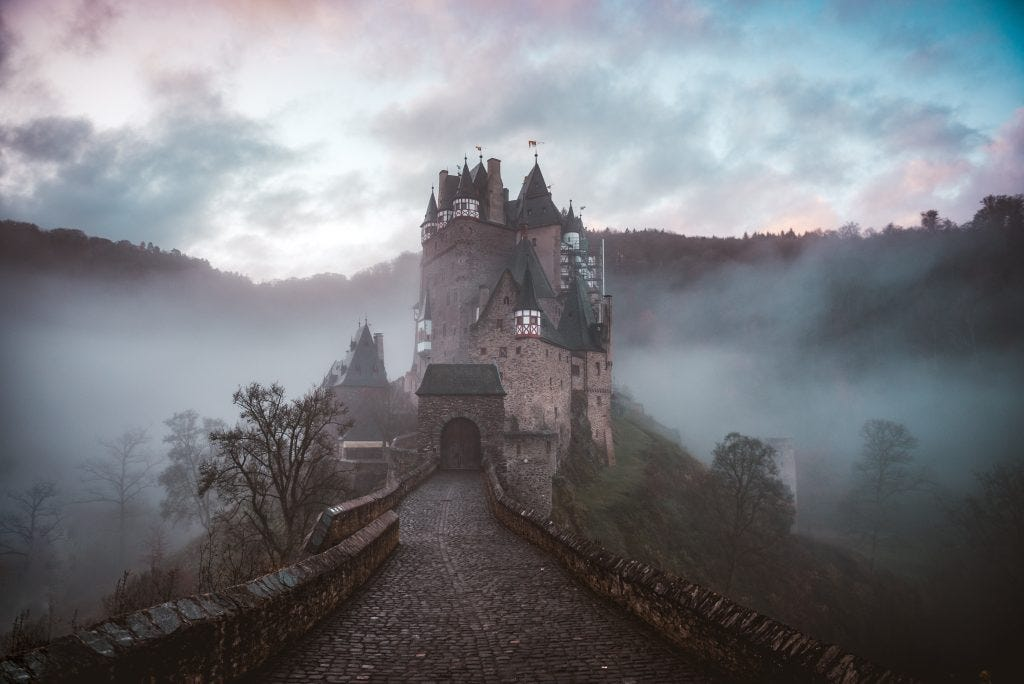
Adding in the Details
There are 4 key areas of worldbuilding:
- The man-made environment (towns, cities, markets, schools, etc.)
- The natural environment (seasons, weather, atmosphere, temperature, flora and fauna).
- Systems (culture, politics, social norms, customs, magic systems – if applicable – etc.)
- Tools and technology (clothing, tools or equipment, important objects)
Even if your story is set in the real world, you’ll want to build in the relevant details as if you were designing a movie set.
Best Practices & Self-Editing Checklist
Run through these thoughts while worldbuilding.
- Does the environment my character is in make sense for their development and what they are trying to achieve? If not (and this could be the case. That’s okay), why not?
- Does the environment show the reader the level of trouble or peace the character is in?
- Replace the world your character is in now with the direct opposite. Would the scene still feel right? Would it hinder the reader’s understanding?
Prompts to Practice:
- A character who absolutely hates attention and loves quiet spaces is forced to attend a massive, chaotic family reunion. The event is held in a loud, cramped backyard during a heatwave. Start the story right when they arrive.
- A neat-freak 13-year-old keeps their bedroom organized to a T, but is sent to a babysitter’s house for the night. Typical, except that this new babysitter’s house is messy, chaotic, full of loud pets, and smells old. Write a scene that shows the messy visual details and how they clash with the teenager’s lifestyle as the teenager walks through the front door. Use the messy visual details to show the deep clash between the two characters’ lifestyles and values.
- A character has exactly five minutes to get to a life-changing job interview. They are in the building, but suddenly the old elevator they’re riding in stalls and stops between floors. Write a scene from this moment and how being in this small space triggers pressure on the character and forces them to grapple with the potential of their low point.
Suggested Books with Strong World Building
- The City We Became by N.K Jemisin
- Imaginary Friend by Stephen Chbosky
- The Hobbit by J.R.R Tolkien
- The Haunting of Hill House by Shirley Jackson
- A Christmas Carol by Charles Dickens
- Funny Story by Emily Henry
- The Hotel Nantucket by Elin Hilenbrand
Hit subscribe to get weekly updates on posts from the Hoboken Public Library!
Written by:
Sean Willey
Information and Digital Services Assistant
General Writing Craft Titles (To get inspired and immerse yourself, whether your pursuits are authorship or to better understand good storytelling.)
Book: Save the Cat! Writes a Novel by Jessica Brody
Book: Mastering the Process: From Idea to Novel by Elizabeth George
Book: On Writing: A Memoir of the Craft by Stephen King
Book: Bird by Bird: Some Instructions on Writing and Life by Anne Lamott
Book: A Long Game: Notes on Writing Fiction by Elizabeth McCracken
TV: The Great Courses Writing Great Fiction
Audiobook: The Writing Life by Annie Dillard
Audiobook: Structuring Your Novel: Essential Keys to Writing an Outstanding Story
Audiobook: The Anatomy of Genre by John Truby
Audiobook: The Business of Being a Writer by Jane Friedman
Audiobook: Writing Series from Sandy Marsh (multiple step-by-step titles through the writing process)
Audiobook: Writing Fiction: A Guide to the Narrative Craft
Writing Workshops and Program Options at the Hoboken Public Library
1. Write and Share: Prompts and Projects
Whether you’re drafting a novel, developing a short story, exploring a new idea, or simply hoping to practice your writing skills, this space offers the chance to put words on the page alongside fellow writers.
Prompts for each meetup are themed and sent to registrants the morning of, so that they can develop ideas and thoughts for the evening’s gathering. These prompts are optional for those looking for a creative spark. Writers are more than welcome to focus on their own projects, too. This is time set aside to help us all get closer to reaching our writing goals.
To join us or if you have questions, please email reference@hobokenlibrary.org.
2. Writers Group
Get input and constructive feedback on your writing project in a friendly and supportive environment! Meets once a month.
If you are working on your next project—whether it is a novel, short story, memoir or poetry—our Writers Group is a great place to get input and constructive feedback on your work! Our supportive group of fellow writers can help give you insights you need into shaping your work for self or traditional publication.
Email hplwriters@gmail.com for more information.


Leave a Reply