Archive | 2014

Reading Treats and Trends: The Tastemakers and Eating Wildly

19 Nov

Nibble your way through these two fun and insightful nonfiction works that will give you a new perspective on the food you eat!

The Tastemakers: Why We’re Crazy for Cupcakes but Fed Up With Fondue (Plus Baconomics, Superfoods, and Other Secrets From the World of Food Trends), by David Sax

tastemakers


The title fairly well hints at the variety of what this intriguing nonfiction book contains.  In The Tastemakers, David Sax looks at types of food trends, how trends start, their impact on things like money and politics, and finally how trends may fall out of favor.  Each section of The Tastemakers is linked with a specific food including bacon, chia seeds, red prince apples, Indian food, food trucks and more that exemplify the concept that Sax is conveying and about that foods specific rise to food trend status.

Although like me you may be familiar with some of these such as the cultural trend of the cupcake that arose from its appearance on Sex and the City, there are some areas I found very surprising.  It was fascinating to see how agricultural trends such as specific types of apples come about and how their proponents can be thwarted by things like unseasonable weather destroying crops.  You may have noticed how bacon has gone from once a simple breakfast food to becoming something that has been used to flavor everything from mayonnaise to vodka, but Sax looks at not only this trend, but how this has an economic impact on everyone from pig farmers to the sellers of bacon themed novelty toys.  I felt the book left me with not only a better understanding of trends in general, but also a better appreciation for the food I eat.

If you enjoy this book you can also check out Sax’s other work Save the Deli: In Search of Perfect Pastrami, Crusty Rye, and the Heart of Jewish Delicatessen available from BCCLS libraries.

Eating Wildly: Foraging for Life, Love, and the Perfect Meal, by Ava Chin
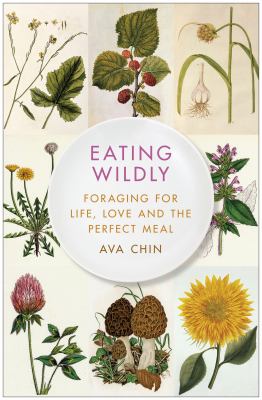
eatingwildly


Eating Wildly is a fascinating memoir framed by Ava Chin’s experiences foraging for food in New York City.  Foraging isn’t just a survival skill for scouts in the woods anymore, but currently a fad amongst some New Yorkers and other urban dwellers to find things to eat in parks and even in the sidewalk cracks near their homes.  An episode of Top Chef Duels even recently featured a challenge using foraged ingredients gathered by the chefs.  Chin wrote the Urban Forager blog for the New York Times for several years.  The book describes some of her finds including oyster mushrooms, blackberries, and wild garlic.

Her quests for mulberries reminded me of picking mulberries in the wooded area near my childhood home.  I can remember picking them with my parents when we were out walking our dogs and enjoying the sweet berries as they stained our hands dark purple.  I’m not sure though if I would be as comfortable picking things from the sidewalk cracks in the city, but it certainly made me rethink the “weeds” around me.

Although the foraging was interesting, I was drawn to her larger life story.  Chin’s father abandoned her mother when he found out she was pregnant and Chin works through her feelings about her father, mother, and grandparents who helped raise her, as she examines the natural world around her.  I found though her family life was fully explored, I would have liked more exploration of some of her romantic relationships who seemed to pop in and out of her life, without getting a feeling for them as people.

An important consideration for anyone who is taking up foraging is to read and learn from experienced foragers since edible plants, mushrooms, and berries can look very similar to poisonous ones.  Ava discovered this when she gathered up some tasty looking mushrooms which on further examination with a spore print (she details how to make one in the book) proved to be toxic.  Other tips for safe foraging are also included along with recipes, some of which have supermarket substitutions for the grocery store foragers amongst us.

-Written by Aimee Harris, Head of Reference

We Are Family

14 Nov

As Thanksgiving approaches, the first of the winter holidays that are supposed to speak to family bonding and family love, it occurs to me that we are living in a very new age of what a family is.  In the middle of the twentieth century, family had a specific appearance: two parents of opposite gender and similar skin tones, a child or two reflecting the genetic combination of those two parents, and extended family with similar ethnicities and probably cultural backgrounds.  Now, in the early twenty-first century, the people who we consider “family” come in all varieties and flavors.  Our family may be related to us or not by biology.  Our children may be birth children or adopted children, no less dear for the way in which they joined our family. Parents may be different sex or same sex.  Sometimes there is one parent raising a child or the child may be freely moving among homes with stepparents and step siblings (see my previous blog about children of divorce).  Families are no longer homogenous and while this generation of children may be oblivious to differences, there is still a need to make each child feel comfortable with their similar or unique family situation.

As you give thanks for the people you choose as your family – or wonder how long dinner will keep you away from the Bowl games – this is a good time to consider books that tell kids that all families are just fine so long as they come complete with the large measure of love that every child needs to surround him or her.  As South African activist, Desmond Tutu once said, “You don’t choose your family. They are God’s gift to you, as you are to them.”  Here’s hoping your children live in a varicolored garden of family delights.

I Love Saturdays y Domingos, by Alma Flor Ada.

ilovesaturdays


A young girl delights in the differences and similarities she finds when visiting her Anglo grandparents on Saturday and her Hispanic grandparents on Sunday.

Marisol McDonald Doesn’t Match, by Monica Brown.

marisolmcdonald


Marisol McDonald has brown skin and red hair.  She also loves to play soccer, but wants to be a princess.  Marisol, who tells her story in Spanish and English, is a child whose mixture makes her very special.

Papa Jethro, by Deborah Bodin Cohen.

papajethro


When Rachel asks Grandpa Nick why she is Jewish and he is Christian, he tells her a story from the Bible about Jethro and his grandson, Gershom, who loved one another despite the differences in their religions.

Tell Me Again About the Night I Was Born, by Jamie Lee Curtis.

tellmeagain


Actress and writer Curtis has two children who became part of her family by adoption.  This book was written at the beginning of her journey as an adoptive parent, explaining about the excitement and significance of bringing home a baby.

Black, White, Just Right!, by Marguerite Davol.

blackwhitejustright


A child from a biracial background happily describes how her parents are different in some ways, but similar in others, and how all of their uniqueness has made her a special and unique person.

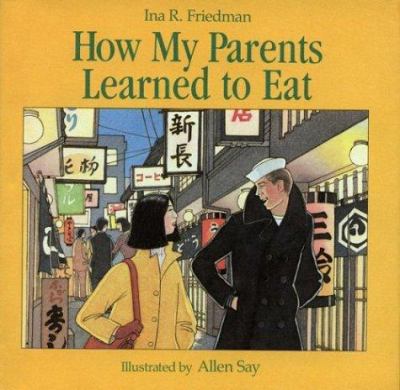
How My Parents Learned to Eat, by Ina Friedman.

howmyparents


This is now an older book, set in a different wartime era.  However, its message remains clear. An American sailor meets a Japanese woman when he is stationed in her country.  The two have trouble communicating, but each has tried to learn to eat with the other’s utensils.  The story is told by their child, so obviously by sharing meals, the two found love.

Dragon’s Extraordinary Egg, by Debi Gliori.

dragonsextraordinary


A dragon finds an abandoned egg and raises it as his own.  He is not prepared for the unlikely inhabitant of the egg, who has feathers and webbed feet and looks nothing like him.  However, along with a different appearance, the penguin has special abilities that are different from the dragon’s and save the day when they are needed.

Sweet Moon Baby, by Karen Henry Clark.

sweetmoonbaby


The smiling moon watches over a baby in China whose parents love, but cannot raise her. In another part of the world is a childless couple who long for a baby and make the Chinese child their own.

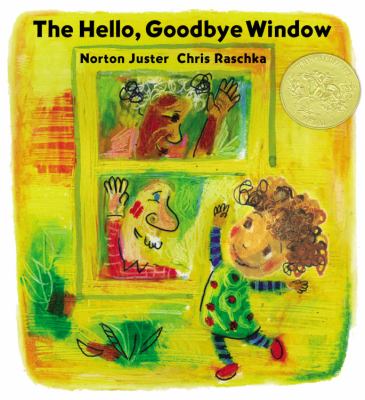
The Hello, Goodbye Window, by Norton Juster.

hellogoodbyewindow


This gentle, funny book features a curly haired child of a mixed racial background who seems to burst with happiness when she is visiting her loving grandparents.

The Red Thread, by Grace Lin.

redthread


Once there was a sad king and his queen.  They wanted a child, but could not have one.  Then they found a mysterious red thread that led them to the child that was meant to be part of their family.

Family, by Isabell Monk.

family


Hope has a new and unusual dessert to bring to her mother’s family reunion.  While other family members bring more typically African American dishes, Hope brings pickles to share, and somehow it is just the right thing to add to the table.

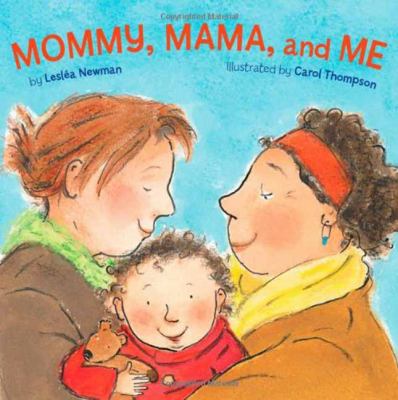
Mommy, Mama, and Me, by Leslea Newman.

mommymamame


Daddy, Papa, and Me, by Leslea Newman.

daddypapame


Author Newman discusses the families of two same sex couples in which each parent loves, entertains, and guides a small child, a toddler, who is represented as fairly androgynous so that readers can apply their own pronouns to the stories.

My Two Grandmothers, by Effin Older.

mytwograndmothers


After Lily celebrates Chanuka with her Bubbie and Christmas with her Grandma, she decides that the two grandparents need a special party that she plans for them.

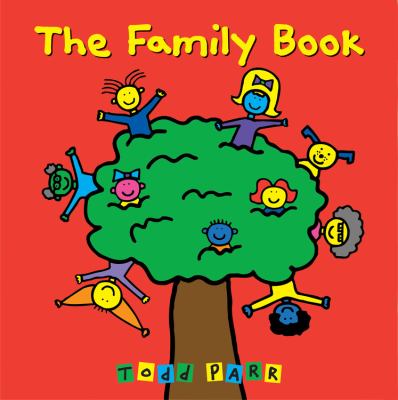
The Family Book, Todd Parr.

familybook


In Parr’s signature style of bright primary colors and bold, child-like drawings, the author represents a variety of families.  Some families are big and some are small.  Some have two parents and some have one.  Some parents have the same gender and some have opposite genders.  Each family is unique in some ways and different in others.

We Belong Together: A Book About Adoption and Families, by Todd Parr.

webelongtogether


Distinctive art and color tell the powerful story of how a family is formed by adoption.  Parr extends the story even further by talking about bringing a pet into the mix, as well.

My Mother Is the Most Beautiful Woman in the World: A Russian Folktale, by Rebecca Hourwich Reyher.

Image via Amazon

This is a gently told and meaningful story about a mother who is lost and then found by her child.  As the child searches for his mother, it is clear that he sees her through loving eyes and sees only her beauty.

Horton Hatches the Egg, by Dr. Seuss

hortonhatchestheegg


IMHO, one of the best of the good doctor’s books, emphasizing the dedication of parenthood, the need to keep promises, and how nurture sometimes trumps nature when caring for a child.  “I meant what I said and I said what I meant, An elephant is faithful – 100 percent.”

-Written by Lois Rubin Gross, Senior Children’s Librarian