Tag Archives: story time

Helping Your Child Start School, Part I: Saying Good-bye at the Door

25 Jun

This year, the Hoboken Library will be doing some special story times, in August, for children having their first school experience in pre-school or kindergarten.  In this three-part list, I will share some books that will prepare your child for what to expect in their daycare or kindergarten classroom and help you and your child prepare for the pains of separation, especially if this is the first time and your child has been home with you since birth.  I would also like to suggest that you visit the following website to see what you can expect your child to learn during their first school experience.  Note that expectations are listed for each grade in school and might give you an idea as to early preparations for getting your child ready to learn: www.pbs.org/parents/education/going-to-school/grade-by-grade/

This is what is suggested that a child know before starting preschool: http://preschoolers.about.com/od/learningeducation/a/PreKprelesson.htm

This is what is suggested that children know before starting kindergarten: https://www.commonsensemedia.org/blog/6-skills-every-kid-should-know-before-kindergarten

The first list I will share with you has to do with separation anxiety, both for children and parents.  One of the hardest–and most exciting–days in your life is the day your child walks through a real school door.  It represents the beginning of the time when your child is no longer in your protective cocoon and must learn to get along in a world without your protection.  That first day is hard on everyone.  Here are some books to help you and your little one find the excitement, as well as the tears, in separation:

Mommy in My Pocket, by Carol Hunt Sendrak.

mommy-in-my-pocket

A little girl gets anxious about leaving her mother when she starts her first day of school.

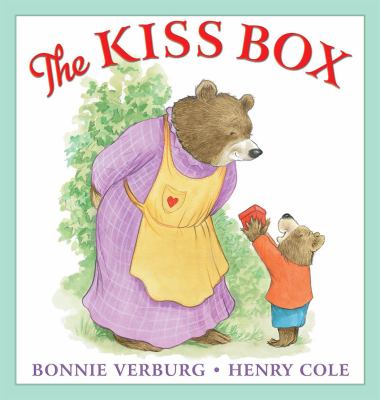
The Kiss Box, by Bonnie Verburg.
kiss-box

Mama Bear and Little Bear prepare for a short separation by sharing a special gift.

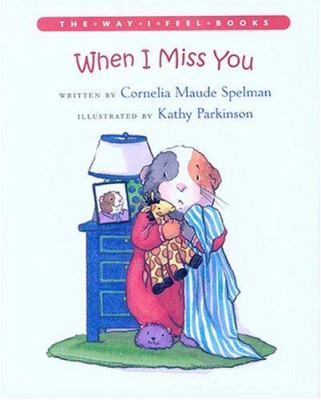
When I Miss You, by Cornelia Spelman.
when-i-miss-you

A young guinea pig talks about the things that make him feel better when his parents have to leave him.

Llama Llama Misses Mama, Anna Dewdney.

llama-llama-misses-mama

It is the first day of school and Llama Llama experiences separation anxiety when he has to leave Mama.

Jake Starts School, by Michael Wright.

jake-starts-school

Jake clings to his parents and makes them stay with him during the entire first day of school.  Meanwhile, he can only watch the fun that his classmates are having.

Ready, Set, School! by Jacquelyn Mitchard.

ready-set-school

Rory tackles two kinds of separation anxiety in one week: he has to stay away from home, overnight; and he starts pre-school, as well.

The Kissing Hand, by Audrey Penn.

kissing-hand

When Chester Raccoon doesn’t want to go to school, his mother teaches him a way to carry her love with him wherever he goes.

Mama Don’t Go! by Rosemary Wells.

mama-dont-go

Yoko learns that “mothers always come back,” from a classmate when she is worried about being left at kindergarten.

These books and others on the subject of children and separation anxiety in different circumstances are available at the Hoboken Library and through the BCCLS Library network.

-Written by Lois Gross, Senior Children’s Librarian

This post is the first in a three part series, which complement special story times to be held at the Hoboken Public Library in August for children starting school for the first time. Check back next week for the second part.

Part 2

Part 3

Theatre for the Mind

1 Apr

Long ago and far away, just after the dinosaurs roamed the earth, there was this thing called radio. I’m not talking about top-forty hits radio, or Sirius radio in your car. This was a console radio with buttons and dials that sat as a central focus of everyone’s living room, and from this wonderful instrument spilled out Big Band music, girl singers, soap opera and children’s shows like a storytelling program called Let’s Pretend. Anyone who attends my story times is familiar with the Let’s Pretend theme song because I use it to open and end each story time. There was also a wonderful performer named Kate Smith and it was on her show that I was introduced to Story Princess who enchanted me with her stories for children.

Thanks to a sister who was a born teacher, I read early so it wasn’t really necessary for my parents to read to me, but I frequently read out loud to my own daughter. Even when I had to work evenings (which, as a librarian, is a given), I made tapes of favorite stories that she could hear at bedtime.

I think there is a magical connection established when parents read aloud to children, or when anyone reads aloud to children. Not only are electronic devices turned off so that you can have human contact with the child, but you likely have the child’s undivided attention for the length of the reading. For children who have been raised with an assault of images, reading allowed exercises a different set of brain waves, ones in which the child exercises imagination to create their own mental images of what an author is describing. Too often, these days, we take the imagination out of stories giving young readers 3D, pop-off-the screen pictures that deny them the opportunity to think for themselves. If we want the next generation of artists, writers, and even inventors, this ability to conceptualize is critical to the process.

Also, keep in mind that reading out loud helps your child to develop vocabulary above their reading level. Children listen at a higher level than they read and to experience new words, phrases and concepts an adult voice is a great addition to the process. Also, don’t forget that, when you have finished reading, it is good to talk to your child about what they’ve read. Not only will this help you to see your child’s level of comprehension, but it will also give you insights into how your child views the world.

The Hoboken Library is in the process of acquiring a collection of titles for parents to help you select books for reading aloud. Books like Jim Trelease’s The Read Aloud Handbook (Penguin Books 2006), and Pa, Allyn’s What to Read When (Avery, 2009) will help you to select age and interest-appropriate books for your child. Also, many websites, such as  www.goodreads.com will help you to make selections.

Meanwhile, here are some books that you may remember from your own childhood that you will want to share with your child. (Note: These are all chapter books designed to be read with slightly older readers. There are many wonderful picture books for little ones, but chapter book read-alouds get less attention and I’d like to feature these).

Click on the links on each title to go right to the library’s catalog to reserve a copy online!

MatildaMatilda, by Roald Dahl.
Having just seen the Broadway musical of this darkly funny book about a gifted five year old, sadly mistreated by her foolish and cruelish parents, It is on my mind to recommend. Matilda is a wonderfully, humorous, satirical book that actually highlights the dangers of too much “telly” as Matilda, our heroine, glories in the good of books. The school’s head mistress, Miss Trunchbull, is the stuff of nightmares, but there is a lovely teacher, Miss Honey, and a kind librarian who encourage Matilda’s imagination and love of books, and it all works out well, in the end.

despereaux

Tale of Despereaux, by Kate diCamillo.
This was made into a wonderful animated movie, several years back, so after you’ve read the story of the plucky little mouse who, with a rat and a servant boy, conspire to save a princess, you might borrow the movie from the library and compare and contrast. Which version does your child like best? Is the story as they pictured it in their mind’s eye?

Mrs.-Piggle-Wiggle

Mrs. Piggle Wiggle, by Betty McDonald.
When I was in first grade, the greatest reward our teacher could offer was a session of reading out loud from Mrs. Piggle Wiggle. Yes, it’s been around that long, and it still holds up. The story of the rotund little lady with magic cures for children’s bad behavior begs to be read aloud. Don’t hesitate to act out the cures (especially The Whispering Cure for gossipy little girls). All of these stories are a bit moralistic, but the fun is so enormous that no one notices.

9781416928171_p0_v1_s260x420

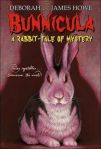
Bunnicula, by James and Deborah Howe.
Chester, the cat and Harold, the dog are suspicious of the newly acquired bunny who has joined their family’s menagerie. Somehow, the vegetables in the refrigerator have developed a tendency to lose their color, and the cat and dog suspect that the pink-eyed bunny is a vampire rabbit. When they hear that you get rid of vampires by putting a steak through their heart, it’s a hop, skip and a jump to the meat section of the refrigerator.

ibbotsonplatform13

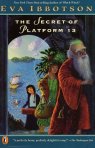
Secret of Platform 13, by Eva Ibbotson.
If you have children who are not quite ready for Harry Potter, start them on Eva Ibbotson. In fact, even if they’ve read Harry Potter, Eva Ibbotson’s books are wonderful fantasies which are more concise, but no less magical than J.K. Rowling. In this book, my favorite, a secret door opens under a train track every nine years, allowing access to a magical island. Nine years ago, a prince was kidnapped, and an ogre and a young wizard set out to save him, never knowing that he has become so spoiled they might just decide to give him back.

When you read aloud to your child, you share a bit of yourself, both from the selection of books and how you present them. The gift of reading is something you will always want to make a family event.

– Lois Rubin Gross, Senior Children’s Librarian