Tag Archives: nonfiction

Gone Girl and Lost Girls: Two Tales of Six Girls

1 Sep

I recently realized that two books I read this summer were from different genres but similar as they were both about missing women: Gone Girl by Gillian Flynn (fiction) and Lost Girls: An Unsolved American Mystery by Robert Kolker (nonfiction).

***

You may have already heard of Gone Girl. This popular thriller by Gillian Flynn topped many best-of lists last year. I happened upon a copy while shelving and grabbed it since it’s been so popular. Reese Witherspoon’s production company is adapting the story into a movie starring Ben Affleck and Rosamund Pike.

gone-girl

The Girl that’s Gone is Amy Elliott Dunne, who mysteriously disappears from her home the morning of her fifth wedding anniversary. This book has two alternating narrators–her husband Nick and Amy, via journal entries, which I think is an interesting device. Which narrator should the reader trust? Who is telling the truth?

After Nick and Amy lost their jobs during the recession, they moved from Brooklyn to Nick’s hometown of North Carthage, Missouri. Their relationship becomes strained as Amy, a native New Yorker, is a fish out of water in the Midwest while Nick easily assimilates.

Nick is the main suspect after Amy goes missing, which rocks the small town and immediately becomes a national news. Nick maintains his innocence despite everyone’s suspicions–his only ally is his twin sister Margo–and works to find other suspects in Amy’s disappearance. Will Nick clear his name? What happened to Amy?

***

Lost Girls is an impeccably reported true crime story about the disappearances of five women that worked as escorts. I read an interview with Kolker on Gawker, and was intrigued by this book.
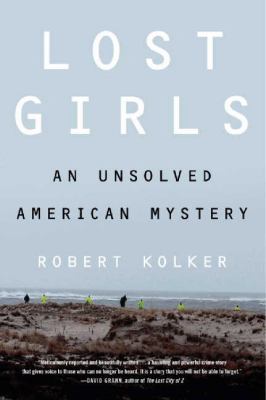
lost-girls

The book begins with Shannan Gilbert’s disappearance from a home in Oak Beach, a secluded community on the south shore of Long Island. The local police force’s reluctant search for her eventually led to the discovery of four other women believed to be victims of a still-at-large serial killer targeting sex workers that advertise online through Craigslist and Backpage.

Lost Girls has two parts. Book 1 devotes two chapters to each woman’s background and her time as an escort up to her disappearance. Book 2 discusses theories about the identity of the women’s killer, and how the victims’ families have banded together, which Kolker first wrote about for New York magazine.

This book’s interior design felt interactive. Maps marking each woman’s home town and when she arrived in the New York City area precede each chapter. A timeline, a list of characters, and additional maps in the back of the book help readers keep up with all the details.

***

There are definitely some suspenseful moments in Gone Girl that grabbed my attention, but ultimately the book came up short for me. Flynn does an excellent job of spinning a twisted tale and describing the bleak, recession-ravaged Missouri town where Nick and Amy live. I don’t recommend Gone Girl but won’t discourage anyone from reading it, so they can draw their own conclusions*.

I don’t recall much about the original cases on which Lost Girls are based, but found the presentation of the stories and details so compelling. Kolker spent a lot of time with the women’s families and friends and wrote thoughtfully about the five women. Most notably, he neither passed judgement on their decisions to work as escorts nor blamed them for their deaths.

To me, Lost Girls is a better book. I’ve recommended it to friends and family since finishing it. By no means is it a happy story (these women had tough lives), but I found it engaging. I empathized with the families and their losses. At parts I was furious about the complacency shown by the police departments investigating the disappearances.

Gone Girl made me angry for different reasons. One was the ending, which I found unsatisfying. Also, I found most of the characters unlikable. Amy and Nick are written as such terrible people and they deserve each other.

If you read (or have read) either Gone Girl or Lost Girls (or both!) let me know what you think in the comments, or at hobkref@bccls.org.

What books have you read this summer that you liked? Did you read anything you didn’t like?

-Kerry Weinstein, Reference Librarian.

*According to Book Riot, I am not the only reader that didn’t enjoy Gone Girl.

Seattle’s Musical Legacy: Jimi Hendrix and Nirvana’s Kurt Cobain

21 Jun

I traveled to Portland, Oregon, this past Easter weekend. Before heading home, I visited Seattle, Washington, for a day. Seeing Seattle and the Space Needle have long been on my travel to-do list.

Space Needle

I was lucky to miss Seattle’s rainy, dreary weather the day I visited.

Seattle is known for its damp, rainy climate that feeds the lush green landscapes, which is why the city is nicknamed the Emerald City.

What most people associate with Seattle is the music scene–in particular a genre known as grunge. Bands such as Nirvana, Alice in Chains, Pearl Jam, Soundgarden, and many many others started out in the Emerald City.

I could write hundreds and hundreds of words about Seattle-based bands and artists and hardly scratch the surface, so here I will focus on two of my favorites: Jimi Hendrix and Kurt Cobain of Nirvana.

Jimi Hendrix

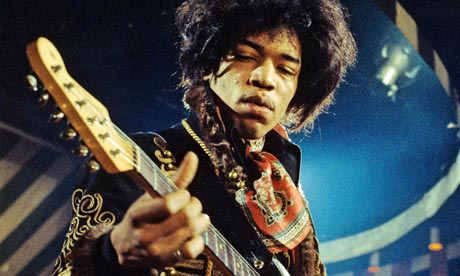
Jimi Hendrix, arguably one of the best guitar players of all time, was born in Seattle on November 27, 1942. He is known for his skillful guitar playing and his bohemian look.

Jimi Hendrix

My mom’s granny destroyed her older siblings’ Jimi Hendrix records because she didn’t want them listening to “that hippie freak music.”

Although Jimi was American, he first found fame in London in 1966 where his performances impressed fellow guitar luminaries Eric Clapton, Jeff Beck, and Brian Jones.

My first introduction to Jimi’s music was, oddly enough, through the movie Wayne’s World. The film featured “Foxy Lady” and “Fire”, both tracks from the Jimi Hendrix Experience’s Are You Experienced–an excellent album.

“Foxy Lady” is known for its whirring, opening riffs and its suggestive lyrics. Toward the end of the song Jimi yells “…I’m comin’ to git ya!”

After performing “Fire”, Jimi sometimes set his guitar ablaze for dramatic emphasis, as depicted in this video. Notice how he moved his hands over the fire, as if to conjure the flames.

If you’re a Jimi Hendrix fan, I highly recommend Jimi Hendrix: The Stories Behind Every Song, by David Stubbs. This book is a comprehensive biography about Jimi and discusses the origins of his entire musical catalog.

Jimi Jendrix

According to this book, Jimi’s inspiration for the song “Fire” was very simple: he was cold and asked if he could stand closer to the fireplace to warm up. “Let me stand next to your fire.”

My favorite Hendrix song is “Bold As Love”, the last track on the album Axis: Bold As Love. This song is about Jimi’s fascination with the Earth’s axis. I dig how the song fades out as if it’s ending but then starts back up with a drum fill and closes out strong. Also, the line “my yellow is not so mellow” is a call-out to Donovan‘s 1960s hit, “Mellow Yellow”.

His electrifying take on the “Star Spangled Banner” at Woodstock in August 1969 is another favorite.

Stubbs says Jimi’s performance of the national anthem was his way of commenting on the United States’ turbulent political climate in the late 1960s. Jimi was passive in demeanor and often used music to make social statements.

Jimi Hendrix died on September 18, 1970 in London, but was laid to rest southeast of Seattle, in Renton, Washington. His legacy lives on through the artists he has influenced. Among those is Nirvana’s Kurt Cobain from Aberdeen, Washington.

Kurt Cobain

Or as he sometimes spelled his name, KurDt Kobain.

Much has been written about Kurt Cobain, the lead singer of Nirvana, since his untimely death in 1994. I was most interested in reading his own words, which led me to Journals.Journals

Journals features images of pages from twenty or so journals Kurt wrote during his life that were locked in a safe for years.

Nirvana, which also included bass player Krist Novoselic and drummer Dave Grohl, is probably the band most associated with grunge. “Smells Like Teen Spirit”, from Nevermind, is likely the most iconic grunge song. (Feel free to suggest others in the comments.)

Nevermind was a great album, but the band’s recording of their MTV Unplugged session is also excellent. I like this recording because it’s the closest I’ll ever get to seeing Nirvana in concert. From the videos I’ve seen on YouTube, they put on a good show.

Kurt wrote about his plans for Nirvana. Journals includes a draft of a letter firing a drummer for not being dedicated enough to the band. According to the book’s notes, Kurt often used his journals to draft letters before he sent them.

Lyrics to “Lithium”, “Smells Like Teen Spirit”, “In Bloom”, “Come As You Are”, all tracks that appear on Nirvana’s 1991 breakthrough album Nevermind, are scrawled in the journal as well. Kurt also drafted lyrics for other songs, such as “Heart-Shaped Box” from In Utero, in the journals. It’s interesting to see how all those songs developed.

(Sidebar: For more about Nevermind, check out the documentary Sound City. Dave Grohl directed the film, and Krist Novoselic and the album’s producer Butch Vig were featured.)

Kurt also made several lists detailing his favorite albums and songs. A Scottish alternative band that Kurt admired called The Vaselines appeared on several of these lists. Nirvana later covered their track “Molly’s Lips.” Journals also includes a draft of a letter to Eugene Kelly of the Vaselines–Nirvana was scheduled to perform with Kelly’s new band, Captain America, in England.

Other topics in Journals are Kurt’s feelings about his growing fame and the record industry as a whole. He discussed using drugs and a chronic, undiagnosed stomach condition he dealt with much of his life. A rather unique love note addressed to his wife, Courtney Love, is also in the book.

My favorite entry is one Kurt wrote after his daughter Frances Bean Cobain (who he named after guitarist Frances McKee of The Vaselines) was born in 1992 about the awesome responsibility of parenting and how much he loves her. I enjoyed it because it shows that even genre-defining, millionaire rock stars are nervous about driving with their infant in the car.

I highly recommend Journals for fans or anyone interested in learning more about Kurt Cobain. This book is excellently curated. The minimal design keeps the reader’s focus on the photographs taken of actual pages from Kurt’s journals and his words. Reading his private thoughts felt uncomfortable at times, but I found him fascinating.

Written by Kerry Weinstein, Reference Librarian