Greetings! I’m Clay, a part-time library assistant in the Circulation Department of the Hoboken Public Library. I didn’t really intend this staff picks to be a celebration of British pop culture, it just turned out that way. (All items mentioned are available in the BCCLS system.)
Sherlock

BBC television series, 2010-continuing
The iconic character Sherlock Holmes is updated to modern-day London, in a world where there is no Arthur Conan Doyle character to emulate–this is an original Sherlock, insufferably arrogant and inarguably brilliant. Creators Mark Gatiss and Steven Moffat, who were also behind the successful re-launch of Dr. Who, have created a delightfully sinister London, crawling with evil geniuses a la Holmes’ nemesis Dr. Moriarty (who appears in altered form). The character interplay remains faithful to the original pairing of Holmes and Watson, with every episode making subtle allusion to the Conan Doyle canon without descending into straight homage.
Only nine episodes have appeared–three seasons of three episodes each since 2010–a pace grown all the more leisurely after the show made film stars out of Benedict Cumberbatch (Sherlock turned dragon) and Martin Freeman (Dr. Watson turned hobbit). Just repeat “quality over quantity” through a British stiff upper lip, while marveling at the mind-blowing end of Series 2 and trust that Gatiss and Moffat can escape from the intriguing corner they painted themselves into at the end of Series 3.
Life on Mars

BBC television series, 2006-2007
A modern-day cop crashes his car and is thrown back into the 1970s. If that sounds familiar, it’s because this BBC TV series spun off a U.S. version (with a different ending). But this is the superior model.
Chief Inspector Sam Tyler, played by John Simm, is rushing to save his girlfriend from a serial killer when he is hit by a car, as David Bowie’s “Life on Mars” trickles out from his car’s iPod. Coming to, Tyler finds himself sporting a leather jacket and rocking a collar the size of a New York slice–not on Mars but somewhere almost as foreign: the blighted smokestacks and shabby wasteland of industrial Manchester, 33 years in his past. Bowie is still playing, but on an 8-track player in a 1973 model car: He’s been literally knocked into the 1970s.
Stranded without a cell phone or web connection, Tyler must cope with dodgy tape decks and noisy rotary phones. The anachronisms aren’t used as cheap gags, as in the show’s inferior, Tyler-less sequel Ashes to Ashes, but are smoothly incorporated into the gritty action. Besides solving the essential mystery, Tyler must eventually make a wrenching decision–in which world do his true loyalties lie, and what makes for an authentic life, anyway?
It works on many levels: Besides being a conventional good cop-bad cop police procedural, it’s also an ambiguous, sometimes surreal science-fiction mystery and a humorous fish-out-of-water tale with strong, appealing characters. It tells its story in 16 tight episodes over two seasons, topped with perhaps the single most fitting final scene since the dawn of television.
Watership Down
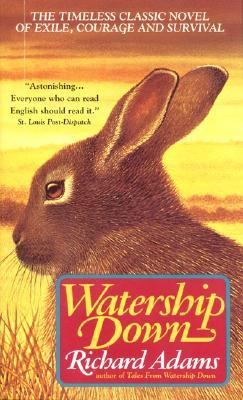
The novel by British author Richard Adams is about a group of bunnies who leave their warren. From that benign description emerges a profound tale that contains everything you could ever want in an adventure story–action, suspense, horror, even a mythos relayed through tales passed generation to generation (and given these are rabbits, that’s a lot of generations), delivered at a thumping pace. Adams’ rabbits could have easily been silly or twee, but the characterizations feel right–like actual rabbits, not humans in fuzzy suits, with their own language and worldview, and a puzzled hatred for a humankind that seems to want to wipe them off the earth. The animated movie is quite impressive too, though definitely not for young children. Hrududu!
Hot Fuzz
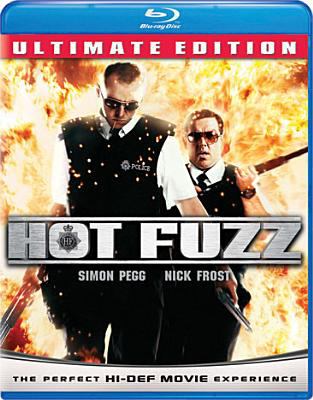
This British comedy throws a control-freak policeman–exiled from London for being too dedicated to his job–into a mercilessly quaint English village that harbors a secret, deadly conspiracy. It’s the middle entry of director Edgar Wright’s thematically connected “Cornetto Trilogy” (named after the cameos made in each of his movies by that British-based frozen treat) alongside Shaun of the Dead and The World’s End.
Your favorite may depend on your favorite genre: Shaun for zombie fans, Hot Fuzz for police procedural/cozy mysteries, The World’s End for a Big Chill type pub-crawl reunion that abruptly turns into….er, something else. They’re all involving, grisly, and hilarious, but while I found Shaun a little short and The World’s End a little long, Hot Fuzz was just right. The director commentaries are well worth the listen, as Wright and his pet actor Simon Pegg (who stars in all three) points out all the little loving, enriching details you took in only subconsciously the first time around.
Clothes, Clothes, Clothes. Music, Music, Music. Boys, Boys, Boys.

2014 autobiography by Viv Albertine
Albertine was guitarist for The Slits, the influential (deep breath) British-reggae-feminist-punk-girl-band, back at a time and place–1970s England–when girls did not play guitars in bands. Albertine escaped an abusive childhood through music, and taught herself to play, albeit crudely. Enthusiasm and energy, not musical virtuosity, was all you needed in the punk era.
The Slits, led by singer Ari Up, still in her teens when the band formed, are a respected obscurity now, best known for their ground-breaking 1979 debut LP Cut. But while never quite making the punk pantheon, Albertine was present during the creation, dating Mick Jones of The Clash and being in a band with Sid Vicious before he joined the Sex Pistols.
Albertine names names in Clothes…Music…Boys, even telling off her (former) manager for insisting she employ a ghostwriter for this autobiography. We’re the beneficiaries: Clothes…Music…Boys is feisty and direct, peppered with earthy, scabrous wit and graphic, brutal self-effacement, and Albertine is blessed with either voluminous diaries or a photographic memory. Sometimes it’s even touching, as when she describes seeing her brutal father, thin and wizened in his coffin, with Albertine and her young daughter the only ones at the funeral: “How sad to be lying there, all dressed up in your Sunday best, and no one wants to come and see you, no one wants to say goodbye.”
Alice in Sunderland
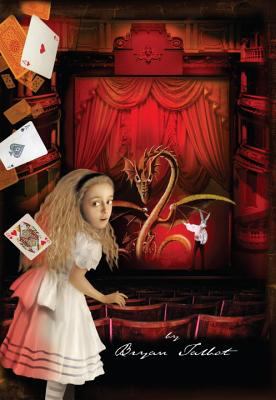
2007 graphic novel by Brian Talbot
For fans of Lewis Carroll or hard-core Anglo-culture afficionados, this veddy British project makes the case–via an overwhelming collage of fact and opinion delivered by cartoon pastiche, whimsical homage, and historical scrapbook–that it was the industrial Northern town of Sunderland that inspired Carroll’s wondrously nonsensical Wonderland, not the academic atmosphere of Oxford, where he taught and the milieu with which he’s identified. It’s a dizzyingly erudite dose of scattershot history, and if you don’t mind having your brain feel full to bursting, it might be your cup of tea.
Shameless Plug (also British-based):
Death in the Eye, my self-published murder mystery in the cozy Agatha Christie tradition, is available as a Kindle book and a paperback, and through the Hoboken Public Library’s Technology Lending program.

From the back of the print edition:
The year is 1924. Gwendolyn Parks, the blind young heiress of Pibble, a grand house outside London, has miraculously regained her eyesight after a tumble down the stairs after a dinner party. But it’s no cause for celebration. For Gwen did not fall — she was pushed, by someone at the party. Yet she tells no one, relying upon the miracle of her reclaimed eyesight to solve the mystery herself.
-Written by Clay Waters, Library Assistant


 Hoboken Library Staff Picks