Martha Ballard’s diary entries frequently contained this note when she wasn’t out delivering babies in Hallowell (now Augusta), Maine. She lived and operated in a world both uniquely familiar and starkly foreign to our own, a tight-knit 18th century community in which she played the vital role of midwife. She called on neighbors, attended church, worked in her garden, remembered anniversaries, and raised a family with her husband Ephraim, ten years her senior. Most importantly and notably, she kept a diary over the course of her last 27 years of life, recording her work, the daily goings-on in her community, and her life in over 10,000 entries between 1785 and 1812.
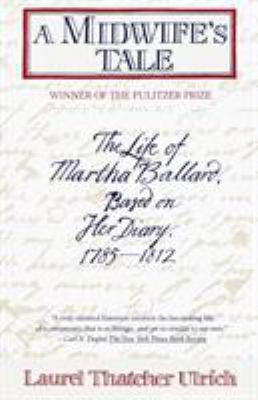
As I write this, I have also been at home. Hoboken is practicing social distancing due to COVID-19, and I can’t go out unless I need groceries or other essentials. If I want to take a walk for some fresh air, I can, but I have to keep six feet apart from other people. I could in theory take my cat for a walk in his stroller to get outside, but I’d worry that people would assume a human child was in there and I’d be branded an irresponsible parent. On the flip side, this means I’ve been getting a lot of reading done, so I finished my reread of Laurel Thatcher Ulrich’s A Midwife’s Tale in a few days. It was to be the historical nonfictional book club’s discussion book for April, but the date is now up in the air for the time being. I hadn’t read it since my undergraduate days at Gettysburg for my historical method class, but I recalled learning a lot about how to work with primary sources from it, so I picked it for the book club – and I am so glad I did. If you are interested in participating in our virtual book discussion starting on Friday, March 27 check out our calendar page.
In a way, it’s very relevant right now. When I first read the book, it was for purely educational purposes. I was reading it to learn how to utilize primary sources to tell an individual’s story, and I used what I learned within the next year when I took on my undergraduate senior thesis project, which involved extrapolating a story from a soldier’s court-martial. A reread of it now, though, gives the book new meaning. Right now, we’re living through a historical event. Life is going on as normally as possible as we remain in lockdown due to COVID-19, only going out for essentials and working from home if possible. Everyone’s searching for some normalcy, but at the same time we all know we’re living through something historic. I’ve decided to collect articles on COVID-19 and Hoboken for a future vertical file, but I’m also keeping a log of my activities during this period of social distancing because I know someday I’ll want to remember it all – or someone coming after me might want to know what it was like to live through this.
Martha didn’t particularly consider her diary to be historic. She mostly used it to record her daily life, the comings and goings of friends, family, and neighbors, and her midwifery business. She probably didn’t anticipate that it would be today sitting in a historical society, a testament to life in frontier Maine before Maine was even a separate state from Massachusetts. She definitely wouldn’t have imagined that nearly 200 years after her death in 1812 a historian would find her diary there and use it to patch her life together for modern readers. Martha wasn’t the sort of person who intended to be famous, if her no-nonsense diary entries are any indication. She’s now the subject of a Pulitzer Prize-winning piece of historical nonfiction. She’ll be remembered for eternity. She’s achieved immortality, so sought after by rulers of the past, and yet she was an ordinary, everyday woman with an ordinary, everyday – yet crucial – job.
In the spirit of Martha Ballard, I’d like to make a request of you all. If you read this blog post, please consider keeping a journal or a log of your life during this time. When we’ve returned to business as usual here in Hoboken, donate that journal or log or a copy of it to us here at the Hoboken Public Library. We’d love to preserve your story so that future generations can remember what life was like in this difficult time for all of us – and it’ll give you another thing to do during quarantine! We would appreciate your help in recording history – indeed, we’re living through it right now! Send us your activities, your photos, your videos – anything you feel we should save! This may not be the best historical event to live during, but let’s make the most of it and make sure that we’re remembered for what we did to save and protect others during this outbreak! After 9/11, HPL collected people’s memories and it was published by Wiley in publication September 11: Hoboken Remembers that is now part of our local history collection.
You can send any reflections, images, videos, or other items about your experience during quarantine you want preserved to stephanie.diorio@hoboken.bccls.org, and I’ll make sure they’re safe and protected for the future!
Oh, and one more thing – whilst you’re stuck at home, fill out that Census! You can do it online, and you’ll be helping future historians, archivists, and genealogists too! Your descendants will be able to find you in 72 years when they’re looking!
Stay safe, keep six feet apart, and wash your hands – we’ll get through this!
Written by:
Steph Diorio
Hoboken History Librarian
 Hoboken Library Staff Picks