Archive | Science Fiction and Fantasy Book Club RSS feed for this section

Selections from the Hoboken Public Library’s Science Fiction and Fantasy Book Club Part 3: Ringworld, Ghost Story, Frankenstein, and Hogfather

22 Dec

The HPL’s Science Fiction and Fantasy Book Club started in January of this year.  We have had great discussions each month of a different science fiction or fantasy book picked by the group.  Along with the selected works, group members discuss other favorite science fiction/fantasy books, TV shows, and movies.    We would love to have you join us in the New Year!  We will be reading Robert A. Heinlein’s Starship Troopers for January’s discussion, the first three L. Frank Baum books for February, and David Weber’s On Basilisk Station for March.  You can also check out my previous two blog posts (Part 1 and Part 2) to see other books the group read this past year.

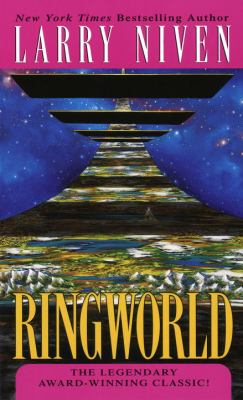
Ringworld, by Larry Niven
Ringworld
Ringworld resulted in a lively discussion amongst the group members and had the biggest turnout of any book discussion this year.  Several of the members of the book discussion group were huge fans of Larry Niven’s work and as a new reader to Ringworld it was nice to get their perspectives.  Niven’s work appeals to those who like hard science fiction and it is driven by ideas and science with characters and plot there to highlight these concepts.  Ringworld is a manmade ring shaped world which was abandoned by its creators who those left behind now worship as gods.  Four explorers: two humans and two aliens, make the journey to Ringworld.  I enjoyed the aliens that Niven created: the cat-like Kzin, and a Pierson’s Puppeteer who has two heads that it also uses as hands and whose brain is located at the top of its spinal column.  The group remarked Niven’s human characters also felt alien since they were living so far into the future and with the help of booster spice had the opportunity to live a long life of leisure.  It is a great adventure story.  The group did note though that the depiction of women was dated and would probably need to be updated if Ringworld was adapted in movie form for a modern audience.  The book has not yet been adapted to television or movies, but the video game Halo’s world was inspired by Ringworld.  If you enjoy Ringworld there are several sequels focusing on Ringworld, and Niven set several other works of his in the known space universe as well.

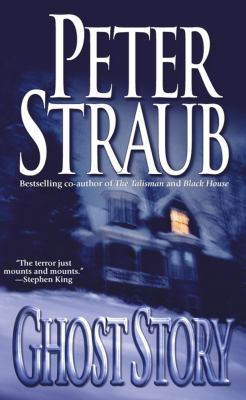
Ghost Story, by Peter Straub
ghost-story
The book club decided to read a classic work of horror for October’s book of the month, Peter Straub’s Ghost Story.  I’ve been known to have nightmares just from the commercials from horror movies so I decided this book would not be one I would be reading right before bed.  Ghost Story is the tale of “Chowder Society,” a group of friends that gather together to tell spooky tales, but the scariest tale of all is the one they are living through as a supernatural entity is out to seek revenge for an incident that occurred years earlier.  As well as his own works, Straub has also collaborated with friend and fellow horror great, Stephen King.  King has praised Ghost Story.  As is frequent in King’s works, one of the characters in the novel is an author whose own work informs what is going on in the small but not so idyllic town of Milburn, NY.  This book was not amongst the favorites overall of books we have read for the group.  Much of the group felt the pace was too slow and would have benefited from paring down the story significantly.  However, there were portions that were still riveting and the story holds up well even 35 years after initial publication.  Ghost Story seemed to the group to focus on the potential for evil to secretly lurk in those around us.  It also provides a meditation on the nature of long term friendships. The library showed the 1981 film that the book was based on for further discussion.

Frankenstein, by Mary Shelley

frankenstein
Frankenstein has become a part of modern pop culture with numerous reinterpretations like TV’s Herman Munster and even FrankenBerry, a cartoon character hawking sugary cereal.  The visuals of the iconic look of the character comes from Boris Karloff’s portrayal in the 1931, but the tragic story of man who sought create a life and instead created a monster came from the imagination of a young Mary Shelley. I read Frankenstein for a literature class taught by one of my favorite professors at Montclair State University.  The class centered on understanding the different types of literary criticism such as new criticism, feminist criticism, Marxist criticism, reader response and more using the text of Frankenstein to see how the book could be interpreted differently by each of these methods.  Having spent a whole semester so closely reading the book 15 years ago, I was looking forward to seeing how the members of the book discussion would react to Mary Shelley’s classic work.  And sure enough the insightful members of the group still had further interpretations of the novel including one unique perspective about the mystery elements of the work.  The wonderful part about book clubs is that they let you see books from not only your perspective, but also gives you the insights from other readers.  If you only are familiar with the films, you should definitely check out Shelley’s Frankenstein, which is often considered the first science fiction novel.

Hogfather, by Terry Pratchett

hogfather
Terry Pratchett is my father’s favorite fantasy author.  I can remember him passing along several of his favorites to me when I was a teenager.  Pratchett’s novels are hilarious and we thought his novel Hogfather (a Discworld version of Santa) would be the perfect way to celebrate the holiday season.  The Discworld is a magical realm filled with wizards, witches, and some magical creatures from Pratchett’s own imagination.  His work often pokes fun at other Science Fiction and Fantasy authors such as Tolkien and Lovecraft as well as satirizing modern daily life.  Hogfather takes a humorous look at the commercialism of our holidays.  As a fan of Nightmare Before Christmas, Death’s attempt to take over the part of the m.i.a. Hogfather reminded me and some of the other group members, of Jack Skellington’s similar efforts to replace Santa Claus in Tim Burton’s movie.  You can find many of Pratchett’s Discworld novels at BCCLS libraries and as eBooks for download for Hoboken Library cardholders from eLibraryNJ.  Group members noted that the novel has a more cohesive plot than much of Pratchett’s work and that although it features characters from other Pratchett novels, it is not necessary to have read the other books to enjoy this one.  The movie was adapted as a television movie in the UK and is available on DVD.  Although the movie’s special effects are not always the best, the acting is enjoyable.  Group members especially mentioned liking the portrayal of the villainous Teatime.

Hope to see you for our discussion of Robert A. Heinlein’s Starship Troopers in January!

-Written by Aimee Harris, Head of Reference

Selections from the Hoboken Public Library’s Science Fiction and Fantasy Book Club Part 2: Hitchhiker’s Guide to the Galaxy, American Gods, Hyperion, and Orlando

27 Aug

The HPL’s Science Fiction and Fantasy Book Club meets monthly.  Each meeting a different science fiction or fantasy book is picked by the group.  Along with the selected works group members discuss other favorite science fiction/fantasy books, TV shows, and movies.  If you would like to be added to the mailing list to keep up to date about what is being read, email hplwriters@gmail.com  The next book we will be reading is Larry Niven’s Ringworld, for the meeting on September 22 at 6 pm.  We have the rest of the year planned out as well; we will be reading Peter Straub’s suspenseful Ghost Story in October, Mary Shelley’s classic Frankenstein in November, and Terry Pratchett’s humorous Hogfather in December.  We would love to hear your ideas for books for the group to read in the upcoming year.

Hitchhiker’s Guide to the Galaxy, by Douglas Adams

hitchhikers-guide-to-galaxy
I had first read the Hitchhiker’s Guide to the Galaxy back when I was in middle school and rereading it turned out to be as funny and engaging as in my memory.  The book centers around Arthur Dent, who after watching his home be destroyed to build a highway, then finds earth also has been destroyed by aliens planning a similar interstellar project.  Throughout are entries from the “Hitchhiker’s Guide to the Galaxy,” which tell its readers why it is always important to carry a towel and how the Babel Fish inserted in one’s ear allows you to understand any language. The absurd humor is of the type that I find uniquely British so if you are fan of Monty Python or Dr. Who, Hitchhiker’s Guide to the Galaxy should tickle your funny bone.  Adams satirizes everything from government, politics, business, religion, poetry, and philosophy.  A few of the members of the group felt it lacked any real “science” for science fiction, but we agreed that if you are looking for something humorous Hitchhiker’s Guide to the Galaxy is a good  choice.  It is a very quick read so if you haven’t checked it out yet, I highly recommended it.  The library also held a screening of the 2005 movie adaptation and we hope to have screenings of adaptations of Frankenstein and Ghost Story as well in the upcoming months.

American Gods, by Neil Gaiman

american-gods
You may remember I had previously done a post on Neil Gaiman, who is one of my favorite authors.  I was therefore excited when the group chose American Gods for our June book club choice.  We read the author’s preferred text, which was released for the 10th anniversary of the novel.  American Gods mixes old gods from myths and legends that came over to America with immigrants, such as Anansi from Africa and Odin from Scandinavia, with the new “gods” from our modern society, such as Television, Media, and the Internet.  American Gods revolves around antihero Shadow, who has only recently been released from jail and becomes a pawn in the coming war between the new and old gods.  Although I have found sometimes the author’s preferred text are bogged down in unnecessary exposition that a skilled editor would leave out, in this case American Gods held my interest even with the additional text, though those with less time may prefer the shorter original edition (both are available from BCCLS libraries).  This rich novel gave the group a lot of great topics to discuss. If you enjoy this work also check out Gaiman’s Anansi Boys which further develops the world that Gaiman created in American Gods, this time focusing on the sons of Mr. Nancy (aka Anansi).

Hyperion, by Dan Simmons

hyperion
Dan Simmons has a bit of something for everyone in Hyperion.  Those who enjoy literature will enjoy the conceit of this Science Fiction novel having seven pilgrims on their way to a planet called Hyperion sharing their stories reminiscent of The Canterbury Tales (these include a scholar, poet, priest, detective, soldier, and consul) as well as the reference to poet John Keats and his works. Hyperion also contains elements of horror in their dealing with the mysterious Shrike.  There is even some romance in three of the stories as well in the mix.  My favorite was the Scholar’s Story, but each had interesting characters and a thought-provoking tale.  It was fun to hear the different group member’s perspectives on Hyperion.  One member of the group found the first story from the priest boring and slow moving, while another thought it was the best story in the book.  The character of the poet, Martin Silenus, was also polarizing with some of the group enjoying his antics and others finding him irritating.  This novel brought up some great debates about various elements and characters.  Check it out and see what you think!

Orlando, by Virginia Woolf

orlando
For the book club’s first female author we decided to go with not just a fantasy classic, but a classic work of literature, Virginia Woolf’s Orlando.  Many of the group had seen the movie adaptation, but were curious to read the novel that inspired it.  The group was mixed in their reaction to Orlando with some praising it highly and others finding it difficult stylistically to get through.  However, everyone found a lot to talk about and discuss in this thought provoking novel.  What gives this classic its fantasy twist is that Orlando not only has an extraordinarily long life (living from the time of Queen Elizabeth into the twentieth century), but that half way through the novel he magically changes gender and becomes female.  Orlando explores the notions of both gender and sex and the expectations society places on men and women.  It therefore leads us to question the ideas that come with an insistence on a gender binary.  We can see the seeds of what many contemporary women authors write about when dealing with gender planted in Orlando and it resonated with me as a precursor to Jeannette Winterson and Sarah Waters works, both of whom I wrote about in June for our Pride month blog.

Jeanette Winterson wrote an informative and thought provoking intro to one edition of Orlando, an excerpt of which you can read here. Winterson states, “Orlando refuses all constraints: historical, fantastical, metaphysical, and sociological. Ageing is irrelevant. Gender is irrelevant. Time is irrelevant. It is as though we could live as we always wanted to; disappointments, difficulties, sorrow, love, children, lovers, nothing to be avoided, everything to be claimed.”  This to me is what the best science fiction and fantasy allow, us to move beyond and question the world as it is and look at it for better or worse the way it could or can be.

Hope to see you for our discussion of Larry Niven’s Ringworld in September!

-Written by Aimee Harris, Head of Reference