Archive | Poetry RSS feed for this section

Writing Inspiration: A Love Song to the Lonely

10 Apr

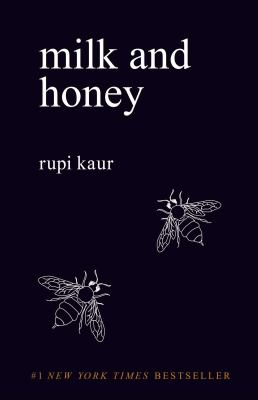
MilkandHoney
I had written about one of New York Times bestsellers “Milk and Honey” by Rupi Kaur, as poetry that is an outstanding understatement. Now, for National Poetry Month, I second that opinion with this next poem from that same chapter “the loving”.

“i do not want to have you night / to fill the empty parts of me / i want to be full on my own / i want to be so complete / i could light a whole city / and then / i want to have you / cause the two of us combined / could set it on fire”

As I’ve said before, “Milk and Honey” is not only a collection of poetry and prose about survival, it’s also a love song. This book calls to everyone, with its four chapters labeled, “the hurting”, “the loving”, “the breaking”, and “the healing”. During these times I find myself in the chapter “the loving”, specifically this poem.

Just as the poems have no titles, we have no name for this time we are all experiencing. This can be seen as an editing choice or a purposeful choice that is supposed to signify unity. Alluding to my idea, we see this from the chapter “the loving”. The last two lines of said poem can be found on page 59 and it reads:

cause the two of us combined / could set it on fire”

We are all in a time that we are all in. Everyone is experiencing suffering, pain, hurt, loss, and depravity, but we are all experiencing it together. In a time where some of us may be feeling lonely during isolation, let this poem remind you that you are not alone. This is a time for everyone, for you, to become great and to love yourself, so when we finally get together once again, we will light up the whole world.

Of course this is just my own emotional connection to this particular prose, as there are other particular depths within me that it reaches also. But as a whole this speaks to a deeper and somewhat neglected part of myself that calls to light how I see, treat, and care for myself emotionally, physically and spiritually.

Now is the time to love ourselves, to love one another, and feed into our neglected souls so when the isolation is lifted and we are ready to come back out, we set the world glowing with unity.

For more on poetry, please feel free to visit our Facebook and YouTube for some cool videos and our website for ways on how you can read online through our apps.  You can try writing some of your own with our Friday Writing Prompt featured below.

Written by
Sherissa Salas
Adult Programming Assistant/Media Liaison

Friday Writing Prompt:
Poetry can be intimidating since we do not encounter it as frequently on a daily basis as many types of writing, however, April being Poetry Month, it is the perfect time to dive in and give it a try, even if you never have before.  The best way to get a feel for poetry is by reading other poet’s works.  You can check out a variety of poetry collections including Kaur’s Milk and Honey on Hoopla.

Take inspiration from the beautiful lines of Kaur’s poem that Sherissa shared and think of how your own loneliness makes you feel.  What about it do you enjoy and what do you dislike?  What imagery or objects do you associate with it, that you could use in your poem?  What person have you not been able to see in the last few days, whom you miss, is the first you would like to see again?  How will you feel when you see them?  What will the experience be like?  Is there a specific imagery or object you associate with being together with them you could use in your poem?  Now get writing!  And if you like your poem consider sharing it with the person you were inspired by.

Have a favorite poet?  Share in our comment section!

Written by:
Aimee Harris
Head of Reference


Deaf Republic by Ilya Kaminsky

11 Jul

Deaf Republic
In school, we learned about history’s atrocities and I’m sure I’m not the only child who thought, “Why didn’t people do more? Why didn’t they stand up and fight?” As an adult, it has become clear that things are not always so simple.

All around the world, there are wars, there are atrocities being committed, but yet…people go on with their daily lives. And if the horror is not visible, if it is not directly affecting someone, then most people tend to shove it to the back of their minds. It’s normal, no one likes to feel disquieted and uncomfortable. But is our silence just? That’s another story…

Ilya Kaminsky’s “Deaf Republic” begins with the following poem, titled “We Lived Happily During the War”:

And when they bombed other people’s houses, we

protested
but not enough, we opposed them but not

enough. I was
in my bed, around my bed America

was falling: invisible house by invisible house by invisible house.

I took a chair outside and watched the sun.

In the sixth month
of a disastrous reign in the house of money

in the street of money in the city of money in the country of money,
our great country of money, we (forgive us)

lived happily during the war.

Deaf Republic is a collection of poems woven together to form a narrative story, so those who usually aren’t too into poetry can still read this with ease. The story begins after the above poem: It is a time of unrest and violence in the fictional town of Vasenka. Soldiers come to town and kill a deaf boy. After the shot rings, the townspeople become deaf themselves. Consequently, they teach themselves sign language, which is illustrated throughout the book. The book is divided into two Acts. The first Act follows a newlywed couple, Alfonso and Sonya, while they are expecting their first child. The second Act follows Mama Galya, the head of the puppet theater, as she leads an insurgency against the military.

In “Deaf Republic”, we are confronted by silence in a myriad of ways. Silence in the face of oppressors can be powerful and defiant. (Citizens point to their ears as soldiers bark orders at them, they create their own sign language) Silence in the face of the oppressed can be devastating. (They take Alfonso / and no one stands up. Our silence stands up for us.)

“Deaf Republic” is a powerful read. It is a beautifully written piece with verses that will make you gasp in amazement. And yes, it is unsettling. But I would argue that more than ever, we need to learn to make peace with the feeling of uneasiness. We need to look inward, as painful as that may be, and use that uneasiness and discomfort to go about making change. And that’s something I’m still trying to grapple with: often, the right thing to do is not easy.

At the trial of God, we will ask: why did you allow all this?
And the answer will be an echo: why did you allow all this?

Besides being available in print, Hoboken and other BCCLS patrons can borrow “Deaf Republic” as an ebook from eBCCLS.

Written by:
Samantha Evaristo
Hoboken Library Outreach Assistant