Archive | Nonfiction RSS feed for this section

The Bad Guys Won!: Revisiting the 1986 New York Mets

20 Nov

I am a New York Mets fan, so I was overjoyed when the Mets made the playoffs this year after several down seasons. I wore blue and orange to the library to show my support. The day after games I came to work bleary eyed and clutching coffee after staying up late to watch west coast games and games that went into extra innings.

Back to the Future II predicted that the Chicago Cubs would win the World Series in 2015, but that was not to be. In reality, the Mets lost the title to the Kansas City Royals. But the Mets have a young pitching staff with priceless playoff experience and I am excited about what the future holds for Queens.

bad-guys-won

A friend told me about The Bad Guys Won! by Jeff Pearlman, which is a history of the World Champion 1986 Mets team. I read the book during the 2015 Mets playoffs run to send some 1986 luck their way, and to learn more about the team and the Mets’ history. I was only four years old in 1986, and my idea of appointment television was Fraggle Rock, so I did not watch that World Series. Also, I was most likely sent to bed long before first pitch.

Before reading the book, I knew that the 1986 Mets team liked to party; that they won 108 regular season games; that Red Sox first baseman Bill Buckner bobbled a ground ball hit by Mookie Wilson that allowed the winning run in Game 6 of the World Series; and that the roster included famous Mets such as Gary Carter, Darryl Strawberry, Keith Hernandez, Ron Darling, and Dwight “Doc” Gooden.

This book was well-researched and included interviews with the players and coaches. The first chapter opens with the Mets’ flight to New York from Houston after clinching their World Series spot that includes epic levels of partying, a midair food fight, and some vomit. That story was the perfect way to introduce the team and bring readers into the story.

The narrative descriptions of the World Series game were exciting to read. It also showed the Mets could be as frustrating to watch then as they are now. One entertaining story was when the Mets were down 5-3  in Game 6 and a Red Sox victory seemed imminent, a rally started. Gary Carter, Kevin Mitchell, and Ray Knight (who would later score the winning run on Mookie’s grounder) all got on base with two outs and all told the first base coach Bill Robinson that they were “not scoring the last out of the World Series”, in so many words with various expletives.

Something else I liked about the book was that it wasn’t too heavy on baseball statistics. Personally the emphasis on statistics is my favorite aspect of baseball, but if you don’t understand what OBS is then it can seem like a foreign language. If you are a baseball stats nerd like me, then you should read Moneyball by Michael Lewis, or see the film adaptation by the same name.

The Bad Guys Won!, which was published in 2004, made me think about how sports have been changed by modern technology. In baseball, officials have access to video replays for contested plays that could change the game for better or for worse. (Mets fans recently experienced this in NLDS Game 2.) Social media is prevalent and many players are on Twitter, Instagram, Facebook, etc. Smartphones have made it hard to conceal any bad behavior by players off the field, as websites like Deadspin and TMZ Sports will get the story plus any incriminating images and video. The 1986 Mets, in particular a small segment of players that called themselves the Scum Bunch, were very lucky to precede those sites.

In recent years baseball has been rocked by steroids and performance enhancing (PED) drug scandals that culminated in the 2013 Mitchell Report, an independent investigation of drug use in the sport that led to several player suspensions. Roger Clemens, who pitched for the Red Sox in the 1986 World Series and appears in the book, was named in that report.

This book is a great choice for any Mets fans, particularly those who followed the 1986 season. If you’re more interested in Bill Buckner’s bobble, watch season 8 of Curb Your Enthusiasm, which revisits that infamous play.

My theory is that the Mets will win the World Series in 2016. Why? Because it will be 30 years after the legendary 1986 New York Mets team won the title. The Royals won their last title in 1985. If it worked for them, it can work for the Mets.

I’ll let Mets starting pitcher Noah Syndergaard close out this post with a tweet he posted after the World Series:


-Written by Kerry Weinstein, Reference Librarian

Malala, Modern Age Heroine: Six More Heroines You Should Know

11 Nov

Out of sheer curiosity, I asked my kids in the YA Department, “Who is Malala Yousafzai?”  I got sporadic answers like “She’s an activist,” “She got the Nobel peace prize,” and “She got shot!” (That last one was said a bit dramatically.) They got the idea of who she was. The kids may not be able to fully relate to her but they feel a kinship with her because she is their age. Malala is looked to as a hero by people of all ages, including myself. She lived in a part of Pakistan where the Taliban took over. Talibs did not see education as valuable especially for girls. In effect, Malala fought hard for equal education. For her efforts, she was shot in the head at 15 years old by the Taliban on her way to school. It took about a year for her to recover. This experience only made her fight harder for girl’s education. She founded the Malala Fund to raise awareness and money for girl’s education across the globe. Schools in remote parts of the world like a Syrian refugee camp have benefited from her fund. In 2014, she became the youngest recipient of the Nobel Peace Prize. She even documented her experience in the book, I Am Malala. There are two versions, with one targeted to a young adult audience. To commemorate her efforts, her documentary has just been released about her life as one of the world’s youngest humanitarians.

To echo the words of Malala, “I tell my story not because it is unique, but because it is not.” She is one of many that fights or have fought for quality education for all. Below I have made a nonfiction book list of different Malala’s of different times and countries even our own. Here are some books that put the value of a quality education into perspective and others that tell what happens when that opportunity is taken away.

The Underground Girls of Kabul: In Search of a Hidden Resistance in Afghanistan, by Jenny Norberg

underground-girls-kabul

Even though I read this book earlier this year, I still look back at it with awe. It spoke of women’s issues and restricted rights in present Afghanistan. It appealed to me as an historian because it told of Afghanistan’s rich history. It also had an almost unbiased view of the rules that structure the society of the afghan people. In a society like Afghanistan, men are more valued because they are not limited by the demands of marriage and childbirth as women are. But, women found a way to combat this cultural sexism. The author zeros in on the practice of bacha posh, translated means like a boy. The practice is dressing a girl as a boy for the various reasons. It can be to give the family security in the absence of a male relative, generate income for a family by making the child the breadwinner, or for the simple reason of getting a quality education. Nordberg digs deeper into the psyche of the bacha posh. For example, by interviewing two women that are among the few to attend the university attested their success to being a bacha posh growing up. I’d recommend this book to anyone because it is an elegantly written and shows the resilience of the women of Afghanistan as opposed to certain popular news media. Recommended for ages 18+.

Reading Lolita in Tehran: A Memoir in Books, by Azar Nafisi

reading-lolita-in-tehran

This is the story of Azar Nafisi’s experience in the Islamic Republic of Iran as an educated professor forced to teach in secret. She takes seven of her most committed female students to continue their education in secret even from their own families. Pr. Nafisi has them read forbidden western classics authored by Jane Austen, F. Scott Fitzgerald, and Vladmimir Nabokov. The women accepted the challenge and educated themselves through these banned books. They further explored their wants in life or their frustrations at the world closing in around them. More importantly they discovered freedom in the very crime that they commit. Reading! Recommended for ages 18+.

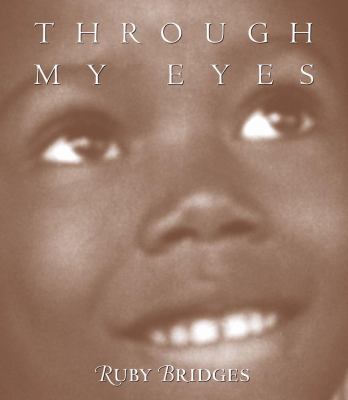
Through My Eyes, by Ruby Bridges

through-my-eyes

Ruby Bridges, a famous civil rights activist, wrote this book in the perspective of her six year old self. She reflects on her harrowing experience of coming to terms with racism and violence for being one of the first African-Americans to attend an all-white school in New Orleans. Although, Ruby was in the protection of U.S Marshalls, they could not protect her ears from the threats that white supremacists shouted every day. One threat in particular was a lady threatening to poison her. Being six year old, Ruby takes it so seriously that she only eats plastic wrapped food. Through the chaos, shines the genuine love of her parents and her teacher, Mrs. Henry. Observations of young Ruby at the time were portrayed through written excerpts by her teacher, her parents, and even famous news publications like The New York Times. Although, this book is for ages 8 up, I enjoyed the testimony of bravery as an adult. (6 year old + desegregation = equal education.)

The Little Rock Nine

warriors-dont-cry

The Little Rock Nine is another name one should come across when reading of the Civil Rights Movement. The desegregation of Central High School in Little Rock, Arkansas was years before Martin Luther King’s “I have a Dream” speech. The Little Rock Nine was a group of nine African American students that challenged the “Jim Crow law” to go to an all-white school. The experiences of these nine brave souls was very similar to Ruby Bridges but each unique in their own right. In the books, The Long Shadow of Little Rock: A Memoir by Daisy Bates, Warriors Don’t Cry: The Searing Memoir of the Battle to Integrate Little Rock’s Central High by Melba Pattillo Beals, and Elizabeth and Hazel: Two Women of Little Rock by David Margolick, are just some that will forever be immortalize Little Rock Nine. Recommended for ages 16+.

The Freedom Writers Diary: How a Teacher and 150 Teens Used Writing to Change Themselves and the World Around Them by the Freedom Writers

freedom-writers-diary

This book is the true story of Erin Gruwell and her students fight for a quality education facing gang members, abusive relatives, and school politics. The school they attended was in an inner city area where guns and drugs are a way of life for most students. Mrs. Gruwell is a first year teacher that gets assigned the “unteachable” students. These students are assigned to her with the intent to pass them through high school because what was the point of teaching them when they were either going to die or get pregnant by age 17. But, Mrs. Gruwell had the opposite in mind. Over time, she takes each hardened student and ingrains in them hope and confidence through her teachings that were related to their daily lives. Her success showed in the fact that all her students got to graduate high school. Some even got to be the first in their family to attend college. This book has been adapted into a movie (The Freedom Writers) with Hilary Swank as Erin Gruwell. This book reflects on the education in most inner city schools that are simply given up on. The stories of these students and Mrs. Grewell are not unique. There are hundreds of failing schools in the U.S. with people like Mrs. Gruwell. This is a sad fact. This is an excellent book for especially educators. Recommended for ages 14+.

I am Nujood: Age 10 and Divorced, by Nujood Ali

i-am-nujood

Nujood Ali was 10 years old when she was married off to a man three times her age in Yemen. As child bride, she was abused in her new home at the hands of her mother-in-law and husband. When she had enough of her situation, she runs away to the courthouse to get a divorce. With the help of a Yemeni lawyer, she was granted a divorce and makes a movement to increase enforcement of banning the marriage of underage brides in Yemen, like her sister and in other Middle Eastern countries. If education was a priority to Nujood’s family, would she have been married off at 10? I believe not. It is a book of a young girl’s bravery to go against her culture to find her own voice and freedom.  Recommended for ages 18+.

-Written by Elbie Love, Young Adult Library Assistant