Archive | Nonfiction RSS feed for this section

Breakout the Seedcakes and Blackberry Tarts: Celebrate the 125th Anniversary of Tolkien’s Birth!

6 Jan

January 3 is the 125th birth anniversary of J.R.R. (John Ronald Reuel) Tolkien who was born in 1892 in what is now South Africa in Bloemfontein.  Tolkien’s hobbits celebrated their byrding days (birthdays) by giving gifts to others rather than simply receiving gifts themselves.  Tolkien has clearly gifted the world with his writing; his work has been translated into over 60 languages as well as having been adapted as movies and even video games.  This is the perfect time to come in and check some out some of his writing and works he inspired today.

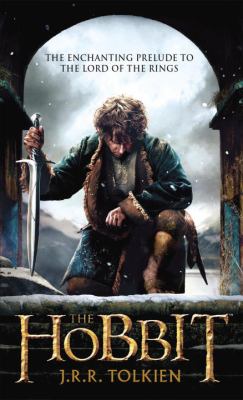
The Hobbit: or, There and Back Again

hobbit
The first and perhaps the most accessible of Tolkien’s novels set in middle earth, The Hobbit tells the story of Bilbo Baggins, a hobbit whose life is changed when Gandalf the Wizard transforms his safe ordinary life into one of adventure.  My first encounter with it was the cartoon from the late 1970’s, which is available at some BCCLS libraries.  Also available to check out is Tolkien’s epic Lord of the Rings published as three volumes (The Fellowship of the Ring, The Two Towers, and The Return of the King) which continue to be influential on many contemporary writers and is the archetype of High Fantasy.  If you would like to start listening to them right now visit Hoopla for digital audiobook copies.

The Lord of the Rings and The Hobbit Films Directed by Peter Jackson

lord-of-the-rings-film.jpg
You can borrow several of the ambitious films that Peter Jackson directed including The Lord of the Rings: The Two Towers, The Lord of the Rings: The Return of the King, and The Hobbit: An Unexpected Journey from HPL.  I saw The Lord of the Rings trilogy with my father who was overjoyed with the special effects laden and visually stunning adaptations of books he had loved as a teenager.  The Hobbit movies were a bit controversial with some fans due to the addition of new characters and plot lines to allow for three films; check them out and see what you think.

Video Games Set in Middle Earth

lego-lotr.jpg
Not satisfied with merely reading or watching about Middle Earth, immerse yourself in the epic battles with Lego The Lord of the Rings for the Xbox 360 or PS3.  The game allows you to unlock over 80 playable Lego versions of Middle Earth characters.   This game is rated E 10+.  For those looking for a more adult game check out Middle-Earth: Shadow of Mordor for the PS3, PS4, Xbox One, or Xbox 360 rated M; you play as Talion, a Ranger of the Black Gate and is set prior to the events in Lord of the Rings.  Also available is the rated M game The Lord of the Rings. War in the North for Xbox 360.

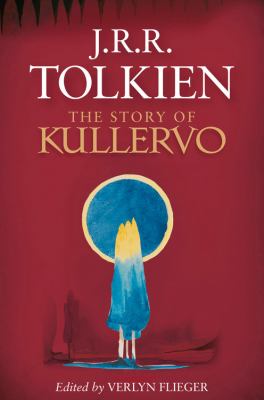
The Story of Kullervo

story-kullervo
If you are already a fan of Tolkien and looking for something new then you might be intrigued by The Story of Kullervo.  Although only recently published, The Story of Kullervo is an early short story from circa 1915, which is based on part of the Finnish epic Kalevala.   Also included are transcripts of Tolkien’s talks on Kalevala.

The Fellowship: The Literary Lives of the Inklings: J.R.R. Tolkien, C. S. Lewis, Owen Barfield, Charles Williams by Philip Zaleski and Carol Zaleski

fellowship-inkling.jpg
Tolkien was part of a literary club in 1932 called the Inklings, who first met at Oxford University. The Inklings critiqued each other’s works and debated the hot topics of the time.  The Fellowship focuses on four of the groups most famous members and it is an interesting look at some of the forces that shaped Tolkien and his work.  Looking for more in-depth insight into Tolkien’s work?  You can also borrow from HPL The Tolkien Companion by J. E. A. Tyler and Exploring J.R.R. Tolkien’s The Hobbit by Corey Olsen.

-Written by Aimee Harris, Head of Reference

Dewey Decimal Challenge: 52 Books in 52 Weeks: Book 1: Encounter in Rendlesham Forest by Nick Pope with John Burroughs, USAF (Ret.), and Jim Penniston, USAF (Ret.) (The 000s)

4 Jan

The first nonfiction chapter book that I read over and over again until the cover fell off was journalist Peggy Orenstein’s Schoolgirls: Young Women, Self-Esteem, and the Confidence Gap. Orenstein’s book, which explores the lives of teenage schoolgirls at two West Coast schools, was motivated by a 1990 study from the American Association of University Women. The study revealed that young girls’ self-esteem declines when they reach adolescence, which is in turn associated with a decline in academic achievement especially in math and science.  I was eleven, I was floored, and I was instantly hooked on the nonfiction genre. Popular science? Count me in! Biography? Sign me up! And my all-time favorite subgenre growing up and to this day: True Crime. From toilets (The Big Necessity: The Unmentionable World of Human Waste and Why It Matters by Rose George) to crime science cleanup (Aftermath, Inc.: Cleaning Up After CSI Goes Home by Gil Reavill) to traffic (Traffic: Why We Drive the Way We Do (and What It Says About Us) by Tom Vanderbilt), I would leave the library with nonfiction books stacked up to my chin.

It wasn’t until I bought my first smartphone about two and a half years ago that my enthusiasm for nonfiction books began to wane. I became a news junkie, constantly checking my preferred news outlets for the most up-to-date information.  Perhaps to find some relief from the seemingly constant barrage of terrible world news, I started reading Elin Hilderbrand romance novels and learned to appreciate her masterful scandal crafting as well as her picturesque Nantucket backdrops. When I did pick up a nonfiction book, it felt like a slog through each chapter. My attention span actually felt shorter!

With all of that being said, it’s a new year, and I am ready to kick it back into high gear with regard to book consumption by participating in a 2017 Dewey Decimal Challenge. Starting January 2017 and ending in December 2017, I will be reading one nonfiction book per week that represents one of the classifications within the Dewey Decimal System. In total, I’ll be reading fifty-two nonfiction books on a huge range of subjects, and I’ll post my reviews in this blog. Most individuals only venture into the nonfiction section when they are looking for information–few think of it as a leisure reading section (Ed. note: I read nonfiction for leisure! -kw). My goal is to showcase the library’s nonfiction collection in a new and exciting way and, hopefully, help you find some titles to read purely for enjoyment.

If you are unfamiliar with the Dewey Decimal System, a nonfiction classification system used by public libraries around the world, fret not! The System groups subjects, keeps similar books together, and aids in browsing. Numbers are used to represent different subjects within the nonfiction collection. There are ten main classifications (with many more subcategories!).  You can check out an overview on Wikipedia at this link. I will select five books to read over the course of five weeks from each of the ten broad Dewey classifications. This will equate to a total of 50 books with the remaining two books selected at random.

For our first five weeks, we will be hanging out in the 000 Generalities classification. The 000s include the following subcategories:

  • 000 Computers, Loch Ness, Bigfoot, UFOs, Aliens
  • 020 Libraries, Encyclopedias & World Record Books
  • 030 Encyclopedias & World Record Books
  • 060 Museums
  • 070 Newspapers

Without further ado, let me review my first title of fifty-two!

Encounter in Rendlesham Forest by Nick Pope with John Burroughs, USAF (Ret.), and Jim Penniston, USAF (Ret.) (001.942 POP)

encounter-rendlesham.jpg

My first book choice for the challenge was a no-brainer for me as I have always been fascinated by the idea of flying saucers and Martians. I remember reading Whitley Strieber’s Communion: A True Story as a young teen and being so terrified that I would hide the book in another room before going to bed. Talk about the power of language! The cover of that book still gives me the heebie jeebies to this day. As I got older, I sought out less sensational accounts of extraterrestrial visitation. And, while I cannot say that I wholeheartedly believe that we are being visited by alien life forms, I will say that I find accounts of UFO sightings from military personnel to be thought-provoking and sometimes deeply unsettling.

In Encounter in Rendlesham Forest, Nick Pope, a retired member of Britain’s Ministry of Defence and former member of the MoD’s section of Secretariat whose duties included investigating reports of UFO sightings, examines a famous series of UFO sightings that occurred in Rendlesham Forest in Suffolk, England, in late December 1980. He is aided in his examination by John Burroughs and Jim Penniston, two retired United States Air Force personnel who were stationed at the US Air Force base adjacent to Rendlesham Forest when the incident took place. Both men claim to have had a close encounter with a UFO in the forest on the night of December 26, 1980, while investigating a report from a security patrol of lights descending into the area. Physical evidence, including indentations in the earth, tree damage, as well as abnormal levels of radiation, was found at the scene. Over the course of three nights, December 26 through December 28, dozens of military personnel, including high ranking officers, witnessed strange phenomena not limited to lights in the distance but actual beams of light descending from the sky at close range. Encounter in Rendlesham Forest includes first-hand accounts from key witnesses; a detailed timeline of each night’s events; the procedures followed (or in many instances NOT followed) by the US Air Force and the Royal Air Force with regard to the incident; exploration of theories put forth by ufologists as well as the media following the incident; examination of accusations of a cover-up; as well as brief mentions of other UFO sightings that Pope believes are of significance with regard to military defense.

While I did not find this book enjoyable due to Pope’s writing style, which, at moments, seems like the ramblings of a fanatic after one too many cups of coffee, along with his habit of condemning speculation while being prone to speculation himself, I was interested in his insider knowledge with regard to how governments dodge UFO-related inquiries from the public, which includes commissioning  investigators from the private sector in order to avoid having to release information made accessible by the Freedom of Information Act. In addition, Pope devotes one chapter to Project Condign, the result of which was an extraordinary document titled “Unidentified Aerial Phenomena in the UK Air Defence Region. This document is a compilation and analysis of data drawn from approximately 10,000 UFO sightings and reports gathered by a section of the Directorate of Scientific and Technical Intelligence within the Defence Intelligence Staff whose parent organization is the Ministry of Defence. According to Pope, not only does this document acknowledge the existence of UFOs, but it addresses the race between governments to harness observed UFO technology for use as a weapon.

Ultimately, Pope provides the reader with some very compelling material but in a way that is, unfortunately, barely coherent at points. I would not recommend this book, but, if you are interested in reading first-hand accounts of UFOs from reputable sources, I would enthusiastically recommend Leslie Kean’s UFOs: Generals, Pilots, and Government Officials Go on the Record. Interestingly, Kean’s view on UFOs is conservative in that she insists that acceptance of the existence of UFOs does not mean acceptance of the existence of extraterrestrial life. Who knows what else they might be!

Until next week, happy reading!

-Written by Sharlene Edwards, Senior Children’s Librarian

Click here to read past posts about Sharlene’s Dewey Decimal Challenge!