Archive | Nonfiction RSS feed for this section

The Graphic Treatment: Non-Fiction Graphic Novels for You to Check Out

15 Feb

One thing that I’ve really enjoyed since becoming a fan of sequential art books (aka graphic novels; aka comics) is the discovery of non-fiction stories told in comic form. Just as with typical non-fiction books, there are non-fiction graphic novels on every topic imaginable.  From the history of beer (The Comic Book Story of Beer: The World’s Favorite Beverage from 7000 BC to Today’s Craft Brewing Revolution by Jonathan Hennessey) to the American Civil War (Battle Lines: A Graphic History of the Civil War by Ari Kelman) no topic is too big or small for the graphic treatment.

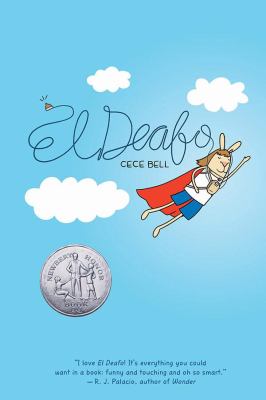
El Deafo by Cece Bell

el-deafo.jpg

The first non-fiction graphic novel I recall reading and enjoying was Cece Bell’s El Deafo. This book is for children but I think anyone would enjoy it. Bell recalls what it was like growing up hearing impaired. She imagines herself as a superhero who, with the help of her hearing aids, can hear people speaking in other rooms. But it can be lonely being different and Cece’s story will resonate with many.

For more graphic biographies try:

The Imitation Game: Alan Turing Decoded by Jim Ottaviani

imitation-game.jpg

Amazing Fantastic Incredible: A Marvelous Memoir by Stan Lee

amazing-fantastic-incredible

Michael Jordan: Bull on Parade by Wilfred Santiago

michael-jordan

Persepolis by Marjane Satrapi

persepolis

Maus: A Survivor’s Tale by Art Spiegelman (a classic!)

maus

The March series (Book One, Book Two, Book Three) has won numerous awards since its debut including the 2016 National Book Award.  It depicts Congressman John Lewis’ first-hand account of the Civil Rights Movement. Although I’ve read several books on the subject, this series helped me to truly understand how astonishing the movement was.

march-book-one.jpg

Although it’s short, and cannot possibly cover everything about Hurricane Katrina, Drowned City: Hurricane Katrina & New Orleans by Don Brown still revealed some facts that I did not know, or that I had forgotten about the devastating event. The brief, stark narration and dialog convey the confusion, anger, and sadness in the storm’s aftermath.

drowned-city.jpg

But maybe you’re looking for something a little more fun? Check out Human Body Theater: A Non-Fiction Review by Maris Wicks. Described as “The all-singing, all dancing anatomy extravaganza”, this book presents scientific information about human anatomy with easy to understand and humorous illustrations and dialog.

human-body-theater.jpg

The library also has books on The Gettysburg Address: A Graphic Adaptation and The United States Constitution: A Graphic Adaptation, both by Jonathan Hennessey, and Charles Darwin’s On the Origin of Species: A Graphic Adaptation by Michael Kelly.

And if none of these topics interests you, but you’d like to read something else in graphic novel format you can drop by the library to browse our non-fiction graphic novel section to see everything that we have!

-Written by Kim Iacucci, Young Adult Librarian

Dewey Decimal Challenge: Book 5: Irons in the Fire by John McPhee (The 000s)

8 Feb

For our fifth and last book in the 000s, I selected another title from the 080 general collections classification–specifically 081 general collections American. Irons in the Fire is a collection of essays, previously published in The New Yorker, by American writer John McPhee, the man who is referred to as the pioneer of creative nonfiction. The seven essays in this collection span a wide-range of topics from cattle rustling to assistive technology for the blind to tire recycling to forensic geology to Plymouth Rock.

Irons in the Fire by John McPhee (081 MCP)

irons-fire.jpg

This has been my favorite pick of the Dewey Decimal Challenge thus far. McPhee’s writing style has been referred to as gentler, more literary journalism. There were several moments when I had to remind myself that I was even reading nonfiction! McPhee brings the characters in his writing alive with detail. While passages in the title essay on cattle rustling made me cringe, especially when McPhee explains the violent process of branding the cattle, I was completely absorbed while learning about this modern-day problem in Nevada leftover from the American Old West’s cowboy culture. I laughed out loud at the end of “Release”, a short essay about Robert Russell, a blind professor, and his unintentionally humorous talking computer. In “The Gravel Page”, McPhee takes us into the fascinating world of forensic geology, which was in its infancy during World War II. A team from the U.S. Geological Survey military geology unit became the key to unlocking the origin of a mysterious balloon offensive led by the Japanese. The Japanese used balloons propelled across the Pacific Ocean on a jet stream to bomb the United States. Out of the approximately 9,000 that are said to have been launched from the beaches of Japan, about 1,000 of these paper balloons carrying explosive devices reached North America. Only one balloon can be said to have fulfilled its mission, killing a local pastor’s pregnant wife and five children in Bly, Oregon in 1945. Incredibly enough, the U.S. Geological Survey military geology unit was able to trace the sand from one of the balloon’s ballast bags to a beach east of Tokyo! Also in “The Gravel Page”, we learn that forensic geology was used to track down the murderer of Adolph Coors III, grandson of Adolph Coors and heir to the Coors beer empire, as well as to determine the original burial location of D.E.A. agent Enrique Camarena, who was murdered while on assignment in Mexico by corrupt police officers working for an infamous drug lord. Since McPhee is a New Jerseyan, many of his essays do reference our state including his essay “In Virgin Forest”, which focuses on Hutcheson Memorial Forest in Franklin Township, New Jersey, a 500-acre nature preserve known for its untouched old growth forest. Rutgers University is permitted to study the woods and is tasked with protecting the periphery. But RU is not allowed to intervene if the woods come under attack by, say, a disease that kills native trees. Its research is purely observational.

While I admit that I may have grown a bit tired of reading about rocks by the time I came to the last essay, “Travels of the Rock”, I would highly recommend this collection of essays not only for their content but also for McPhee’s unique writing style. It is important to note that these essays were published in the 1990s, which means that technological advances may have rendered them irrelevant regarding current trends. Still worth the read though!

-Written by Sharlene Edwards, Senior Children’s Librarian

Click here to read past posts about Sharlene’s Dewey Decimal Challenge!