Archive | Nonfiction RSS feed for this section

What’s New in LGBTQ: New Arrivals to Check Out for Hoboken Pride

31 Jul

Hoboken is celebrating LGBTQ Pride again in August this year and the library is participating with great events like our Vogue Program featuring Drag Queen Performers from NYC and a discussion of the history of the Dance.  In honor of LGBTQ Pride here are some of the recent LGBTQ additions to our collections.

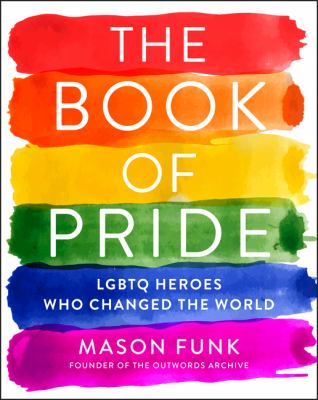
The Book of Pride: LGBTQ Heroes Who Changed the World
by Mason Funk
bookofpride
The Book of Pride tells the story of the LGBTQ rights movement from the early days in 1960s to current day participants in the movement.  Check it out and see where the movement has been and where it is going from the courageous tales of those who were there.  It is available as a digital audiobook from Hoopla.

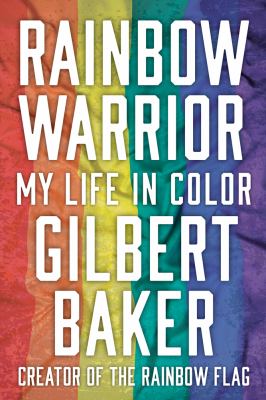
Rainbow Warrior: My Life in Color
by Gilbert Baker
RainbowWarrior
The rainbow flag has become an iconic symbol of the LGBTQ pride movement.  In his memoir, Rainbow Warrior, you can learn more about the artist and activist who first created it. Gilbert passed away in 2017, but his legacy and art lives on.   It is available as an ebook and digital audiobook from Hoopla.

Naturally Tan: A Memoir
by Tan France
NaturallyTan
Tan France is one of the stars of Netflix’s popular Queer Eye and the first openly gay South Asian man to be on a TV show.  In Naturally Tan, he looks back at his childhood in England when he was bullied and his path to coming out and living happily with his husband in Salt Lake City.  It is available as an ebook and digital audiobook from eBCCLS.

The Affair of the Mysterious Letter
by Alexis Hall

mysteriousletter
Alexis Hall is one of my favorite authors.  His latest novel, The Affair of the Mysterious Letter reimagines Sherlock Holmes as Ms. Shaharazad Haas a consulting sorceress who must solve a blackmail case of a former lover, Miss Eirene Viola.  It is available as an ebook from eBCCLS.

You can see more LGBTQ related posts here!

Written by:
Aimee Harris
Head of Reference
How to Hide an Empire: A History of the Greater United States by Daniel Immerwahr

3 Jul

How to Hide an Empire
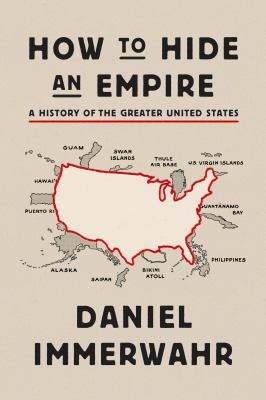
After Hurricane Maria ravaged the island of Puerto Rico in September of 2017, a poll went viral showing that almost half of all Americans did not know that Puerto Ricans are U.S. citizens. As thousands of Puerto Ricans waited for humanitarian aid from the mainland, lots of historians expressed shock that a large number of Americans seemed to have so little knowledge about an island that is a part of their country. In his provocative new book, How to Hide an Empire: A History of the Greater United States Danniel Immerwahr argues that people living in the contiguous 48 states have always mischaracterized the size and scope of their country and sets to expand American history beyond the borders that readers are likely to be familiar with.

Unlike the British, Spanish, and French empires, which were all global in scale and clearly understood to be massive colonial empires, many people in the U.S. grow up learning that their country was founded as an anti-empire or a republic that sought to do away with the colonial ambitions of the European monarchies. This idea is an important part of America’s mythology. Immerwahr’s fascinating book shows why this conception of U.S. history leaves out so much. While many people have little understanding about Puerto Rico’s relationship to the mainland of the U.S., even fewer know that the Philippines was a part of the U.S for almost fifty years. Some maps from the early 1900s even showed the Philippines alongside the United States.

Even more obscure is the history of the hundreds of tiny islands that the U.S. has occupied and claimed. Some of these earliest claims were called the “guano islands,” which were literally uninhabited islands covered in the droppings of seabirds. These islands were valuable because the guano could be scooped clean and bought back to the mainland to be sold as powerful fertilizers.  Another set of islands called Bikini Atool was used as a nuclear testing site after the U.S. forcibly relocated over 100 indigenous inhabitants. Other tiny islands throughout the Pacific became important naval bases. All of these islands remained hidden to the average American.

After World War II, most of the world began giving up their colonies. However, the U.S. would go on to maintain 800 military bases around the world. Immerwahr calls this a “pointillist empire” where instead of powerful countries occupying less powerful ones, a pointillist empire maintains power through hundreds of tiny points on the globe. What I learned from reading How to Hide An Empire is that it’s wrong now and has always been wrong to think of the U.S. as one contiguous land mass. Our history has always been much more complex and expansive than that. This fascinating book made me conceptualize my entire understanding of American geography in a whole new light.

If you are interested in Hoboken history our local history collection is again accessible on the second floor of the main branch.  You can email reference @ hoboken.bccls.org to make an appointment with our Local History Librarian.

The staff of the Hoboken Public Library wishes you a terrific Independence Day!

Written by:
Karl Schwartz
Young Adult Librarian