Archive | Lois Rubin Gross RSS feed for this section

How NOT to Eat Like a Child

16 Jan

Way back in 2001, when dinosaurs still probably roamed the earth (or at least we were all still playing Tetris on our video consoles), a book came out for adults by Delia Ephron, the younger sister of the late, great Nora.  The book was called How to Eat Like a Child, and was a tongue-in-cheek book for adults about how children misbehave, adorably.

Recently, there have been many comments on internet listservs that I am on about how children behave in public, less adorably.  Honestly, it sounds to me that most of these complaints come from young non-parents who will change their tune, quickly, when they have their own little ones to take to public places.  Meanwhile, if you want to cultivate extraordinary behavior in your own offspring that will bring nothing but praise from other adults, I’d like to suggest some books to teach kids the “p’s and q’s” of public behavior, instead of “a,b,c’s.”  These titles are all part of the Hoboken Library’s collection:

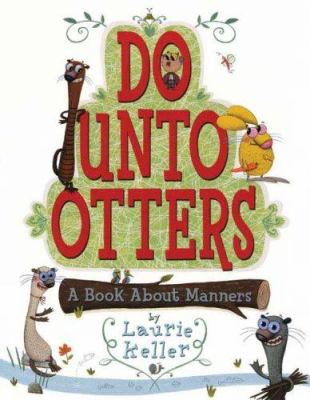
Do Unto Otters: A Book About Manners, by Laurie Keller.
do-unto-otters

Mr. Rabbit wonders how to get along with his new neighbors, who are otters, until he remembers the Golden Rule about treating others as you would like to be treated.

Please Say Please! Penguin’s Guide to Manners, by Margery Cuyler.

please-say-please

Penguin teaches her animal friends the proper way to be a good dinner guest.

Table Manners, by Vladimir Radunsky.
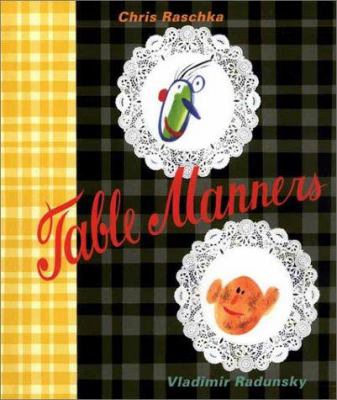
table-manners

Chester teaches his good friend, Dudunoya, about napkins, full-mouthed accidents, and other aspects of proper mealtime behavior.

Hippo Says, “Excuse Me,” and Bear Says “Thank You,” by Michael Dahl.

hippo-says-excuse-me

bear-says-thank-you

This is the most basic of mannerly behavior for the youngest children.  The only thing missing is how to say “please.”

Will Princess Isabel Ever Say Please? By Steve Metzger.

will-princess-isabel-ever-say-please

Princess Isabel is so unmannerly that she is scaring away all the handsome princes who might marry her.  Princess Isabel needs to learn to behave herself, quickly.

Mind Your Manners On-line, by Phyllis Cromwell.

mind-your-manners-online

Hopefully, a book for a slightly older reader who has unsupervised access to the internet.  Deals with cyberbullying, sharing information, and learning to be careful with access to the world’s most amazing tool for communications.

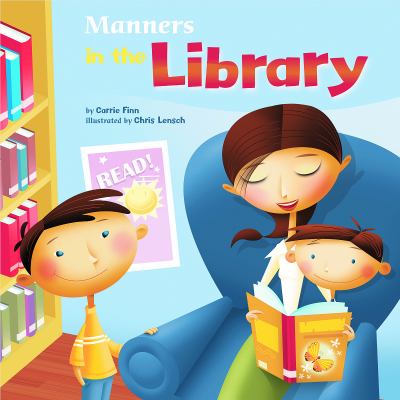
Manners in the Library, by Carrie Finn.
manners-in-the-library

How could I resist?  A little reminder about keeping voices quiet, sharing space with others, and making a visit to the library a pleasant experience.

Now, I am obliged to say “thank you” for reading this post, “please” pass it on to others, and “welcome” to all of you who visit the library.

Written by Lois Gross, Senior Children’s Librarian

Book Review: I Am Malala, by Malala Yousafzai and Christine Lamb

14 Nov

It is seldom that I devote an entire blog to one book, but this is an important book that tells the story of a very important young woman.  In its own way, it is a book that bears comparison to The Diary of a Young Girl, written seventy years ago by another teenager in harrowing circumstances.  The two young women, living decades apart, share a similar commitment to making a positive difference in the world and a similar belief that, despite their oppressors, there is an underlying goodness in mankind.  It is amazing to find this streak of optimism in both books because both young women saw the very worst that humanity produces aimed at them through an accident of religious identity or gender.

i-am-malala

Malala’s book is ghostwritten by British journalist, Christine Lamb, who treads a very delicate path between achieving a smooth delivery of information while maintaining Malala’s true voice.  The story is skillfully treated.  Malala’s unique story actually begins with her birth.  In a country that prizes sons above daughters, Malala’s father, Ziuddian Yousafzai, proclaims that he is happy to have a daughter and will see her educated just as he would a son.  Ziuddian, who is a teacher by profession, opens a school in Mingora, Pakistan, and from the age of two, Malala is part of the school, sitting on teacher’s laps and learning all that she is able.

Ziuddian cultivates learning in all three of his children, but especially in Malala, a spirit of academic competitiveness that sees her perennially coming out at the top of her classes and winning public speaking contests.  It is interesting that from such an early age, Malala is encouraged to express herself in ways that her illiterate, but strong, mother could not imagine.  Whenever there is an opportunity, Malala learns to speak passionately about subjects as diverse as honor and poetry.  While Pashtun tradition says that girls cannot speak their own words but must speak words written by their fathers or brothers, Malala finds that she must tell her own tale to deliver her speeches with sincerity and meaning.

Through all the challenges of her life – a war-torn country, displacement from her home, attacks on the school by the Taliban – Malala is prescient that someday she will come face to face with the enemies of progress.  She even mentally prepares the speech she will deliver if she is ever confronted by a Taliban.  She plans to tell her attacker that all she wants is for all children to be educated.

Unfortunately, in October 2012, the Taliban comes onto the school bus that she is riding and asks, “who is Malala?” then shoots her in the face.  The rest of the story was widely reported in the media, but Lamb and Malala go through it, step by terrifying step.  Malala, who is deeply religious, might say that Allah was protecting her on so many levels.  By coincidence, a British doctor, Fiona Robinson, who specializes in pediatric intensive care was in Pakistan when the attack happened.  She and Pakistani military doctors treated Malala’s injuries when she was triaged.  The importance of the patient struck the Dr. Robinson when she said, “My God, I am treating Pakistan’s Mother Theresa.”

Malala was air lifted on a Saudi hospital jet to Birmingham, England, on her own.  She awoke, days later, in a strange land without her family and with grievous injuries to her head and left side.  Malala takes us through the process of recovery. (As she says, she now knows a great deal about medical procedures).  She also continues through her quick rise to worldwide fame as a spokesperson for the rights of all children, but especially young girls, to have an education.

In unguarded moments, when she is discussing fights with her best friend or sibling rivalry with her brothers, Malala sounds like any child and that is when the book truly resonates with memories of Anne Frank.  But there is something so mature and focused about this young woman as she talks about her mission in life, to see education come to all children.

The thought that came to me, as I read the book, was that in our country so many children take the gift of education for granted.  Schools that fail, schools that have high drop-out rates, schools that “teach to the test” so that students do not learn to think as much as regurgitate, are a sad, sad statement when measured against Malala’s dedication and determination.

We can question if Malala’s father put her in an unnaturally dangerous situation by promoting his cause for education through his young daughter, but this is clearly now Malala’s cause as well.  Read this book because, God or Allah willing, this child is a future leader of the world and one that all our children should strive to emulate.

Written by Lois Gross, Senior Children’s Librarian