I recently realized that two books I read this summer were from different genres but similar as they were both about missing women: Gone Girl by Gillian Flynn (fiction) and Lost Girls: An Unsolved American Mystery by Robert Kolker (nonfiction).
***
You may have already heard of Gone Girl. This popular thriller by Gillian Flynn topped many best-of lists last year. I happened upon a copy while shelving and grabbed it since it’s been so popular. Reese Witherspoon’s production company is adapting the story into a movie starring Ben Affleck and Rosamund Pike.

The Girl that’s Gone is Amy Elliott Dunne, who mysteriously disappears from her home the morning of her fifth wedding anniversary. This book has two alternating narrators–her husband Nick and Amy, via journal entries, which I think is an interesting device. Which narrator should the reader trust? Who is telling the truth?
After Nick and Amy lost their jobs during the recession, they moved from Brooklyn to Nick’s hometown of North Carthage, Missouri. Their relationship becomes strained as Amy, a native New Yorker, is a fish out of water in the Midwest while Nick easily assimilates.
Nick is the main suspect after Amy goes missing, which rocks the small town and immediately becomes a national news. Nick maintains his innocence despite everyone’s suspicions–his only ally is his twin sister Margo–and works to find other suspects in Amy’s disappearance. Will Nick clear his name? What happened to Amy?
***
Lost Girls is an impeccably reported true crime story about the disappearances of five women that worked as escorts. I read an interview with Kolker on Gawker, and was intrigued by this book.
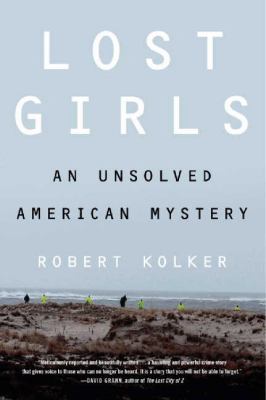
The book begins with Shannan Gilbert’s disappearance from a home in Oak Beach, a secluded community on the south shore of Long Island. The local police force’s reluctant search for her eventually led to the discovery of four other women believed to be victims of a still-at-large serial killer targeting sex workers that advertise online through Craigslist and Backpage.
Lost Girls has two parts. Book 1 devotes two chapters to each woman’s background and her time as an escort up to her disappearance. Book 2 discusses theories about the identity of the women’s killer, and how the victims’ families have banded together, which Kolker first wrote about for New York magazine.
This book’s interior design felt interactive. Maps marking each woman’s home town and when she arrived in the New York City area precede each chapter. A timeline, a list of characters, and additional maps in the back of the book help readers keep up with all the details.
***
There are definitely some suspenseful moments in Gone Girl that grabbed my attention, but ultimately the book came up short for me. Flynn does an excellent job of spinning a twisted tale and describing the bleak, recession-ravaged Missouri town where Nick and Amy live. I don’t recommend Gone Girl but won’t discourage anyone from reading it, so they can draw their own conclusions*.
I don’t recall much about the original cases on which Lost Girls are based, but found the presentation of the stories and details so compelling. Kolker spent a lot of time with the women’s families and friends and wrote thoughtfully about the five women. Most notably, he neither passed judgement on their decisions to work as escorts nor blamed them for their deaths.
To me, Lost Girls is a better book. I’ve recommended it to friends and family since finishing it. By no means is it a happy story (these women had tough lives), but I found it engaging. I empathized with the families and their losses. At parts I was furious about the complacency shown by the police departments investigating the disappearances.
Gone Girl made me angry for different reasons. One was the ending, which I found unsatisfying. Also, I found most of the characters unlikable. Amy and Nick are written as such terrible people and they deserve each other.
If you read (or have read) either Gone Girl or Lost Girls (or both!) let me know what you think in the comments, or at hobkref@bccls.org.
What books have you read this summer that you liked? Did you read anything you didn’t like?
-Kerry Weinstein, Reference Librarian.
*According to Book Riot, I am not the only reader that didn’t enjoy Gone Girl.

 Hoboken Library Staff Picks