Archive | Kerry Weinstein RSS feed for this section

The Women of Mad Men and Call the Midwife

13 May

I am a graduate of Douglass College (DC ‘04), an all-women’s school that was part of Rutgers University. In 2007, Douglass College and three other liberal arts schools were all combined to become the School of Arts and Sciences (SAS). When the merger was first proposed, Douglass alumnae (myself included) protested, and ultimately a compromise was reached that led to the creation of the Douglass Residential College (DRC). Women attending SAS can choose to live at DRC, which offers them special programs and opportunities to excel that are central to Douglass’s mission.

Last month brought a new conflict. Rutgers University wants to fold the Associate Alumnae of Douglass College (the main fundraising body for DC/DRC) into the Rutgers Foundation with the goal of streamlining all fundraising. However, it is not clear if gifts donated to Douglass will go directly to DRC, which is concerning. Again, Douglass alumnae protested and mobilized to Save the AADC. (#SaveAADC) On May 1 there was a rally on DRC, which my friend and fellow alumnae Stephanie attended with her two young sons. (Gotta start kids early in activism!) This issue hasn’t been resolved and is headed toward mediation. Details can be found here.

The quick action of my classmates and sister alumnae, and the pictures from the rally I saw on social media, inspired me to think about my favorite female characters that I admire on TV, most of whom are on Mad Men and Call the Midwife.

Mad Men 

mad-men

Mad Men, a show set in a 1960s Madison Avenue advertising agency that followed the lives of the employees and the events of that turbulent decade, has long been appointment television for me. (This is rare for me, which I’ve previously written about on this blog!) I enjoy discussing Mad Men with my dad, who graduated high school in 1968 and remembers the 1960s well. I am excited to see how it all ends this Sunday when the series finale airs.

I loved following the stories of the women of Mad Men, Betty, Peggy, and Joan. The show was set before the women’s movement gained traction in the 1970s and never shied away from the issues women living and working at the time faced, such as sexual harassment, unequal pay, and discrimination–issues that still exist in 2015, sadly.

Betty Draper Francis (played by January Jones) is a victim of her time–a Bryn Mawr educated woman who was a model but then became a housewife suffering from “the problem that has no name” described in Betty Friedan’s groundbreaking book, The Feminine Mystique. Watching Peggy Olson (Elizabeth Moss) ascend from the secretary pool to become Copy Chief was thrilling but bittersweet because she had to sacrifice more and work much harder than her male colleagues to succeed. Joan Holloway Harris (Christina Hendricks) was the office manager who became a partner at the firm in a controversial manner, but proved herself as a capable ad exec when she brought in Avon as a client.

All seasons of Mad Men (with the exception of the last batch of episodes) are available to borrow from the Hoboken Public Library, and other BCCLS libraries, if you want to dive into this show or re-watch it again.

Season 1, Season 2, Season 3, Season 4, Season 5, Season 6, Season 7 Part 1

Call the Midwife

call-the-midwife

Call the Midwife, based on Jennifer Worth’s memoirs of the same name, follows the nurses and nuns of Nonnatus House that serve the Poplar community in South London in the late 1950s-early 1960s. As the show’s title indicates, much of their time is spent caring for expectant mothers and delivering newborns. The birth scenes are realistic (for TV) and employ real newborn babies, who by British law can only shoot scenes for 20 minutes at a time.

Women make up much of the cast, and their stories are diverse and interesting. Some of the nurses come from more privileged backgrounds and are at first horrified by the poverty they encounter in Poplar. I think Sister Monica Joan (played by Judy Parfitt), an elderly nun who suffers from dementia, is the most fascinating character. She no longer works as a nurse due to her condition, but in her moments of clarity she shares wisdom and sage advice with her fellow sisters and the younger nurses when they run into challenging situations.

Many of the stories Jennifer Worth’s first memoir, which I read and enjoyed, were used in the show. One story I liked that hasn’t been seen on the show was about how one young Poplar boy took it upon himself to protect Nurse Chummy (Miranda Hart), who was a target for teasing by the other children. Worth wrote that that young boy grew up to become a bodyguard for Princess Diana.

All four seasons of Call the Midwife are available to borrow, as well as the memoir. Jennifer Worth wrote two more books a about her time as a midwife, Call the Midwife: Shadows of the Workhouse and Call the Midwife: Farewell to the East End. Both are on my to-read list.

Season 1, Season 2, Season 3, Season 4

Who are your favorite female TV characters? Please share in the comments.

-Written by Kerry Weinstein, Reference Librarian
Film versus Broadway: Hedwig and the Angry Inch, Cabaret, and Once

18 Feb

IMG_2610

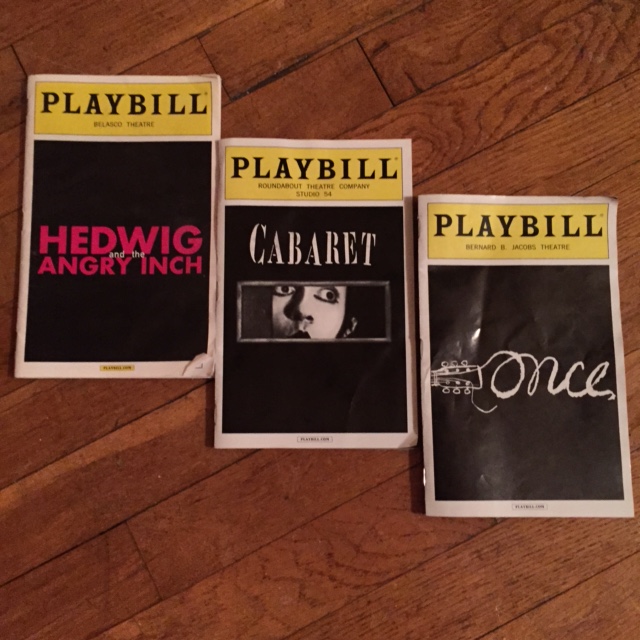
I had the opportunity to see three Broadway shows in the past few months: Hedwig and the Angry Inch, Cabaret, and Once. After seeing the live shows, I watched the film adaptations, or the origin film in the case of Once, to relive the music, the stories, and the characters. While the films can’t recreate the experience of live theater, I enjoyed them all. All three films are available to borrow from BCCLS libraries. I also include catalog links to the soundtracks if you’re more interested in the music.

Hedwig and the Angry Inch

hedwig

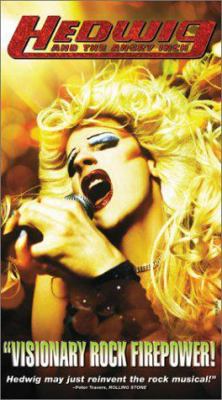
Hedwig and the Angry Inch (both film and stage show versions) is primarily a story about of a lover scorned, with a killer rock and roll score. The action follows Hedwig (born Hansel), a transgender woman from East Berlin, as she follows her former lover, rock star Tommy Gnosis, on his American tour. Hedwig, who has her own band called The Angry Inch, is responsible for many of Tommy’s hits and is angry she never received credit. Love, finding your “other half”, power, and gender are other themes explored in Hedwig.

The music is mostly the same in both versions, but the film has some plot differences. Hedwig and her band perform in a fictional chain restaurant called Bilgewater’s as she follows Tommy’s tour. Character actress Andrea Martin (author of a Funny Lady Memoir called Lady Parts) plays Hedwig’s manager, a role that does not exist in the stage show.

The film was released in 2001 and has some references that may seem dated now. Yitzhak, Hedwig’s husband and a member of The Angry Inch who has aspirations of his own, quits to perform in a touring production of Rent. These details in no way will diminish a viewer’s enjoyment of the film. Just try not to sing along to “Wig In a Box”, which Hedwig invites the viewer to do as the lyrics of the song appear on the screen. This film is so much fun to watch.

John Cameron Mitchell, who played Hedwig in the film, is currently starring in the stage show. How cool would it be to see him on stage, then watch the film?

Cabaret

cabaret

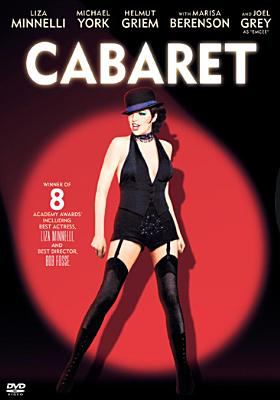
Cabaret is set in 1931 Berlin, when the Nazi party was gaining power. The action is centered at the Kit Kat Club, a sexy but seedy place where the Emcee (Joel Grey) is the host and Sally Bowles (Liza Minnelli) is the headliner. Joel Grey and Liza Minnelli both won Oscars for their roles in the movie, and Bob Fosse won for Best Director. However, the movie could not beat The Godfather for Best Picture that year.

To me, Liza Minnelli is the ultimate Sally Bowles. My first exposure to this show was hearing a recording of “Cabaret” sung by Minnelli on a CD compilation of great Broadway songs called Ultimate Broadway. I was enthralled and persuaded my parents to let me see the 1990s Broadway revival at Studio 54, which starred Gina Gershon as Sally Bowles and Alan Cumming as the Emcee.

Seeing the musical reminded me how dark the story is, and the movie definitely captured that tone. There is just a sense of foreboding throughout the film, and the final image confirms that dread. Listening to the song “Cabaret” on its own makes the show seem lighthearted and fun, with upbeat chords and lyrics like “Life is cabaret old chum, so come to the cabaret!” But that performance comes toward the end of the film, when Sally sings it in desperation to save the career she wants and has sacrificed for. Perhaps Cabaret feels ominous because history documents the results of the Nazi regime.

Cabaret is soon ending its run on Broadway, but the movie and soundtracks are available.

Once

once

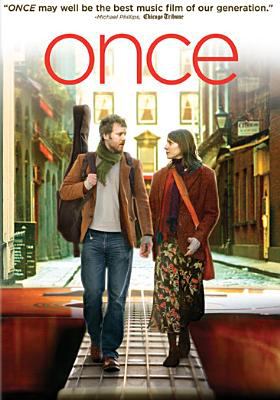
Once is an anomaly here. The stage show, which made its Broadway debut in 2012 and ended its run this past January, was adapted from the 2007 Irish film. Glen Hansard and Marketa Irglova star as Guy and Girl, respectively, who connect over music and spend a creative week together writing and recording original songs. The film was a hit and won a Best Original Song Academy Award for “Falling Slowly” in 2007. While “Falling Slowly” is certainly a gorgeous composition, I have to say “Gold” is my favorite song from both versions.

Girl meets Guy as he is singing on the street. They chat, and he tells her that he fixes vacuums for a living. She announces that her vacuum “doesn’t suck” and the next day she brings the vacuum to him for repair. The vacuum becomes a comic gag, as Girl drags it along with her as she and Guy go for lunch, ride the bus, and get to know each other.

The movie feels more like a musical performed in the theater, as the songs the characters sing express their thoughts, feelings, and experiences. In “Broken Hearted Hoover Fixer Sucker Guy”, Guy explains to Girl how his ex-girlfriend broke his heart and left him behind. Girl is estranged from her husband, with whom she has a young daughter. This pair has so much in common and there is definitely chemistry, which their music captures.

I saw one of the last performances on New Year’s Day, and was glad to experience this show (and hear “Gold”) live.

What are your favorite Broadway shows or film adaptations of musicals?

-Written by Kerry Weinstein, Reference Librarian