Archive | Hoopla RSS feed for this section

Captivating Visual Dystopias: Paradise Hills and Equals

9 Dec

Recently I watched two dystopian films, Paradise Hills and Equals, that were visually enthralling with their use of color and visual metaphors. 

Paradise Hills
Paradise Hills (2019) starts with vibrant floral hues and then ends in darkness as the characters discover the truth about the facilities on a remote island that is supposed to turn the daughters of Uppers (the wealthy elite) into perfect ladies.  While the story is derivative of other feminist works such as The Stepford Wives, it use of colors and visuals is stunning and had me enthralled by this dark whimsical futuristic fairy-tale.  Emma Roberts stars as Uma and the film also features a stellar Awkwafina as Yu.  Mila Jovovich plays the mysterious Duchess who runs the facility.  The outfits the girls wear reminded me of Alice in Wonderland mixed with Clockwork Orange with the look of a whimsical white dress made out of a straitjacket.  Being oneself and speaking your mind are ideals for us all and yet too often women are still made to feel that good girls should just stay quiet and look pretty. You can borrow it on DVD from BCCLS libraries or stream it on Kanopy.

Equals
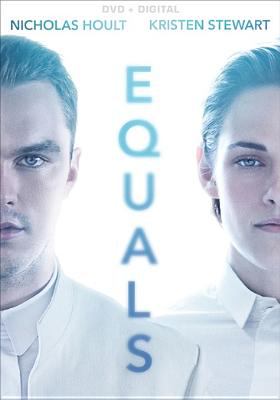
The 2016 film, Equals also use color to effect in this case primarily a lack of colors with only white being prominently featured in costuming.  Peoples’ dress and mannerisms are solely utilitarian in Equals.  The story draws its inspiration from 1984, but focuses primarily on the suppression of emotions and a forbidden love story between Nia (Kristen Stewart) and Silas (Nicholas Hoult).  It is considered a serious medical condition if people encounter Switched on Syndrome (SOS) and begin to have emotional responses to things.  As with Paradise Hills the story works best in its visuals.  The main characters work for a division that must illustrate news stories of outside conflicts, which unlike the world around them often appear in vivid color.  The film moved at a slow pace at time lingering over visual metaphors like Nia and Silas briefly holding hands, this like the monotone deliveries from the actors captures life in a world where along with negative emotions, feelings of happiness and joy are also suppressed. It is available to stream from Hoopla or to borrow on DVD from BCCLS Libraries.

Written by:
Aimee Harris
Head of Information and Digital Services

Magical Histories of New York: Witches of New York and The Age of Witches

15 Jul

Sometimes when I’m at my desk in our library building with its tin ceilings and ornate woodwork, I wonder what it would have been like when the building first opened in 1897 or even earlier in 1890 when the library was first created. Back at the turn of the century when Ami McKay’s Witches of New York and Louisa Morgan’s The Age of Witches were set, Hoboken was just taking shape evolving from a pleasure resort for the wealthy to a popular shipping port and a place of invention by the newly created Steven’s Institute.  I enjoyed both the magical fantasy aspects as well as the insight these books give into history. 

The Witches of New York
by Ami McKay
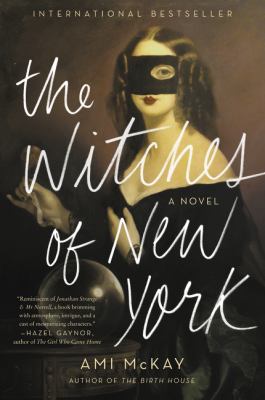
The Witches of New York is set during 1880 and focuses on 17-year-old Beatrice who newly an adult, leaves her Aunt’s home near Sleepy Hollow to answer an ad for a shop girl in New York City which includes the mysterious phrase “Those averse to magic need not apply.”  There she meets Adelaide Thom and Eleanor St. Clair, two witches, who help Beatrice find her own powers and inner strength.  Here witchcraft is used as a metaphor for the power of women and the way in which that power was often suppressed and maligned in history.  I found the characters very enjoyable and there were enough hinted at possibilities for future storylines I have the impression it is likely not the last we will be seeing of these characters.  The three women’s story continue in the novella, Half Spent was the Night.  Adelaide also was featured in an earlier novel by McKay, The Virgin Cure

The Age of Witches
by Louisa Morgan

Set in 1890’s New York and England, The Age of Witches also looks at a group of three woman and the magic they possess, although in this case they are not all working in harmony.  Annis Allington is a young woman who wants nothing more to ride her horse and have the freedom not often given to woman of her age; her social climbing stepmother, Frances, however, sees a good marriage for Annis lifting them from their noveau riche social circle and into the highest levels of society.  Frances had previously used her magic to snag Annis’s father so that she could be lifted out of poverty.  Added in to this mix is Annis’s Aunt Harriet who wishes to keep Frances from manipulating Annis and awaken the young woman’s own power. The characters are strongly written and even when Francis falls into the evil stepmother trope there are still sympathetic aspects to her as a woman looking to rise above the limited circumstances society allowed her at the time.

Want more fantasy stories about witches?  You can read some more of my witchy picks here including Louisa Morgan’s A Secret History of Witches.

Check out The Bone Witch by Rin Chupeco and join us for a Zoom book discussion (online or you can call in with your phone) on July 20 at 6 PM. You can email hplwriters@ gmail.com to receive a Zoom invite.

Written by:
Aimee Harris
Head of Information and Digital Services