Archive | Fiction RSS feed for this section

Turn Off Your Smart Phone: Make a Goal to Read More Books

8 Aug

Summer Reading is winding up at the library as I write this and as I logged my reading, I’ve realized I have been reading less lately, which isn’t completely accurate since I’ve been reading tons of news and blogs and such online, but I’ve certainly been reading less books.  This isn’t just true of myself – I’ve realized as I’ve talked to others.  The phones most of us carry now are more like mini tablets than a means of communication. They constantly demand to be checked for the latest social media update or what latest political scandal has occurred in the news. And that paperback book on my bedside table isn’t constantly sending me push notices, instead it sits there patiently as I renew it for another two weeks and think “I’ll read it tomorrow”.  Ruminating on it now I realize I’m missing out – though since there are entertaining and some high quality things online, there is also a lot of shallow click bait that wastes my time and doesn’t add to my enjoyment of life or increase my understanding of the world in a positive way.  So I’ve decided to put my phone away at the end of the day and read more books.  I hope you’ll join me; let’s keep that pushy electronic device waiting for an hour or two and instead get lost in a good book.

Here are two books I read this summer that I enjoyed curling up with while my cell phone was tucked away in a bed side drawer.  Both deal with frequent vacation destinations that are anything but ordinary.

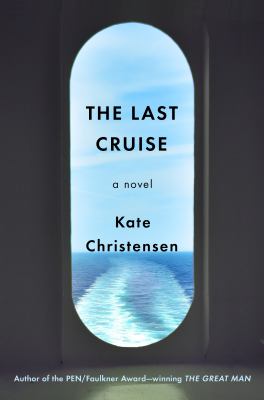
The Last Cruise
by Kate Christensen
LastCruise
I hadn’t read any of Christensen’s writing before, but after reading The Last Cruise, I definitely want to check out more of her fiction and nonfiction. The Last Cruise was beautifully written with the kind of lush language and imagery one would expect to find in poetry. It is set on an old cruise ship making one last trip to Hawaii.  The three main characters: an elderly Israeli musician, an up and coming chef, and a farm wife on a life changing vacation, were all complex and I liked the emotional journey and development that occurred for the three of them over the course of the book. I’m looking forward to taking a cruise next year, so I’m hoping the many disasters that befall the ship and its passengers are not likely to occur in real life. At the very least – not all at once – from the comfort of my own home it was exciting to see how the characters fared through the many challenges they faced.

Tricks For Free
by Seanan McGuire
TricksforFree
I enjoyed this urban fantasy book a lot as I have the other books in the InCryptid series about a family that protects the monsters secretly living among us. Tricks for Free is the second novel focusing on Annie, the youngest of the Price siblings, and though I think I prefer her older sister as a character, I thought this novel was still fast paced and interesting. Tricks for Free is set at a Disney like Amusement Park, which was so well thought out that it felt real. It even had well-detailed associated fictional movies, songs, and characters; I’d love if McGuire crafted the stories that she based these on as they sounded so interesting. I’m looking forward to the next book when it comes out, which also follows Annie and her friends. Tricks for Free included a novella at the end focusing on Annie’s Aeslin Mice (talking mice that worship the Price family) and her boyfriend during the time she is on the run and has to leave them behind.

See the Latest Books Available at HPL
Want to see what is new at HPL?  You can always see what new books we have by browsing the shelves near the first floor circulation desk where they feature the new nonfiction and fiction.  Or you can find lists of new books and other items by going to https://catalog.bccls.org/polaris/custom/whatsnew.aspx?ctx=61

Hoboken Residents Can Have 10 Interlibrary Loan Requests
We appreciated everyone’s patience during the state’s recent interlibrary loan delivery issues, but are thrilled that we can again offer Hoboken Library Residents up to 10 loan requests from other BCCLS libraries at a time so even if something you want is out here, we can request it for you!

Written By:
Aimee Harris
Head of Reference

Guilty vs. Not Guilty: Susan Glaspell’s Trifles

1 Aug

glaspellPlays
The theme of feminism in Susan Glaspell’s Trifles can be seen in many metaphors throughout the entire play. Within the play, the situations that are encountered by the characters are often the same ones that are seen in many feminist literary works. The play is about an investigation of a murder of a husband, Mr. Wright, with the only suspect being the wife, Mrs. Minnie Foster Wright. Preceding the night of the murder, the morning after the county attorney and the sheriff go back to the scene to try and piece together clues that may or may not have been the motive. The entire play is about how even though the men are investigating the crime scene for a motive, it is the women, Mrs. Hale and Peters, who then solve the mystery behind the crime. The women who stick together to cover up for Mrs. Wright’s crime is the symbol of the theme of feminism in the play. The irony of the title Trifles also reflects the theme in that it suggests moreover through the confinements of the social construct of what being a woman entails in this time period. Glaspell’s plot, along with her use of metaphors and irony, is what makes Trifles a clearly feminist play. But how is this relevant to the determination of deeming someone as the accused or the victim?

Well known for her prize winning short story “A Jury of her Peers,” Glaspell shows herself to be just that, advocating for women who are more seen rather than heard, such as the women in this play, making the audience sympathetic towards Mrs. Wright, the murderer, and not sympathetic for the “victim”, Mr. Wright. Here is where the question that seems to echo throughout the entire play being wrestled. Who is the real victim in this homicide?

Susan Glaspell’s play Trifles not only is very similar to her short story “A Jury of Her Peers” but it is also derived from it. The irony of this idea of “a jury of her peers” being placed within the play lies in the word “peers” because the jury itself will only retain men. It is this ironic and almost satiric comment that may cause the reader to look into this idea of oppression and how one woman will be judged by a jury of men, only to come to a verdict about a case in which the victim is a man, or so it would seem.

By examining the power relations in this play, Glaspell’s view suggests on breaking them down by recognizing the role of a woman as what seems socially normative and raises the question of who is the real victim? While the men look for a motivation, the women look for an explanation, thus showing how men not only view justice different, but also how even if given the explanation, wouldn’t be able to understand the evidence as a relevant participle towards the crime – of course this is just an opinion derived from reading this play. This is clearly seen when the character Lewis Hale states, “Well, women are used to worrying over trifles” which then not only sets the premise for the play but also foreshadows how the truth unravels in the ends.

The powerlessness and disenfranchisement of the women can also be seen in the stage direction, and how they almost automatically respond to a man’s presence in the room. After they discover what seems to be a songbird with its head wrung, they then go about concealing evidence that is in fact motive enough for the murder. It is here where the powerlessness and the voiceless-ness are amplified more symbolically. It was the discovery of the dead bird, when I was won over through the persuasion that thus leads me to sympathize over the accused rather than the victimized. This is when we see one of the female characters comment on Mrs. Wright and says, “’She-come to think of it, she was kind of like a bird herself…” and then adds, “’No, Wright wouldn’t like the bird-a thing that sang. She used to sing. He killed that, too’”.

Not only does the title itself call attention to the very little things found in the play that the women find as evidence against their peer, but it is also significant to the role and place women fit in the social hierarchy. They are mere trifles in this social construct that is seemingly dominated by man. This not only ties together Glaspell’s feminist intervention but also justifies within the play, how the women are dismissed, silenced, and even portrayed as not as clever as the men, being stuck in the kitchen and all, while the men investigate the crime scene. Emphasizing “women’s legal place in society” by calling to attention and referencing back to their role and occupancy, “little kitchen things,” as well as their place and identity, “sheriff’s wife.”

Bringing to light this dichotomy of social roles between the male and female characters, and their relationship between justice and social roles, the focus shifts and we see Glaspell’s feminism approach start to unravel as the women take on the role of the men by solving the crime and using their agency to take justice into their own hands. No longer identified by their men, or the law, they break away and unite with one another, thus allowing the audience to feel sympathetic towards the guilty, and therefore flipping the very definition of a victim.

Though it is made very clear in the opening scene of this play that Mrs. Wright is in fact guilty of the murder of her husband, the theme of this play is not solely based on the idea of feminism and social hierarchies. It is upon the continuation of reading this play that the true and deeper symbolism is revealed. Just like a trifle cake with many layers, this play causes you to first look at all the evidence before coming to the definite conclusion of who is the real murderer. This of course deconstructs the norm of what justice means, but personally, it’s one of the main reasons why this play was such a good read. I find deconstruction fascinating, and if any play can cause anyone to doubt the most clearest of evidence against the accused it would be Susan Glaspell’s Trifles.

What side of the law would you find yourself on?  Besides being available in print from BCCLS libraries, you can check Out Trifles and A Jury of Her Peers from Hoopla.  You can listen to an L.A. Theatre Works full-cast performance which features Jeanie Hackett as Mrs. Peters; Amy Madigan as Mrs. Hale; Sam McMurray as the Sheriff; Steven Vinovich as Mr. Hale; Steven Weber as the County Attorney from Hoopla or see a 1979 short film adaptation available from Kanopy.

Written By:
Sherissa Hernandez
Adult Programming Assistant