Archive | Fantasy RSS feed for this section

A Little Bit of Magic: The Swan Gondola, The Thinking Woman’s Guide to Real Magic, and Midnight Crossroad

10 Sep

Sometimes you might wish you had a little more magic in your life, but as these novels show magic doesn’t always make your life easier, but the supernatural always make it a lot more interesting.

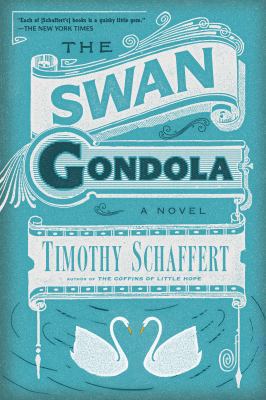
The Swan Gondola
by Timothy Schaffert

swangondola


The Swan Gondola is a tragic love story set at the fictional 1898 Omaha World’s Fair.  This fair is based on the actual historic Trans-Mississippi & International Exposition, but there are many dark fanciful elements that give the book a storybook quality.  Ferret, a magician and ventriloquist, has a dummy that can do everything from talk via a tiny record player in his head to light a cigarette. In his Author’s Note, Schaffert mentions that he was inspired by the Wizard of Oz, who in L. Frank Baum’s story was from Nebraska and was a ventriloquist’s apprentice.  Although not a retelling of The Wizard of Oz, The Swan Gondola takes a great deal of inspiration from the novel and fans of Baum’s series will enjoy finding the references to the Oz stories throughout. At times I found myself exasperated by Ferret’s, foolish lovesick behavior, but this may be partially that even when flawed the main characters are charismatic and leave the reader rooting for them and hoping for their success.  The novel ended very differently than I had expected, but still in a way that is satisfying. The last section includes elements of spiritualism which was historically influential in turn of the century America, but adds another element of the fantastic.  Overall The Swan Gondola charmed me and I will probably seek out some of Schaffert’s other works to read in the future.  If you are interested in reading the Oz series that inspired it checkout our previous blog post on Oz.

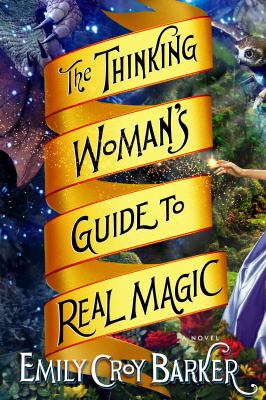
The Thinking Woman’s Guide to Real Magicby Emily Croy Barker

thinkingwomansguidetorealmagic


The Thinking Woman’s Guide to Real Magic sounded like it would be a fun supernatural chicklit book, but it was much darker in tone and more complex than I expected.  Barker’s first novel revolves around Nora, a floundering grad student from NJ, who accidentally wanders into another realm and learns that not only is magic real, but she also has a talent for it.  My favorite part of The Thinking Woman’s Guide to Real Magic is the beginning where Nora has been enchanted by fairies and the ominous feeling and disorientation that the reader feels beneath the beautiful exterior of the fairy realm.  Fans of Deborah Harkness’s books should enjoy this book, however, it is much more swords and sorcery and less urban fantasy.  I enjoyed the way Barker uses things like poetry and algebra as forms of magic in the story.  As a poet I loved the way she worked in quotes from different famous poems such as William Carlos William’s “The Red Wheelbarrow”.  I would have liked to see more of Nora in our world to get a better feel for her as character in that environment; hopefully Barker’s next book will focus on that more.  Be warned the conclusion of the novel is definitely open ended and clearly is meant to lure you into reading the second in the planned trilogy, which has not yet been published.

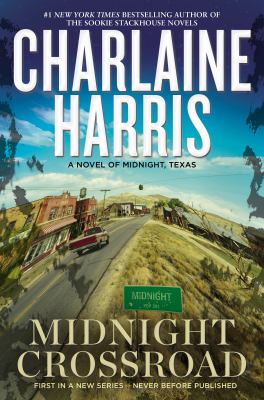
Midnight Crossroadby Charlaine Harris

midnightcrossroad


In Charlaine Harris’s latest urban fantasy infused mystery, Midnight Crossroad residents include a talented witch with her very own cat familiar, a vampire, a psychic, and other mysterious characters.  This is the first in Harris’ new series which is set in the Midnight, Texas.  We are first introduced to the character of Manfred Bernardo who was a secondary character in her Harper Connelly series.  Although much of the novel focuses on him, several other characters including Fiji, the witch, and Bobo, the pawn shop owner are also a major focus (if I had one complaint about the series it was the ridiculous nicknames of all the characters).  The quirky dark town itself also truly feels like character.  Unlike with her Sookie Stackhouse series, where it felt like vampires and shape shifters are everywhere, in this series the small town of Midnight (with its single traffic light) seems particularly unique.  It reminded me a bit in this of my favorite podcast, the wonderful quirky Nightvale where the unexpected is the expected.  I found the novel to be a quick read with moments of humor interspersed with the darkness.  The story seems to also be making a statement about the monsters of myth such as vampires and witches versus the monsters of our real world like racists and sociopaths and where the evil truly lies.  I had begun to become disappointed in some of Harris’s later Sookie novels, but I’m looking forward to reading the next in the Midnight, Texas series.

-Written by Aimee Harris, Head of Reference

Selections from the Hoboken Public Library’s Science Fiction and Fantasy Book Club Part 2: Hitchhiker’s Guide to the Galaxy, American Gods, Hyperion, and Orlando

27 Aug

The HPL’s Science Fiction and Fantasy Book Club meets monthly.  Each meeting a different science fiction or fantasy book is picked by the group.  Along with the selected works group members discuss other favorite science fiction/fantasy books, TV shows, and movies.  If you would like to be added to the mailing list to keep up to date about what is being read, email hplwriters@gmail.com  The next book we will be reading is Larry Niven’s Ringworld, for the meeting on September 22 at 6 pm.  We have the rest of the year planned out as well; we will be reading Peter Straub’s suspenseful Ghost Story in October, Mary Shelley’s classic Frankenstein in November, and Terry Pratchett’s humorous Hogfather in December.  We would love to hear your ideas for books for the group to read in the upcoming year.

Hitchhiker’s Guide to the Galaxy, by Douglas Adams

hitchhikers-guide-to-galaxy
I had first read the Hitchhiker’s Guide to the Galaxy back when I was in middle school and rereading it turned out to be as funny and engaging as in my memory.  The book centers around Arthur Dent, who after watching his home be destroyed to build a highway, then finds earth also has been destroyed by aliens planning a similar interstellar project.  Throughout are entries from the “Hitchhiker’s Guide to the Galaxy,” which tell its readers why it is always important to carry a towel and how the Babel Fish inserted in one’s ear allows you to understand any language. The absurd humor is of the type that I find uniquely British so if you are fan of Monty Python or Dr. Who, Hitchhiker’s Guide to the Galaxy should tickle your funny bone.  Adams satirizes everything from government, politics, business, religion, poetry, and philosophy.  A few of the members of the group felt it lacked any real “science” for science fiction, but we agreed that if you are looking for something humorous Hitchhiker’s Guide to the Galaxy is a good  choice.  It is a very quick read so if you haven’t checked it out yet, I highly recommended it.  The library also held a screening of the 2005 movie adaptation and we hope to have screenings of adaptations of Frankenstein and Ghost Story as well in the upcoming months.

American Gods, by Neil Gaiman

american-gods
You may remember I had previously done a post on Neil Gaiman, who is one of my favorite authors.  I was therefore excited when the group chose American Gods for our June book club choice.  We read the author’s preferred text, which was released for the 10th anniversary of the novel.  American Gods mixes old gods from myths and legends that came over to America with immigrants, such as Anansi from Africa and Odin from Scandinavia, with the new “gods” from our modern society, such as Television, Media, and the Internet.  American Gods revolves around antihero Shadow, who has only recently been released from jail and becomes a pawn in the coming war between the new and old gods.  Although I have found sometimes the author’s preferred text are bogged down in unnecessary exposition that a skilled editor would leave out, in this case American Gods held my interest even with the additional text, though those with less time may prefer the shorter original edition (both are available from BCCLS libraries).  This rich novel gave the group a lot of great topics to discuss. If you enjoy this work also check out Gaiman’s Anansi Boys which further develops the world that Gaiman created in American Gods, this time focusing on the sons of Mr. Nancy (aka Anansi).

Hyperion, by Dan Simmons

hyperion
Dan Simmons has a bit of something for everyone in Hyperion.  Those who enjoy literature will enjoy the conceit of this Science Fiction novel having seven pilgrims on their way to a planet called Hyperion sharing their stories reminiscent of The Canterbury Tales (these include a scholar, poet, priest, detective, soldier, and consul) as well as the reference to poet John Keats and his works. Hyperion also contains elements of horror in their dealing with the mysterious Shrike.  There is even some romance in three of the stories as well in the mix.  My favorite was the Scholar’s Story, but each had interesting characters and a thought-provoking tale.  It was fun to hear the different group member’s perspectives on Hyperion.  One member of the group found the first story from the priest boring and slow moving, while another thought it was the best story in the book.  The character of the poet, Martin Silenus, was also polarizing with some of the group enjoying his antics and others finding him irritating.  This novel brought up some great debates about various elements and characters.  Check it out and see what you think!

Orlando, by Virginia Woolf

orlando
For the book club’s first female author we decided to go with not just a fantasy classic, but a classic work of literature, Virginia Woolf’s Orlando.  Many of the group had seen the movie adaptation, but were curious to read the novel that inspired it.  The group was mixed in their reaction to Orlando with some praising it highly and others finding it difficult stylistically to get through.  However, everyone found a lot to talk about and discuss in this thought provoking novel.  What gives this classic its fantasy twist is that Orlando not only has an extraordinarily long life (living from the time of Queen Elizabeth into the twentieth century), but that half way through the novel he magically changes gender and becomes female.  Orlando explores the notions of both gender and sex and the expectations society places on men and women.  It therefore leads us to question the ideas that come with an insistence on a gender binary.  We can see the seeds of what many contemporary women authors write about when dealing with gender planted in Orlando and it resonated with me as a precursor to Jeannette Winterson and Sarah Waters works, both of whom I wrote about in June for our Pride month blog.

Jeanette Winterson wrote an informative and thought provoking intro to one edition of Orlando, an excerpt of which you can read here. Winterson states, “Orlando refuses all constraints: historical, fantastical, metaphysical, and sociological. Ageing is irrelevant. Gender is irrelevant. Time is irrelevant. It is as though we could live as we always wanted to; disappointments, difficulties, sorrow, love, children, lovers, nothing to be avoided, everything to be claimed.”  This to me is what the best science fiction and fantasy allow, us to move beyond and question the world as it is and look at it for better or worse the way it could or can be.

Hope to see you for our discussion of Larry Niven’s Ringworld in September!

-Written by Aimee Harris, Head of Reference