Archive | eBooks RSS feed for this section

The Question of Youth vs Young: P.S. I Love You

15 May


What is the difference really? I love challenging subjective vs norm definitions.

Recently I found myself re-watching a movie called P.S. I Love You. A little background without spoilers, it’s basically a rom com film about a woman who loses her husband too early in life and for his last act of love he left her birthday gifts to come for after he passed that she could follow in order to help her cope with his loss.

What I find interesting is how you can watch movies so many times in life and certain things won’t hit you until you’ve reached a certain age or gone through something in life that’ll make a single statement you once brushed off seem so deep and relevant to you.

There is this scene in the movie where the female protagonist is talking to a male costar and he says:

“We’re so arrogant, aren’t we? So afraid of age, we do everything we can to prevent it. We don’t realize what a privilege it is to grow old with someone. Someone who doesn’t drive you to commit murder or doesn’t humiliate you beyond repair.”

It just so happens that this quote comes directly from the book P.S. I Love You by Cecilia Ahern. This alone brings me that aha moment because it survived the process of scripting and not only made it to the big screen, but it also made an impression on me. So, it is this very line that lit a spark in that dark corner of my mind that almost laid unoccupied.

It’s an interesting observation. So simple and yet so fleeting to some – but so deep and just hit me right in the feels. We forget sometimes how grateful we should be to live. We try so hard to fight it, ultimately wasting our time and life preventing us actually living so that we can live longer. Doesn’t that just get you right in the chest? The irony that most of our adult lives we spend trying to stay younger, look younger, when we should realize that really growing old is the best gift we can be given.

To interject but also make my point in a different way – there’s this line in this song by Adam Levine that I heard in a movie called Begin Again, but you may also get it on CD – both from the motion picture soundtrack or from Maroon 5’s album V.

“God, tell us the reason youth is wasted on the young” from “Lost Stars” by Adam Levine

Books like Cracking the Aging Code: The New Science of Growing Old – and What It Means for Staying Young by Josh Mitteldorf or The Little Book of Life Hacks: How to make Your Life Happier, Healthier, and More Beautiful by Yumi Sakugawa are available from BCCLS libraries. But doesn’t the question really stand, “What makes you young?”

We live in this world where youth and being young is basically something to worship and idolized. But we forget the value and the gratitude one should have to be able to grow old. To experience and learn.

Why is youth wasted on the young? Such an inane question but it strikes true and then sparks another question, what is youth? But aren’t we all existing and growing and developing until we aren’t anymore? Aren’t we all youth? Constantly maturing.  Watch or read P.S. I Love You and see what you think!  You can borrow it as an ebook from eLibraryNJ.  Let us know in the comments if you have a favorite book about aging or what it means to be young.

Written by:
Sherissa Salas
Adult Programming Assistant
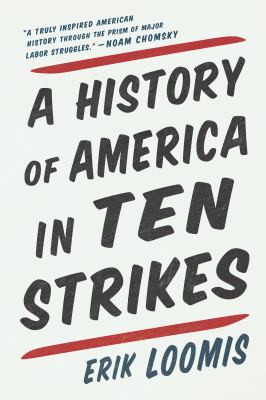
A History of America in Ten Strikes by Erik Loomis

12 Dec

TenStrikes
Labor history is rarely covered in great detail in high schools, which is a shame because the story of how workers gained the right to unionize, an eight-hour day, and a minimum wage is as riveting as any other piece of American history. Many people think that these labor reforms were gifted to workers by the generosity of progressive presidents like Franklin Roosevelt and Lyndon Johnson, but in A History of America in Ten Strikes, Loomis shows that it was workers who won these gains themselves by striking against abusive employers and the government, often when the odds were not in their favor.

For most of our existence as a country, work for the average person was bleak and brutal. Loomis writes about how starvation wages, gruesome workplace accidents and deaths, and violent repression of pro-union organizers was common. Conditions were so abysmal in the cotton and textile mills of Lawrence, Massachusetts that the life expectancy of a worker in the city was just forty years old. Over 100 garment workers burned to death in the devastating Triangle Shirtwaist Factory in New York City during a time when it was common for factory owners to lock their employees inside the workplace. Mining companies would pay their employees in a type of currency called “scrip” that could only be used at company stores that would greatly inflate their prices.

The only tool workers had to fight back against these inhumane conditions was to go on strike. At the General Motors plant in Flint, Michigan in 1936 – 1937, workers locked themselves inside while police shot tear gas through windows and management tried to freeze them out by turning off the heat. Workers from various industries shut down business in Oakland in 1946 in a city-wide general strike. Air traffic controllers unsuccessfully tried to stop international air travel when they walked off the job under President Ronald Reagan. Labor heroes such as Eugene Debs, Big Bill Haywood, and Lucy Parsons all make appearances in Loomis’s history, but it is the striking workers themselves who take center stage in his history.

Loomis writes in an easily digestible narrative style that is never dull. His retelling of America’s labor history is both inspiring by highlighting the courage of average working people, but also tragic by showing inability of many of these same workers to look past the racism and xenophobia that was so deeply ingrained. Loomis’s book is as much about race as it is about class and how racism in America’s history has contributed to the weaknesses of many working class movements. Anyone who has enjoyed Howard Zinn’s A People’s History of the United States will definitely enjoy Loomis’s book.

You can borrow A History of America in Ten Strikes from Hoopla as an ebook.  A People’s History of the United States is available as abridged and unabridged audiobook on Hoopla and as an ebook from eBCCLS.

You can stream a variety of documentaries about this topic on Kanopy including Triangle Fire: A Deadly Factory Accident in New York (Part of the PBS Series: American Experience). Our long time readers may remember our previous posts about the Alice Hoffman novel, The Museum of Extraordinary Things which involved the fire at the Triangle Shirtwaist Factory.

Written By:
Karl Schwartz
Young Adult Librarian