It’s almost Christmas! Similar to last month’s #Gratitude post, I asked my Hoboken Public Library colleagues about their favorite Christmas books, films, and music. Following are their favorites, which are available at the library or through interlibrary loan.
Dear readers, have a Merry Christmas and Happy New Year!
-Kerry Weinstein, Reference Librarian

Image via Amazon
Aimee Harris, Head of Reference
My favorite holiday tradition as a child was when each year after stuffing ourselves with Thanksgiving turkey my mom would pull out our personal collection of Christmas books from storage so that bedtime was full of stories of reindeer, snow men, and elves. Our December library visits also found us lugging home books with a holiday theme. Now I love getting to read Christmas stories to my own son. My favorite as a kid that I enjoy getting to share with him is Santa Mouse by Michael Brown and illustrated by Elfrieda DeWitt, which features an adorable mouse who decides to give Santa a present of his own. It is available from several BCCLS libraries. Of course there are plenty of other books my son likes as well; several of his current favorites are How Do Dinosaurs Say Merry Christmas? by Jane Yolen and illustrated by Mark Teague, Merry Christmas, Splat by Rob Scotton, and A Pirate’s Twelve Days of Christmas by Philip Yates and illustrations by Sebastia Serra. I also delight in reading my own holiday themed books; some of my favorite choices for adults are Rhys Bowen’s The Twelve Clues of Christmas, Donna Andrews’s The Nightingale Before Christmas, and Miracle, and Other Christmas Stories by Connie Willis.

Sharlene Edwards, Senior Children’s Librarian
I love old-timey black and white films. I enjoy the thoughtful dialogue and the simplicity of old school visual effects. My top five B&W movies in order: Miracle on 34th Street, 12 Angry Men, Invasion of the Body Snatchers, The Bad Seed (have you seen this movie?!), and It’s a Wonderful Life, which also happens to be my favorite movie of ALL-TIME. I even have a dog named Zuzu!
I’ve watched IAWL at least once a year (usually twice a year) for the past 15 years. My mom and I have a tradition on Thanksgiving which involves getting comfy on the couch, flipping on the film, and crying tears upon tears of joy. For those not familiar with the film, the story revolves around George Bailey, a kind and passionate soul who puts others’ needs before his own, often to his own detriment. George finds himself in serious trouble after his scatterbrained uncle’s actions result in a warrant for George’s arrest. Convincing himself that he is more valuable to his family dead than alive due to a life insurance policy, George resolve to throw himself off the local bridge. An angel named Clarence intervenes and, after failing to convince George that his life is valuable, he decides to show George by unveiling an alternate reality in which George has never been born. As the two explore this new reality, it becomes increasingly apparent just how many lives George has influenced in positive ways…and how much worse off everyone would be if George had never existed.
This movie is a heartwarming annual reminder that “each man’s life touches so many other lives” and “no man is a failure who has friends.” Gosh, I’m practically tearing up as I write this!
Every Christmas Eve night, after all the family festivities have occurred, my family and I cuddle up in our living room and watch It’s a Wonderful Life. Despite watching it every year, I’ve always fallen asleep during the second half of the film (to ensure that Santa will come, of course). Sadly, I have never actually seen the second half. But I usually do wake up just in time for the famous quote: “Every time a bell rings, an angel gets his wings.”

Aside from the smell of gingerbread, for me Christmas is all about the music. I would have these songs playing the entire month of December if it did not irritate the rest of my family. My playlist: Nat King Cole’s Christmas for Kids From One to Ninety-Two, Bing Crosby’s Christmas, Diana Krall’s Christmas Songs, The Complete Christmas Recordings of Andy Williams, Light of the Stable by Emmylou Harris, A Charlie Brown Christmas, and Martin Sexton’s Camp Holiday. An additional gift is that all this holiday music is available through BCCLS!

Many of my favorites are movies that are already popular, such as National Lampoon’s Christmas Vacation or Elf, so I’ll recommend one that doesn’t seem as well-known… Santa Claus: The Movie (1985) starring David Huddleston, Dudley Moore and John Lithgow. When I was little I thought that this was the true story of Kris Kringle since it starts out with his origin story, explaining how a simple toymaker became the world-famous gift giver. Today, this movie still has magic and nostalgia and makes me excited for the holiday. If you need to get into the spirit of the season, I’d suggest adding this film to your preparations. The movie can be borrowed from the library.
Kerry Weinstein, Reference Librarian
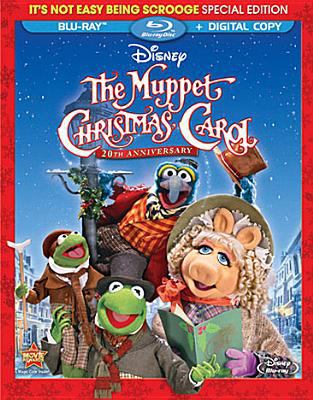
Every Christmas I like to watch The Muppet Christmas Carol, based on Charles Dickens’ classic story A Christmas Carol. The movie features original music, the lyrics of which I still remember since first hearing them when I was 10. “Scrooge”, which introduces Ebenezer Scrooge (played by Michael Caine), includes the line “no cheeses for us meeces [sic]” sung by the Muppet mice that never fails to crack me up. Here is a clip of that song from YouTube.
My family is also Jewish, so we celebrate Hanukkah. Without a doubt more music, film, and movies are dedicated to Christmas, but we like to listen to Adam Sandler’s four iterations of “The Chanukah Song”. The original and Part 2 can be streamed on Hoopla Digital, and Part 3 is on the soundtrack for Eight Crazy Nights. Part 4 can be heard on YouTube, which we replayed over and over again during Thanksgiving, laughing and giving thanks for Adam Sandler being a mensch and filling the Hanukkah music void.



 Hoboken Library Staff Picks