Archive | Digital Materials RSS feed for this section

Meet me at the Renaissance Faire: Books and More for Ren Faire Fans of all Ages!

25 Sep

Now that summer has come to an end, I am looking forward to the cooler autumn day and one of my favorite outings to do with family and friends-heading to the Renaissance Faire, where jousts are recreated, giant turkey legs are devoured, and many attendees enjoy participating in period garb.  For my fellow faire fans, I hope you enjoy your visits and check out some of the items available to our Hoboken patrons.

For Kids and Teens

All’s Faire in Middle School
by Victoria Jamieson
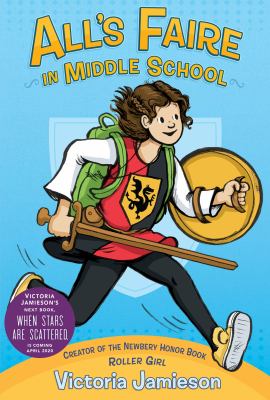
All's Faire in Middle School
Imogene is a homeschooled eleven year old whose parents work at a Renaissance Faire, who must now make the transition to a public middle school.  This graphic novel of a would-be knight-in-training battling the “dragons” of middle school is a good read for tweens looking to fight for their place in a frequently less than chivalrous world.

Great Medieval Projects You Can Build Yourself
by Kris Bordessa and Shawn Braley

Great Medieval Projects

Image from Hoopladigital.com

My son loves stories of knights and wizards. If your child too is enamored with fantasy or tales from the middle ages than they may enjoy Great Medieval Projects You Can Build Yourself which includes activities geared towards kids ages 9 to 12. Besides the fun hands on activities children are also provided with historically accurate information that will give them an understanding of the period that laid the foundation for the renaissance.

My Faire Lady
by Laura Wettersten
My Faire Lady
In My Faire Lady, Rowena gets a surprising summer job after her boyfriend cheats on her and she wants an excuse to get out of town.  New experiences and new romance blossom for her at the Ren Faire.

For Adults

American Princess
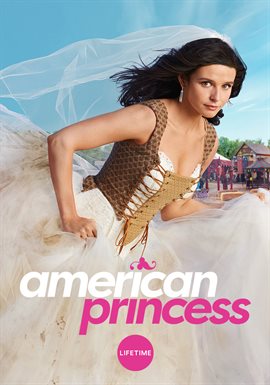
American Princess

Image from Hoopladigital.com

In American Princess, an Upper East Side “Princess” dream wedding is derailed when she catches her husband cheating on her.  In her escape from her wedding venue, she stumbles on a Renaissance Festival whose staff take her in and provide her with a job and a family while her ego and psyche heal.   I missed the show when it premiered at the beginning of the summer so was happy when I saw it available from Hoopla.  I found it delightfully funny.  The creator based it on her own experience working at a Renaissance Faire.  It is rated MA and has bawdy humor on occasion so is recommended only for adult viewers.

Hard Day’s Knight
by Katie MacAlister
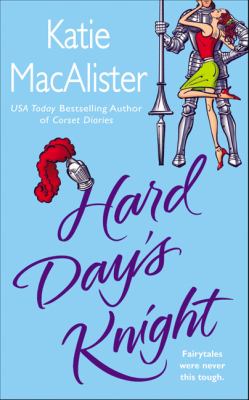
Hard Day's Knight
Another fun romance choice available from Hoopla is the audiobook of Katie MacAlister’s Hard Day’s Knight read by Karen White, where Pepper Marsh is looking for her prince at Ontario’s Renaissance Faire.  Walker McPahil rescues her from being trampled, but can she break through the armor around his heart?  This title is also available in print and large print from BCCLS libraries.

Ren Faire Romance Series
by A.J. Marcus
Jouster's Lance
In Ren Faire Romance, a series from Dreamspinner Press (who specializes in LGBTQ fiction),  A.J. Marcus’s characters find the men of their dreams amongst the jousters, falconers, and archers at Renaissance Festivals.  Part one begins with the Jouster’s Lance.

Looking for great music to listen to on your way to a Renaissance Faire?  Check out my previous blog post.

Written by:
Aimee Harris
Head of Reference

GETTING PAST THE MYTHS OF LANGUAGE LEARNING        

28 Aug

LANGUAGE LEARNING MYTH #1: I’m too old to learn a new language.

FALSE. There is a common assumption that children are better at learning languages than adults. They might be better at picking up pronunciation, but otherwise, adults have many advantages over kids. Adults already have pre-existing language knowledge. Adults understand how conjugation works, what an adjective does, etc. Meanwhile, children struggle with many aspects of language. For example, they have a hard time with irregular verbs (e.g., saying “runned” instead of “ran”). Additionally, babies take years before they can even utter a word. An adult? Well, you can learn how to say a few basic phrases in a day!

LANGUAGE LEARNING MYTH #2: I don’t have an innate talent for languages, so I can’t learn.

FALSE. Everyone is capable of learning a language. While it’s true that some people pick up on certain aspects of language more quickly, those same people can also peter out when they reach an intermediate level (trust me, I’ve been there before). Everyone has different strengths, but it is not talent that makes them fluent. It is regular practice and determination.

LANGUAGE LEARNING MYTH #3: I need to spend money on materials and on travel to learn a language.

FALSE. You can obtain a various amount of language learning resources from the library FOR FREE. In addition to language learning materials on our shelves, the library offers free access to software programs that normally would require payment, such as Rosetta Stone and Mango Languages. The Hoboken Public Library and Friends of the Library also provides free ESL practice every month, which will be starting a new series of classes in September. Language learners can also benefit from free access to video lessons on Universal Class and movies in several languages and language lessons from The Great Courses on Kanopy. If you’ve got your Hoboken Resident Library Card, you don’t even need to leave the house! And travel? Sure, immersion can be useful, but it doesn’t always work. There are a lot of factors that go into making full immersion a successful method, and as I’ve mentioned before, it is possible to become fluent without moving to a country (or locale) where a certain language is spoken. The most important thing is PRACTICE, and that practice must be applied to the four language skills: reading, writing, speaking, listening. If you consistently practice all of these skills, then you will achieve your goals.

Before you begin your language journey, make sure you have a goal in mind. This is of the utmost importance. “I want to be fluent” is not a good enough goal. It is vague and will not motivate you when you eventually reach a rough patch. What does fluent even truly mean? (We can save that conversation for another day…) What you want is a more specific goal, and remember, you can add another goal once you achieve the first. It is entirely fine to have short-term goals. Good examples of language learning goals are: “I want to be able to have small talk with my friend” or “I want to be able to read X book.”  These are specific and realistic goals that will help you keep focused and stay on track.

In my next post, I’ll provide you with a walkthrough of a software program you can have free access to through the library: Mango Languages. In the meantime, why don’t you check out the library’s many resources and choose a language to study?

Written by:
Samantha Evaristo
Hoboken Library Outreach Assistant