Archive | Children’s RSS feed for this section

Sharing Books with Distant Grandchildren

17 Sep

I’m writing this blog for my “peeps.”  You know who you are.  You’re the ones who wore a real Davy Crockett coonskin cap and owned an original Whammo Hula Hoop.  You remember the Beatles on the Ed Sullivan Show.  If you weren’t at Woodstock, you probably lie and say you were.  The sixties is now not just your favorite decade, but also the age on your driver’s license.  No, I don’t know how it happened, either.

Here’s what else happened while we were growing older: we raised independent kids, a lot of whom bring your grandchildren to the library.  We may live in North Jersey, but our kids went to college all over the country and followed their dreams to Los Angeles, San Francisco, Boulder, or Austin.  Sometimes, they followed their dreams to a whole other country which means you don’t get to see your grandkids very often.

Now, it’s just as likely that, if you’re reading this column, you are not the grandparent but the wandering offspring.  Have you called your parents lately?  I just had to ask.  I promised your parents.  Anyway, it’s not like you can run next door so that your parents can read a bedtime story to their beloved grandchild.

And that’s where the Internet comes in.  Even grandparents know how to Skype, now.  We may not be crazy about how we look on camera, but that doesn’t mean we won’t go on-screen to share some time with a distant and beloved grandchild.  So, why not turn it into an occasion for book sharing?  I’m about to give you a way for intergenerational sharing, but mainly aimed at little kids.  However, consider that talking about books online doesn’t need to be restricted to children, ages 3 to 7.  Ever since Harry Potter and The Hunger Games arrived on the scene, it’s not at all unusual to find adults prowling around the Children’s Department looking for a book that their grandchild has recommended to them.  Instead of the awkward, “So, how old are you now,” telephone conversations that my parents used to have with my daughter, you can now discuss Katniss Everdeen and all the other dystopias your older grandchild is exploring.

Meanwhile, if you have younger grandchildren, there are some reading alternatives that you might not have heard about.  Readeo is a really cool book chat site.  You can buy a subscription for $9.99 a month (or $99 a year) and share books with your grandchildren from the site.  One subscription covers you and any and all of your grandkids.  You don’t need a separate subscription for each household.  Also, there’s an on-line chat function that allows you to discuss books with your young partner.  Readeo’s collection of online titles allows you to share current licensed book characters with your reading buddy.

A Story Before Bed is another service to explore for long distance reading.  You can go online and record a book for your favorite child using the webcam on your computer.  You won’t pay for the book until you’re satisfied with the product that you’ve created.  After that, the book is available for your grandchild to access on their home computer, tablet, or even an iPhone.  The choices of titles may be less familiar to you, but I recognized a number of them from our Hoboken Library collection.

Most of you have probably already discovered Skype as a way of sharing books.  This works best if both you and the child have a copy of the book, but with practice, you can probably hold the book up to the camera on your computer.  You can start the conversation with your regular weekly updates, and then extend your visit with a selection of books to share.  Time the call to evening in your grandchild’s time zone and you will have the joy of reading your child a bedtime story, perhaps even one you used to read to their parent.

You can use just about any book that you love to read to your grandchildren, but just to extend the theme, here are some books about grandparents and grandchildren that you might want to consider:

Tea with Grandpa, by Barney Saltzberg.
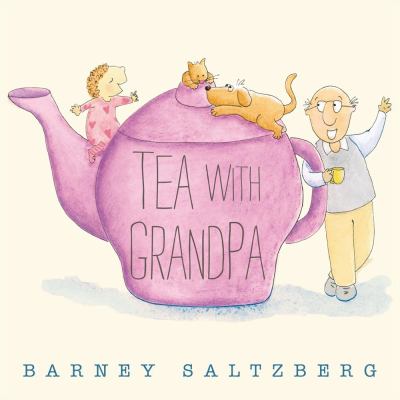
teawithgrandpa


The child in the book rushes home from school for her standing 3:30 date with her grandfather.  They talk, share tea, and read books.  The catch is that Grandpa is talking to the child by Skype.

Nana in the City, by Lauren Castillo.
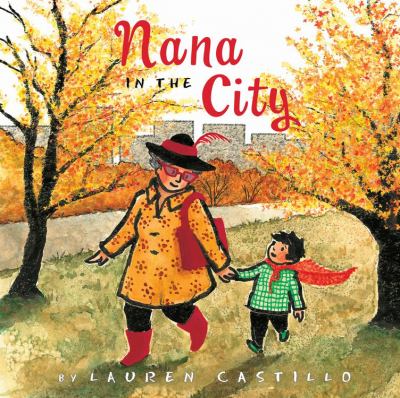
nanainthecity


The little boy in this book is visiting his grandma in the big city where she lives.  He’s not at all sure that he likes the city, or that he thinks it is a safe place for his grandmother to live.  Nana, however, has a solution to his concerns. She provides him with a cape that confers superpowers and he is a braver visitor from there on.

Amelia Bedelia’s First Apple Pie, by Herman Parish.

ameliabedeliasfirstapplepie


You may be familiar with Amelia Bedelia as the literal-minded maid who makes many mistakes because she doesn’t understand colloquialisms.  Now we have a much younger Amelia, still plagued with literalism, who is visiting her grandparents.  She wants to make an apple pie but, with her usual problems, her efforts are fraught with problems.  Don’t worry.  It all comes out well in the end, and the apple pie is delicious.

Heaven Is Having You, by Giles Andreae.
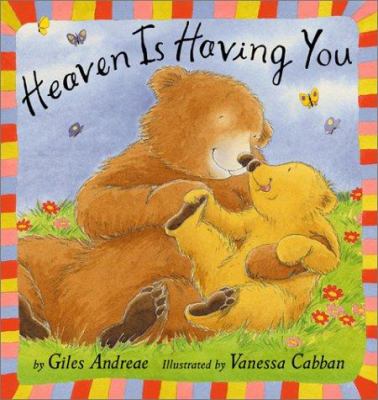
heavenishavingyou


Grandma Bear believes that heaven is all around her every day.  She also knows that the very best example of “heaven on earth” is having her small bear grandchild with her.

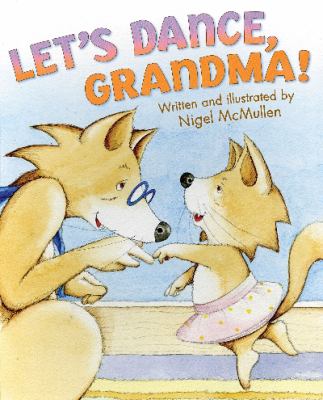
Let’s Dance, Grandma!, by Nigel McMullen.
letsdancegrandma


Lucy loves to dance, but she is happiest when she is dancing with her grandmother.

The Ultimate Guide to Grandmas and Grandpas!, by Sally Lloyd Jones.

ultimateguidetograndmasandgrandpas


This is a book for kids about the care and feeding of grandparents.  It suggests ways to keep grandparents entertained by giving them special treats, singing to them, and dancing with them.

Everything is Different at Nonna’s House, by Caron Lee Cohen.

everythingisdifferentatnonnashouse


A young boy lives in the city while his grandparents live on a farm.  Their living environments are very different.  The one unchangeable thing is how much the boy’s grandparents love him, whether in his city or their country.

Don’t sacrifice the experience of shared reading just because you live far from your grandchildren or your grandparents.  The library and other online resources make it possible to keep the lines of communications open, wherever you live.

-Written by Lois Rubin Gross, Senior Children’s Librarian

International Literacy Day, September 8: Why U.S. Children Should Understand the Privilege of an Education

3 Sep

On Monday, September 8, we will celebrate International Literacy Day.  Based on an old agrarian model, students in the United States will have just started back to school.  In our area of the country, the return to school usually coincides with the conclusion of the beach season.

U.S. students spend an average of 180 days per year in the classroom.  In the developed world, this places us very close to the bottom of the list for days of school attendance.  At the top of the list is China with 260 days and Japan with 243 days.

Over the summer, we have seen many Hoboken children come to the library to do their summer reading assignments. Motivated students showed up early in the summer and then continued to read independently through the rest of the break.  I am very proud to say that at least 207 students, this year, participated in the library’s Summer Reading Program and cumulatively logged 4367 hours of reading.  The library also promoted pre-school literacy by rewarding younger children for listening to at least ten books.  44 children took part in this program.  According to a document prepared by the New York State Library, “learning slide,” i.e., the loss of knowledge during the summer break period is mitigated by involvement in a library Summer Reading Program:  “Current research points out that increased summer reading reduces summer learning loss.  Secretary of Education, Arne Duncan, has stated “A key step toward stopping the “summer slide”, is the development and launch of high quality programs that take advantage of time outside the school day and year to help children learn, grow, and develop” (Elling, 2009).”

It is important that U.S. children understand the privilege of having available to them a free education.  Certainly, there are school districts that perform better than others in the delivery of a top quality education, but the mere fact of an available education is something that is envied by many young people around the world.  International Literacy Day is an excellent opportunity to help your child understand the importance of having an educated and literate citizenry if we are to stand beside other countries that place great importance on educating their children.  One of the best ways to do this is to learn about children, around the world, who fight for the right to be educated.  Especially in the case of young women who are routinely denied the right to be educated in other nations, we must understand that education is a gift from generation to generation.  To quote Queen Rania of Jordan, “If you educate a woman, you educate a family, if you educate a girl, you educate the future.”

The following is a list of books and two recently released documentaries that will teach your children about the determination of many young people around the world to get an education and make a place for themselves as leaders of their communities, their countries, and the world:

Armando and the Blue Tarp School, by Edith Hope Fine and Judith Josephson.

armando-blue-tarp-school

Armando and his father work in Mexico as trash pickers.  Their job seems hopeless and the chance of elevating their station in life is an impossible dream.  Then, Senor David sets up a makeshift school covered by a blue tarp, right near the garbage dump.  Armando’s father resolves that his son will get an education and have a better life. Armando excels in art, and when a fire breaks out in their town, it is Armando’s pictures that bring attention to the town and gets outside support. (Picture Book/ Fiction)

Beatrice’s Dream: A Story of Kibera Slum, by Karen Lynn Williams.

beatrices-dream

Beatrice is a thirteen-year old girl who lives in a Nairobi shantytown.  Each day, she walks to school through mud and dirt.  Her goal is to become a nurse and help the people of her town, and her teachers at school encourage her to learn in an atmosphere of support and safety. (Middle Reader/Young Adult Fiction)

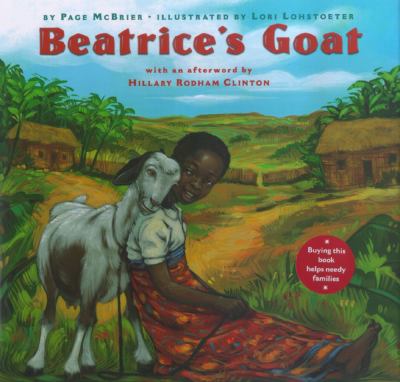
Beatrice’s Goat, by Paige McBrier.

beatrices-goat

Beatrice longs to go to school more than anything else.  However, she knows that school fees and uniforms cost more than her family can afford.  Then, Heifer International gives her a goat that was donated by an American family.  With this precious gift, Beatrice is able to raise the money she needs to have to enroll in school and help her family live a better life. (Picture Book/ Non-fiction)

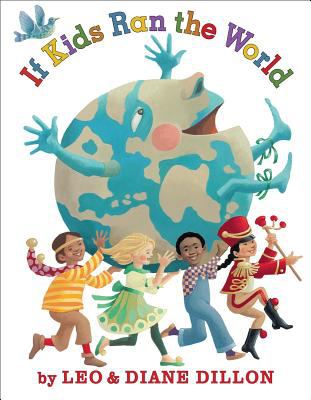
If Kids Ran the World, by Leo and Diane Dillon.

if-kids-ran-the-world

This brand new entry from an award winning husband-and-wife author and illustrator team supposes a world where children are in charge.  With the optimism and idealism of childhood, the Dillons see a child-created world without hunger, with adequate housing, with available health care, with kindness to all, and education for every person. The book is filled with colorful, multi-ethnic illustrations and a sense that children have the ability to achieve this Utopia. (Picture Book/Fiction)

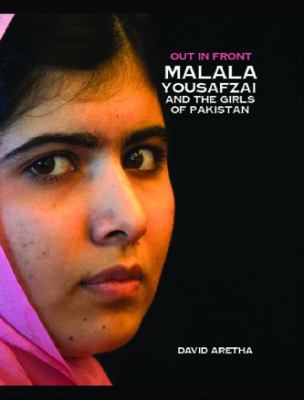
Malala Yousafzai and the Girls of Pakistan, by David Aretha.

malala-yousafzai

Following the success of the autobiographical book, I Am Malala, by Malala Yousafzai and Christine Lamb, this is a biography of Yousafzai, the young Pakistani girl whose fight for education set her at odds with the Taliban who tried to kill her in order to make an example of her.  In addition to telling the story of Malala’s brave recovery, the book traces the recent history of Pakistan and the conditions that have led to the suppression of education for young women. (Young Adult/ Non-Fiction)

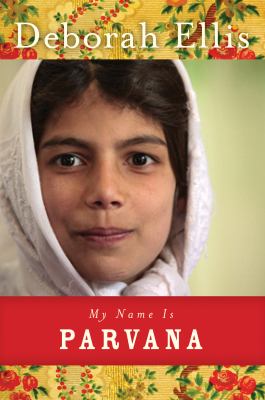
My Name Is Parvana, by Deborah Ellis.

my-name-is-parvana

This is part of the award-winning series by Ellis called The Breadwinner about a young girl who disguises herself as a boy so that she can support her family after her father is imprisoned by the Taliban. In this installment, Parvana, now fifteen years old, continues to fight for an education even though going to school endangers her life under the Taliban regime. (Middle Reader/Young Adult Fiction)

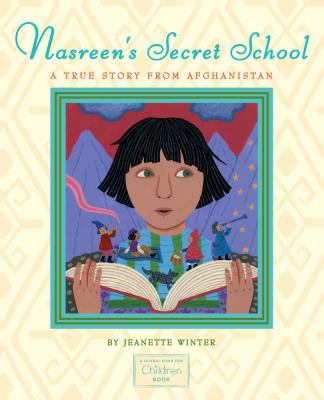
Nasreen’s Secret School, by Jeanette Winter.

nasreens-secret-school

Nasreen is desolate when her parents disappear.  She has not spoken a word since their disappearance.  It is up to her grandmother to try to save Nasreen and she does this by enrolling her in a secret school.  In Nasreen’s Afghani village, girls are not allowed to attend school, so this is a courageous act on the part of Nasreen and her grandmother. Education helps Nasreen to heal and, eventually, to speak again. Illustrated with beautiful folk art pictures.  Based on a true story. (Juvenile/Middle Reader/ Non-Fiction)

Running Shoes, by Frederick Lipp.

running-shoes

When Sophia, a young Cambodian girl, wants to go to school, it requires an act of courage and determination.  In her village, there are few resources, and her father has just died.  Although she wants to continue in school, the trip must be made of foot and she does not have good shoes.  A compassionate social worker makes her a gift of a pair of running shoes that allow her to travel the rocky roads to school each day and continue her education.

A School Like Mine: A Unique Celebration of Schools Around the World, by Penny Smith and Zehovit Shalev.

school-like-mine

This book shows the commonalities and differences of how children attend school around the world.   Children of six continents are shown in their schools covering everything from village schools to urban schools, and rural schools to (American) home schools.  Many pictures illustrate the difference in environment and dress. (Juvenile Non-Fiction)

Three Cups of Tea: One Man’s Mission to Promote Peace One School at a Time, by Greg Mortenson.

three-cups-of-tea

In 1993, the author was hiking in the mountains of Pakistan when he became lost.  He was rescued and cared for by local villagers.  Vowing to repay them for their kindness, Mortenson set about creating an initiative to build schools both in Pakistan and Afghanistan.  The story is retold for younger children in the book, Listen to the Wind: the Story of Dr. Greg and the Three Cups of Tea,  also by Greg Mortenson with photos by Susan Roth. (Juvenile/ Non-Fiction)

In addition to the wealth of books highlighting the importance of education to young people around the world, learn more about the effort to empower young women through education in the following two documentaries:

Girl Rising, by Richard Robbins.

girl-rising

The Academy Award nominated filmmaker documents the journeys of nine courageous young women around the world as they fight to pull themselves out of poverty and, against all odds, attain an education.  The stories are voiced by nine well-known actors including Kerry Washington, Liam Neeson, Frieda Pinto, Alicia Keys, Chloe Grace Moretz, Salma Hayek, and Selena Gomez.

Half the Sky, directed by Maro Chermayoff and written by Michelle Ferrari.

half-the-sky

Inspired by the book of the same name by Nicholas Kristof and Sheryl WuDunn, This film travels around the world documenting the oppression of young women who are frequently sold into slavery or prostitution but who have managed to save themselves, and through courage and education, reach back and pull other women out of lives of poverty and abuse.

All of these books and films are available to you and your young people through the BCCLS library system.  Use your library card, this month, to exercise the gift of literacy from which we all benefit.

-Written by Lois Rubin Gross, Senior Children’s Librarian