Archive | Children’s RSS feed for this section

Easing a Child Through Divorce

8 Oct

When parents divorce, it is the children who are often the collateral damage.  No one wants to see their child hurt when parents decide to end a marriage, but it is inevitable because even the most civilized divorces leave children – especially small children – wondering why mom and dad can’t just learn to share as children do.

This is not a guilt trip for anyone going through the pain of a divorce, but there are many books that can help you to do some bibliotherapy, i.e., healing your child through books.  I’ve focused on books for young children, although there are many, many adult books to offer advice of easing your children through the divorce process.  However, the following books are stories to be shared with a child to reassure him or her that many families go through the difficulties that their family is experiencing and that there are coping strategies to help them deal with the changes in their lives.  Most of these books focus on shared custody experiences with parents working extremely hard to make sure that the child experiences the least upheaval, possible.

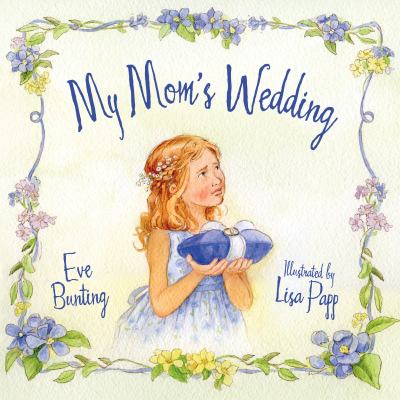
My Mom’s Wedding, by Eve Bunting.
mymomswedding


Seven year old Pinkie has mixed feelings about her mother’s remarriage.  Things get even weirder when Pinkie learns that her father will be a guest at her mother’s wedding.  (Ages 4 to 8)

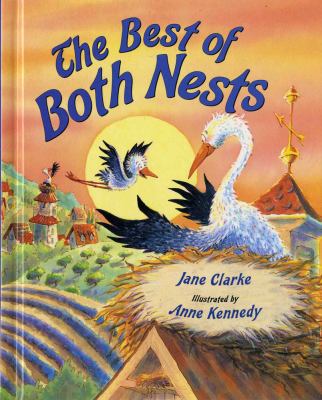
The Best of Both Nests, by Jane Clarke
bestofbothnests


When Stanley the Stork’s parents’ divorce his father goes to live in a new nest.  Then he meets Stella whose parents are also divorcing and teaches Stanley that two nests can better than one. (Ages 3+)

Fred Stays With Me, by Nancy Coffelt.

fredstayswithme


A child describes her parents’ shared custody arrangement that includes her dog going back and forth between her mother’s and her father’s houses.  Fred, the dog, is having a tough time adjusting to his new lifestyle and is causing trouble in each of the homes.  However, his devotion to his young mistress earns him her love and his dog treats. (Ages 5 to 8)

The “D” Word: Divorce, by Julia Cook.

dword


Through well-placed humor and good advice, this book expresses the emotions children feel during the break-up of a marriage, and suggests ways that parents can help them to deal with their feelings.  The book employs the “Three “C’s”: I didn’t cause it, I can’t control it, I have to learn to cope with it. (Ages 6 to 10)

Emily’s Blue Period, by Cathleen Daly.

emilysblueperios


After her parents’ divorce, Emily finds comfort in learning about art, and expressing herself and her emotions through art projects. (Ages 6 to 8)

I Have Two Homes, by Marian DeSmet.

ihavetwohomes


When her parents separate, Nina sees that she can still spend time with each parent but in their different homes.  (Ages 3 to 5)

Weekends with Dad: What to Expect When Your Parents Divorce, by Melissa Higgins.

weekendswithdad


This book walks a child through the difficult events surrounding parents’ divorce and explains the emotions that the child may experience in terms that the child can understand. (Ages 4 to 7)

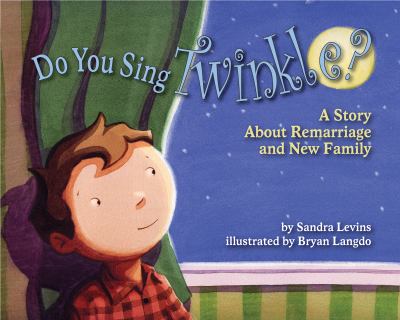
Do You Sing Twinkle?: A Story About Remarriage and New family, by Sandra Levins.
doyousingtwinkle


A little boy has a particularly tough time when his parents divorce, and his dad remarries.  The fact that his father now has a new family is particularly troubling to the child, but a caring teacher at school helps him work through his anger.  His parents also come up with constructive solutions to help him feel secure in both of his homes.  (Ages 3 to 7)

Was It the Chocolate Pudding?: A Story for Little Kids About Divorce, by Sandra Levins.

wasitthechocolatepudding


This is a book to teach children, realistically, about divorce, about joint custody agreements, and about how things will change when they are living with a single parent. (Ages 3 to 5)

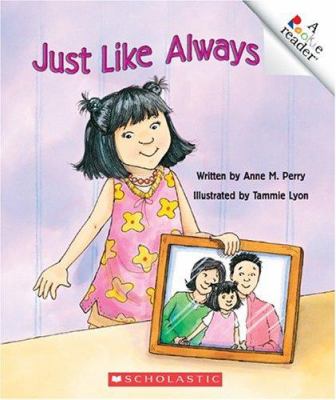
Just Like Always, by Anne M. Perry.
justlikealways


In this easy reader, children just learning to read independently learn that many things remain the same even after parents divorce.  (Ages 5 to 8)

It’s Not Your Fault, Koko Bear, by Vicki Lansky.

itsnotyourfaultkokobear


When Koko Bear’s parents are getting a divorce, he goes through a range of emotions: anger, guilt, confusion, and sadness.  His parents, who always have his best interests at heart, help him to deal with the emotional upheaval he is experiencing.  This book contains tips for parents about helping kids to deal with divorce. (Ages 3 to 7)

Oliver at the Window, by Elizabeth Shreeve.

oliveratthewindow


When Oliver’s parents divorce, he finds comfort in his stuffed lion.  The lion stays right by him as he stands in the window waiting for his mom or his dad to come to pick him up for their custodial time. (Ages 3 to 5)

Monday, Wednesday, and Every Other Weekend, by Karen Stanton.

mondaywednesday


Although Henry enjoys his time at his mother’s apartment and his father’s house, his dog, Pomegranate, is having trouble figuring out which place to actually call home.  (Ages 3 to 6)

Living with Mom and Living with Dad, by Melanie Walsh.

livingwithmomlivingwithdad


With illustrations that resembles a child’s finger paintings, this book shows how the child involved lives very different lives on his mom’s farm and in his dad’s urban home.  However, mom and dad put up a united front by both attending his school play.  (Ages 3+)

The Hoboken Public Library and other libraries in the BCCLS system provide many books to support children in emotional changes in their lives.  Check out the library’s catalogs for other books to help children cope with family change.

-Written by Lois Rubin Gross, Senior Children’s Librarian

Behind the Barbed Wire Fence

24 Sep

Some time this year, a new musical will open on Broadway called, “Allegiance.”  It is the story of actor George Takei (Mr. Sulu from Star Trek) and the years his family spent interned in Japanese internment camps during World War II.

The detainment of American citizens based on the country of origin and their race is a dark chapter in our nation’s history.  Fueled by anti-Japanese sentiments after the bombing of Pearl Harbor, nearly 120,000 Americans were sent to camps across the west and in the south purely because they were Japanese.  The conditions in the camps were bad.  Men in the camps were asked to swear loyalty oaths and those that didn’t, the “No-No boys,” were either imprisoned or repatriated to Japan, a country some of them had never even visited.  Many young men, to prove their loyalty to the United States, enlisted in the Army as part of the 100th/442nd.  This unit of the military was the most highly decorated unit in military history

On January 2, 1945, almost seventy years ago, the Supreme Court decided that loyal American citizens could not be imprisoned and, by 1946, the camps were closed.  However, the Japanese-Americans imprisoned during that time lost their dignity and their property.  Only one governor, Colorado Governor Ralph Carr, stood against the Federal government and gave state citizenship to the prisoners in his state.  To quote Governor Carr, “If you harm them, you must harm me. I was brought up in a small town where I knew the shame and dishonor of race hatred. I grew to despise it because it threatened the happiness of you and you and you.”

In the following list, I have included both fact and fiction; adult, young adult, and children’s books.  We learn best by remembering the mistakes that were made in the past.  The following books are an important step in teaching children about this little acknowledged chapter in American history:

Voices from the Camp: Internment of Japanese Americans During World War II, by Larry Dane Brimner.

voicesfromthecamps


Author Brimner details personal testimony of Japanese American survivors of the World War II forced evacuation. The book discusses the actual “relocation” of Japanese Americans, daily life in the camps, and how people were treated upon their return to their former homes.  It also discusses the burden of shame that survivors of the camps carry. (Grades 7 to 12)

Fighting for Honor: Japanese Americans and World War II, by Michael Cooper.

fightingforhonor


Examines the history of the Japanese people in the United States including the mass relocation and the recruitment of Japanese men to the 100th/442nd, the most decorated unit in the U.S. military. (Grades 6 to 12)

The Magic of Ordinary Days, by Ann Howard Creel.

magicofordinarydays


When a young woman in Denver becomes pregnant by a soldier, her father sends her into an arranged marriage to a farmer in Southern Colorado.  Taken from her home and urban lifestyle, the woman is at loose ends until she befriends two young Japanese women in the nearby Amache camp.  This friendship accidentally leads to the escape of German prisoners of war and the prosecution of the Japanese women.  Based on a true story, this is an excellent book club selection.  It was also made into a 2005 Hallmark movie starring Keri Russell and Skeet Ulrich.  (Grades 9+)

Red Berries, White Clouds, Blue Skies, by Sandra Dallas.

redberrieswhiteclouds


When 12 year old Tomi and her family are “relocated” from Southern California to a camp on the Colorado plains, their lives go through upheaval.  Tomi is an optimistic girl and not only makes an adjustment, but helps other people in the camp to adjust, as well.  However, Tomi’s father had been imprisoned without cause and when he finally returns to his family, he is no longer a patriotic American, and his disillusionment spreads to his daughter.  Only after Tomi writes a prize winning essay on Why I Am an American do father and daughter make their peace with the treatment they experienced.  (Grades 4 to 8)

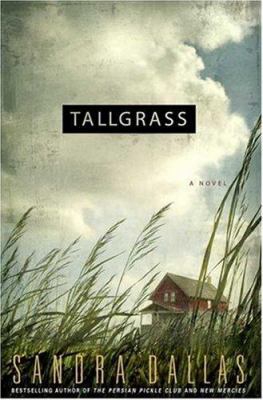
Tallgrass, by Sandra Dallas.

tallgrass


When a young girl is murdered on a Colorado farm, the residents of the nearby Japanese internment camps are suspected.  A local girl observes the presence of prejudice in her community, even as her father displays his ethics by fighting bigotry.  (Grade 9+)

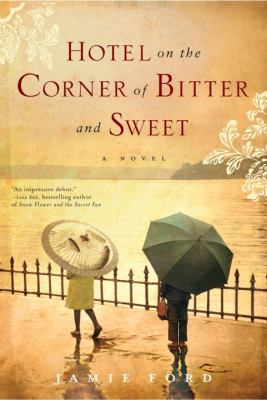
Hotel on the Corner of Bitter and Sweet, by Jamie Ford.

hotelonthecorner


This popular book club selection takes place in Seattle just before the war.  A young Chinese boy who is a jazz aficionado, befriends a Japanese girl and a Black musician.  The two children experience racial discrimination as they are drawn to each other.  (Adult)

Silver Like Dust: One Family’s Story of America’s Japanese Internment, by Kimi Cunningham Grant.

silverlikedust


A young girl in Pennsylvania denies her Japanese heritage until she learns the story of her grandmother’s relocation to the Heart Mountain Camp in Wyoming.  (Adult)

Dash, by Kirby Larson.

dash


When her family is forced into an internment camp, Mitsi Kashino must give her beloved dog, Dash, to a neighbor.  During her imprisonment, it is the ongoing letters about Dash that keep Mitsi connected to the outside world.  (Grades 3 to 7)

Baseball Saved Us, by Ken Mochizuki.

baseballsavedus


A Japanese American boy learns to play baseball as a survival strategy when he is in the relocation camps.  After the war, when he has returned home, playing baseball for his school helps him to survive prejudice.  (Grades 1 to 5)

I Am an American: A True Story of Japanese Internment, by Jerry Stanley.

iamanamerican


A highly personal portrait of Shi Namua, one of the nearly 120,000 Americans of Japanese descent who were evacuated to internment camps.  This book places discriminatory racial laws and segregated California schools in the perspective of wartime jingoism. (Grades 3 and up).

Farewell to Manzanar: A True Story of Japanese American Experience During and After the World War II Internment, by Jeanne Wakatsuki Houston.

farewelltomanzanar


This is a beautifully rendered newer edition of a classic autobiography for younger readers.  Jeanne Wakatsuki was seven years old when her family was sent to Manzanar along with 10,000 other Japanese Americans.  The author describes camp life, an attempt by reluctant prisoners to establish a “normal” day to day life by creating schools, Boy and Girl Scout troops, having “sock hops,” cheerleading squads, and all of the trappings of American life outside of the camps.  (Grades 7 and up)

To the Stars: The Autobiography of George Takei, Star Trek’s Mr. Sulu, by George Takei.

download

Image via Amazon

Before he became an actor and became well-known for the part of Mr. Sulu on Star Trek, Takei was a young California boy who, with his family, was deported to an internment camp in the Arkansas swamps, and later transferred to another camp in California.  Takei, who has always been a political activist, also discusses his early work on California strawberry farms which helped him to understand issues of migrant labor.  For “Trekkies” or “trekkers,” the book touches on well-known conflicts between Takei and actor William Shatner. (Adult)

Several of the books mentioned in this list are fine selections for book discussion groups.  While many (young) Americans are not even aware of this chapter of American history, it is an important lesson in life on the home front during World War II.

-Written by Lois Gross, Senior Children’s Librarian