Archive | Children’s Fiction RSS feed for this section

Searching for Imaginary Beasties: Invisible Beasts, Half-Off Ragnarok, and Professor Wormbog in Search for the Zipperump-a-Zoo

22 Oct

From Big Foot to the Loch Ness Monster there are all sorts of creatures that exist in legends and myths.  My husband knows someone who claimed he saw a vampire cat in the Phillipines and even the creator of Sherlock Holmes, Sir Arthur Conan Doyle believed in fairies.  Whether you believe that these animals of legend are hidden away or just like a good story, what better time than Halloween to track down one of these beastie books?

Half-Off Ragnarok : An InCryptid novel, by Seanan McGuire

halfoffragnarok


I had written about Seanan McGuire’s InCryptid series in last year’s Halloween post on Urban Fantasy series.  The first two books in the series Discount Armageddon and Midnight Blue-Light Special focused on Verity Price a cryptozoologist and ballroom dancer.  In the latest novel in the InCryptid series McGuire focuses on Verity’s older brother Alexander.  The tone and humor are still familiar from the first novels, but I liked Alexander’s perspective as a cryptoherpetologist who to the ordinary world seems to be studying regular reptiles and working at a zoo in Ohio, but is actually studying the fricken (small feathered frogs) in the nearby swamps.  There is a twist with his Australian girlfriend Shelby, who also works at the zoo as a big cat trainer, which I won’t reveal but further builds on the mythology of the world that the book is set in.  The book’s main mystery is who and why someone or something is turning people into stone so there are a lot of Basilisks, Gorgons, and Cockatrices in this book, but many other creatures are featured as well including my favorite the Aeslin Mice (think the mice from Cinderella, but ultrareligious).  Since Half-Off Ragnarok focuses on Alexander rather than Verity, it feels like a fresh start, but the book reveals some of what occurred in the first two books so if you are one to avoid spoilers you may want to start with Discount Armageddon first.  In the acknowledgements McGuire mentions that the next book will also focus on Alexander.  I’m hoping that future novels may focus on more of the Price family who all seem equally quirky and endearing.  Pocket Apocalypse the next book in the series is scheduled to be released in March of next year.

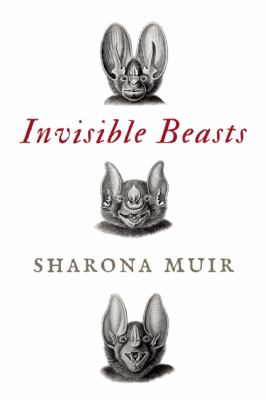
Invisible Beasts: Tales of the Animals that Go Unseen Amongst Us, by Sharona Muir
invsiblebeasts


Muir’s debut novel Invisible Beasts is a beautifully written guide book to unseen animals.  Unlike in the InCryptid series these animals are unseen not simply because they are hiding from humans, but because they literally can’t be seen except for a few individuals with a rare genetic ability.  Sophie, Invisible Beast’s narrator, is one of these individuals.  Since unlike her sister she is not a trained researcher her observations are less scientific and more poetic than one would find in your average guidebook (Muir is unsurprisingly a poet as well as prose writer).  Instead of drawing from the creatures of myths and legends, Muir creates original beasts.  Many of the animals such as the Truth Bats, who are disturbed by lying and give a person’s voice a ring of truth, are used as analogies for things we encounter in our day to day lives or as explanation for things such as the invisible species of possum that likes to hide missing socks or keys in its pouch.  The book also draws attention to the importance of ecological preservation beyond iconic animals like pandas or bald eagles.  I did at times wish there was more of an overarching story along with the entries about each animal.  I would enjoy seeing a sequel to Invisible Beasts that focused more on Sophie and her interaction with the visible world as well as featuring the unique creatures in the invisible one. Parts of Invisible Beasts appeared in literary magazines as individual stories and at times the work felt more like a short story collection than a novel and therefore it seemed like it wasn’t wholly necessary to read about each animal in order.  Two of my favorite “animals” were the Spiders of Theodora and the Invisible Dogs.   To learn more about Muir’s inspiration for her imaginary bestiary you can read an insightful interview on her publisher’s website.

Professor Wormbog in Search for the Zipperump-a-Zooby Mercer Mayer

zipperumpazoo


Little kids love beasties and shouldn’t be left out of the hunt for incryptids.  Mercer Mayer’s Professor Wormbog in Search for the Zipperump-a-Zoo, was one of my favorite picture books as a kid.  My cousin had left her copy at my grandmother’s house and I always had it read to me several times whenever I stayed there.  I loved the silly bright pictures of all the made up creatures that Mayer created.  There are little hidden details on every page that make it a joy to look at.  I couldn’t resist buying a copy for my own toddler last Halloween.  This title contains many of the creatures Mayer later used in his popular Little Monsters series.  Professor Wormbog has collected monsters from A (Askinforit) to Y (Yalapappus), but he is missing the mysteries and elusive Zipperump-a-Zoo, which he can’t find on land, in the sea, or up in the trees.  Kids will love the twist ending and parents will enjoy the fun humor even as their tongues get twisted around some of the creature’s names.  Mayer has published over 300 titles for kids on everything from potty training to learning to share, but this is still my favorite.  You can find many of Mayer’s books from BCCLS libraries.

-Written by Aimee Harris, Head of Reference

Behind the Barbed Wire Fence

24 Sep

Some time this year, a new musical will open on Broadway called, “Allegiance.”  It is the story of actor George Takei (Mr. Sulu from Star Trek) and the years his family spent interned in Japanese internment camps during World War II.

The detainment of American citizens based on the country of origin and their race is a dark chapter in our nation’s history.  Fueled by anti-Japanese sentiments after the bombing of Pearl Harbor, nearly 120,000 Americans were sent to camps across the west and in the south purely because they were Japanese.  The conditions in the camps were bad.  Men in the camps were asked to swear loyalty oaths and those that didn’t, the “No-No boys,” were either imprisoned or repatriated to Japan, a country some of them had never even visited.  Many young men, to prove their loyalty to the United States, enlisted in the Army as part of the 100th/442nd.  This unit of the military was the most highly decorated unit in military history

On January 2, 1945, almost seventy years ago, the Supreme Court decided that loyal American citizens could not be imprisoned and, by 1946, the camps were closed.  However, the Japanese-Americans imprisoned during that time lost their dignity and their property.  Only one governor, Colorado Governor Ralph Carr, stood against the Federal government and gave state citizenship to the prisoners in his state.  To quote Governor Carr, “If you harm them, you must harm me. I was brought up in a small town where I knew the shame and dishonor of race hatred. I grew to despise it because it threatened the happiness of you and you and you.”

In the following list, I have included both fact and fiction; adult, young adult, and children’s books.  We learn best by remembering the mistakes that were made in the past.  The following books are an important step in teaching children about this little acknowledged chapter in American history:

Voices from the Camp: Internment of Japanese Americans During World War II, by Larry Dane Brimner.

voicesfromthecamps


Author Brimner details personal testimony of Japanese American survivors of the World War II forced evacuation. The book discusses the actual “relocation” of Japanese Americans, daily life in the camps, and how people were treated upon their return to their former homes.  It also discusses the burden of shame that survivors of the camps carry. (Grades 7 to 12)

Fighting for Honor: Japanese Americans and World War II, by Michael Cooper.

fightingforhonor


Examines the history of the Japanese people in the United States including the mass relocation and the recruitment of Japanese men to the 100th/442nd, the most decorated unit in the U.S. military. (Grades 6 to 12)

The Magic of Ordinary Days, by Ann Howard Creel.

magicofordinarydays


When a young woman in Denver becomes pregnant by a soldier, her father sends her into an arranged marriage to a farmer in Southern Colorado.  Taken from her home and urban lifestyle, the woman is at loose ends until she befriends two young Japanese women in the nearby Amache camp.  This friendship accidentally leads to the escape of German prisoners of war and the prosecution of the Japanese women.  Based on a true story, this is an excellent book club selection.  It was also made into a 2005 Hallmark movie starring Keri Russell and Skeet Ulrich.  (Grades 9+)

Red Berries, White Clouds, Blue Skies, by Sandra Dallas.

redberrieswhiteclouds


When 12 year old Tomi and her family are “relocated” from Southern California to a camp on the Colorado plains, their lives go through upheaval.  Tomi is an optimistic girl and not only makes an adjustment, but helps other people in the camp to adjust, as well.  However, Tomi’s father had been imprisoned without cause and when he finally returns to his family, he is no longer a patriotic American, and his disillusionment spreads to his daughter.  Only after Tomi writes a prize winning essay on Why I Am an American do father and daughter make their peace with the treatment they experienced.  (Grades 4 to 8)

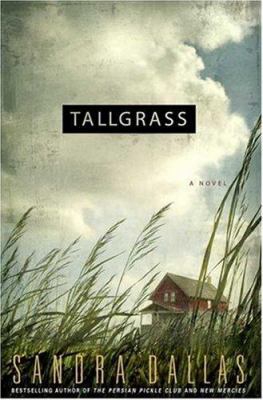
Tallgrass, by Sandra Dallas.

tallgrass


When a young girl is murdered on a Colorado farm, the residents of the nearby Japanese internment camps are suspected.  A local girl observes the presence of prejudice in her community, even as her father displays his ethics by fighting bigotry.  (Grade 9+)

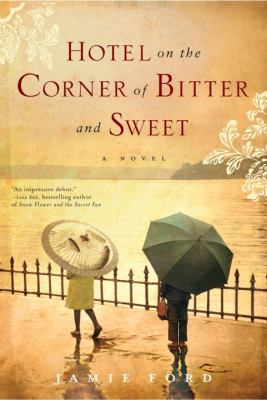
Hotel on the Corner of Bitter and Sweet, by Jamie Ford.

hotelonthecorner


This popular book club selection takes place in Seattle just before the war.  A young Chinese boy who is a jazz aficionado, befriends a Japanese girl and a Black musician.  The two children experience racial discrimination as they are drawn to each other.  (Adult)

Silver Like Dust: One Family’s Story of America’s Japanese Internment, by Kimi Cunningham Grant.

silverlikedust


A young girl in Pennsylvania denies her Japanese heritage until she learns the story of her grandmother’s relocation to the Heart Mountain Camp in Wyoming.  (Adult)

Dash, by Kirby Larson.

dash


When her family is forced into an internment camp, Mitsi Kashino must give her beloved dog, Dash, to a neighbor.  During her imprisonment, it is the ongoing letters about Dash that keep Mitsi connected to the outside world.  (Grades 3 to 7)

Baseball Saved Us, by Ken Mochizuki.

baseballsavedus


A Japanese American boy learns to play baseball as a survival strategy when he is in the relocation camps.  After the war, when he has returned home, playing baseball for his school helps him to survive prejudice.  (Grades 1 to 5)

I Am an American: A True Story of Japanese Internment, by Jerry Stanley.

iamanamerican


A highly personal portrait of Shi Namua, one of the nearly 120,000 Americans of Japanese descent who were evacuated to internment camps.  This book places discriminatory racial laws and segregated California schools in the perspective of wartime jingoism. (Grades 3 and up).

Farewell to Manzanar: A True Story of Japanese American Experience During and After the World War II Internment, by Jeanne Wakatsuki Houston.

farewelltomanzanar


This is a beautifully rendered newer edition of a classic autobiography for younger readers.  Jeanne Wakatsuki was seven years old when her family was sent to Manzanar along with 10,000 other Japanese Americans.  The author describes camp life, an attempt by reluctant prisoners to establish a “normal” day to day life by creating schools, Boy and Girl Scout troops, having “sock hops,” cheerleading squads, and all of the trappings of American life outside of the camps.  (Grades 7 and up)

To the Stars: The Autobiography of George Takei, Star Trek’s Mr. Sulu, by George Takei.

download

Image via Amazon

Before he became an actor and became well-known for the part of Mr. Sulu on Star Trek, Takei was a young California boy who, with his family, was deported to an internment camp in the Arkansas swamps, and later transferred to another camp in California.  Takei, who has always been a political activist, also discusses his early work on California strawberry farms which helped him to understand issues of migrant labor.  For “Trekkies” or “trekkers,” the book touches on well-known conflicts between Takei and actor William Shatner. (Adult)

Several of the books mentioned in this list are fine selections for book discussion groups.  While many (young) Americans are not even aware of this chapter of American history, it is an important lesson in life on the home front during World War II.

-Written by Lois Gross, Senior Children’s Librarian