Archive | April, 2020

Writing Inspiration: A Love Song to the Lonely

10 Apr

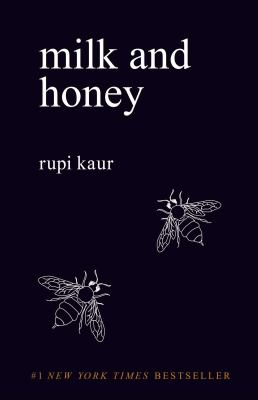
MilkandHoney
I had written about one of New York Times bestsellers “Milk and Honey” by Rupi Kaur, as poetry that is an outstanding understatement. Now, for National Poetry Month, I second that opinion with this next poem from that same chapter “the loving”.

“i do not want to have you night / to fill the empty parts of me / i want to be full on my own / i want to be so complete / i could light a whole city / and then / i want to have you / cause the two of us combined / could set it on fire”

As I’ve said before, “Milk and Honey” is not only a collection of poetry and prose about survival, it’s also a love song. This book calls to everyone, with its four chapters labeled, “the hurting”, “the loving”, “the breaking”, and “the healing”. During these times I find myself in the chapter “the loving”, specifically this poem.

Just as the poems have no titles, we have no name for this time we are all experiencing. This can be seen as an editing choice or a purposeful choice that is supposed to signify unity. Alluding to my idea, we see this from the chapter “the loving”. The last two lines of said poem can be found on page 59 and it reads:

cause the two of us combined / could set it on fire”

We are all in a time that we are all in. Everyone is experiencing suffering, pain, hurt, loss, and depravity, but we are all experiencing it together. In a time where some of us may be feeling lonely during isolation, let this poem remind you that you are not alone. This is a time for everyone, for you, to become great and to love yourself, so when we finally get together once again, we will light up the whole world.

Of course this is just my own emotional connection to this particular prose, as there are other particular depths within me that it reaches also. But as a whole this speaks to a deeper and somewhat neglected part of myself that calls to light how I see, treat, and care for myself emotionally, physically and spiritually.

Now is the time to love ourselves, to love one another, and feed into our neglected souls so when the isolation is lifted and we are ready to come back out, we set the world glowing with unity.

For more on poetry, please feel free to visit our Facebook and YouTube for some cool videos and our website for ways on how you can read online through our apps.  You can try writing some of your own with our Friday Writing Prompt featured below.

Written by
Sherissa Salas
Adult Programming Assistant/Media Liaison

Friday Writing Prompt:
Poetry can be intimidating since we do not encounter it as frequently on a daily basis as many types of writing, however, April being Poetry Month, it is the perfect time to dive in and give it a try, even if you never have before.  The best way to get a feel for poetry is by reading other poet’s works.  You can check out a variety of poetry collections including Kaur’s Milk and Honey on Hoopla.

Take inspiration from the beautiful lines of Kaur’s poem that Sherissa shared and think of how your own loneliness makes you feel.  What about it do you enjoy and what do you dislike?  What imagery or objects do you associate with it, that you could use in your poem?  What person have you not been able to see in the last few days, whom you miss, is the first you would like to see again?  How will you feel when you see them?  What will the experience be like?  Is there a specific imagery or object you associate with being together with them you could use in your poem?  Now get writing!  And if you like your poem consider sharing it with the person you were inspired by.

Have a favorite poet?  Share in our comment section!

Written by:
Aimee Harris
Head of Reference


Recommendations for Autism Acceptance Month

8 Apr

It is admittedly difficult all the time to be an openly autistic woman in this society. I’ve now lived that life for nearly 31 years, being “out” as autistic for 11 of them. I was diagnosed in 2009 at the age of 20 and decided to be forthright with people about it in the hopes that it would help them understand me better. It ended up leading me down a different path than I expected – I became a self-advocate, and I’ve now spoken at conferences regarding libraries and autism. If you’d told the scared 20-year-old that she’d someday do public speaking about her newly-diagnosed brain, how it works, and how best to accommodate it, she wouldn’t have believed you. That’s how it turned out for me, however, and it all started because I decided to begin writing a blog about being autistic and began finding other openly autistic people.

The hardest time to be autistic is the month of April. April has been declared Autism Awareness Month, but autistic people prefer the term Autistic Acceptance Month. This is because “awareness”can portray us as tragedies or burdens rather than people with different support needs living in a society not designed for us. April is therefore a very stressful month for us as we have to listen to people trying to “cure” something that can’t be cured and refusing to accept our differences as a natural part of the human condition.

To help combat those views, as they are prejudices many hold unknowingly due to how autism has traditionally been portrayed, I’ve decided to compile a list of books written by autistic authors about the autistic experience – and one book written by a non-autistic author who nevertheless has compiled an excellent history of our struggle for societal acceptance.

Look Me In The Eye
by John Elder Robison
Look me in the Eye
Look Me In The Eye by John Elder Robison is probably the best-known memoir by an autistic person. Robison is a public speaker now (I’ve had the honor of seeing him in person – we were on the same bill at a conference!). It’s a good starting point if you’re interested in seeking out autistic voices. Robison went undiagnosed for a large portion of his life, as many of us did (especially older autistic people), and he was finally diagnosed at age 40. Autism aside, his life is just plain interesting to read about because he’s had some really cool jobs, so I double recommend this one!

Pretending To Be Normal
by Liane Holliday Willey
Pretending to be Normal
Pretending To Be Normal by Liane Holliday Willey is another perspective on growing up undiagnosed until adulthood. The title has always resonated with me, because I’ve spent large portions of my life pretending to be “normal” just to protect myself from other people and their judgment, which is often harsh. It’s often especially difficult for women to get a diagnosis because autism is still frequently perceived as a “boy’s club” – indeed, I was a fairly obvious case in retrospect but wasn’t diagnosed until age 20. It’s especially common for autistic women to figure it out themselves before seeking or receiving a formal diagnosis because of this gender bias.

Funny, You Don’t Look Autistic
by Michael McCreary
Funny You Don't Look Autistic
Funny, You Don’t Look Autistic by Michael McCreary definitely has my favorite title on the list because, well, we’re told that all the time. People seem to think autism has a “look” somehow. It doesn’t. I often wonder if this is because Down Syndrome and certain other conditions have a chromosomal element that alters physical appearance so the public assumes autism must have one too. McCreary is living my dream and is doing comedy, which is what I’d hopefully be doing if I wasn’t an archivist instead. This book is also well suited for YA readers, so if you’ve got some teens looking for forthright information on autism this is a great book to pick up!  Currently it is part of Overdrive’s Big Library Read which connects readers around the world with the same book at the same time without any waitlists or holds; this title will be part of the Big Read till April 13.

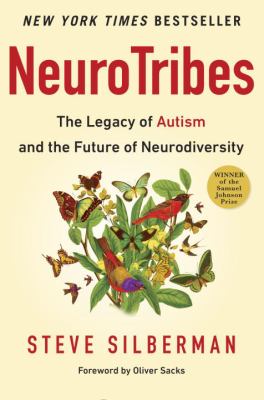
Neurotribes
by Steve Silberman
Neurotribes
Neurotribes by Steve Silberman was not written by an autistic person. Silberman isn’t one of us. However, he’s one of the best allies we’ve got, and Neurotribes is actually a comprehensive history of autism in society. Silberman certainly understands cultural stigmatization – he’s a Jewish gay man – and he brings that nuance to what is a wonderfully crafted history. I’m very proud to count him as an ally in the fight for autistic rights and acceptance.

We hope these books will help our non-autistic readers on their way to being a better ally to the autistic people in your life – and trust me, the odds are good you know at least one of us, even if you don’t know it yet!  If you are autistic and have a favorite book to recommend, please share it in our comments.

Thanks for all your support, and stay safe during this time, everyone!

Written by:
Steph Diorio
History Librarian

Besides being the local history librarian, Steph Diorio is an autistic self-advocate. She has, spoken at Targeting Autism, a conference regarding autism and libraries, twice. She is also the founder of the Autistic Gaming Initiative, a team of autistic gamers who livestream once a month to support the Autistic Self-Advocacy Network and Autistic Women and Nonbinary Network.