Often cooking is described as an art. Cooking also carries with it tradition. You may not know why you have to chill something before baking, but you know it is what is your grandmother always has done. But behind the art and the tradition also lies a great deal of science. If you are curious about the science behind some of your favorite foods or drinks, then these books will be a revelation.
The Drunken Botanist: The Plants that Create the World’s Great Drinks
by Amy Stewart
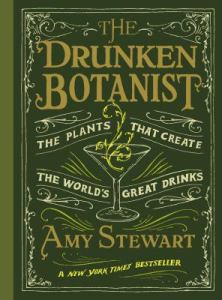
Everyone knows that wine is made with grapes, but many would probably not recognize a hops vine, if they were standing in front of one. Despite my high school proficiency test telling me my best choice of career was as a botanist (librarian was only number 10), I have avoided much exploration of the science of plants but, I couldn’t resist checking out Amy Stewart’s ode to the botany of alcohol. Whether you are a foodie, a gardener, or simply someone who occasionally likes imbibing, you will enjoy this fascinating work.
I read the book straight through, but my husband enjoyed skimming through it and felt it would make a good coffee table book. Part one begins with looking at distillation and fermentation and the plants that are frequently and sometimes not so frequently used in the process. She then moves on to fruits, flowers, nuts, spices, and herbs that are used to flavor the drinks. Finally part three includes items to use as mixers in cocktails. She infuses humor and interesting historical facts into the brew. Throughout there are tips on how to make cocktails with the variety of alcohols described as well as an explanation of how to grow some of the plants discussed for home brewing. If you are a fan of Stewart’s insect related works, you will be delighted by the inclusion of some insects commonly associated with the beverages including for marketing gimmick (the worm in tequila), coloring (in some Italian digestifs), or the source of an ingredient (bees making honey used in mead). Her focus is worldwide and touches on everything from rice for sake in Asia to agave for tequila in Mexico.
If you would prefer to only peruse the work for your favorite libations or plants, an index is included for easy browsing. And don’t worry despite the title, Stewart is not championing excessive drinking, she encourages throughout moderation in enjoying cocktails and portion sizes. The Drunken Botanist is available at the Hoboken Public Library in print format and in ebook format from elibrarynj and ebccls. Amy Stewart is the author of several other books available from BCCLS Libraries including Wicked Plants, Wicked Bugs, and Flower Confidential.
Molecular Gastronomy: Exploring the Science of Flavor
by Hervé This
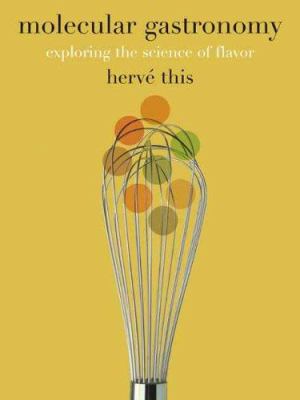
Hervé This’ Molecular Gastronomy looks at cooking from the perspective of physics and chemistry. He tests commonly held beliefs, to see what the science behind items is. The work is translated from French by Malcolm DeBevoise and there is a decidedly French focus on items such as quenelles, quiches, and soufflés. Since I was raised with French food as a staple I enjoyed this, but for non-Francophiles this might be a slight issue. But if you are adventurous, perhaps for those new to French food the work may be inspirational to try new dishes.
The work is broken down into four parts with further sections that focus on a specific topic. I found myself browsing through for the topics and dishes that most caught my fancy. Part One starts with Secrets of the Kitchen and includes discussions on topics of basic cooking techniques as pertaining to things like boiling eggs and making a fondue. I had always used white wines in my fondue, but hadn’t realized that their more acidic nature over reds helps stabilize the emulsion with the wine and the cheese. Part Two is the Physiology of Flavor which covers a fascinating discussion of the evolution of taste and how the process of taste occurs physically and in the brain. It also looks at how things like taste and digestion are related. It was interesting to learn that salt both increases agreeable taste and suppresses bitter taste, and that those who enjoy spicy foods may have burned out some of their receptors to sense the food’s heat. Part Three Investigations and Models looks at how science can be used to improve culinary techniques like bread rising, lumps in sauces, and the best glasses to use for all wines (narrow bowled glasses of the type more commonly used for white wines). It also explores how science can explain regional difference in things like Iberico ham and cheeses (helpful if you’ve ever wanted to justify to yourself on splurging on an expensive import). Part Four A Cuisine for Tomorrow includes areas for further development such as new methods of heating food and cooking in a vacuum. A helpful glossary is included, but the section for further reading may be limiting to American readers since many of the articles listed are in French.
Molecular Gastronomy is available from BCCLS libraries in print and as an ebook from elibrarynj. Kitchen Mysteries: Revealing the Science of Food by Hervé This (translated by Jody Gladding) is also available from BCCLS in print. If you are intrigued by the topic of molecular gastronomy and would like to learn more you should check out Modernist Cuisine: The Art and Science of Cooking by Nathan Myhrvold, an epic six volume work or Myhrvold’s more compact one volume Modernist Cuisine at Home. Both are available from BCCLS Libraries.
The World in Your Lunch Box: The Wacky History and Weird Science of Everyday Foods
by Claire Eamer

Adults don’t have to be the only ones to explore the science behind food. Claire Eamer’s The World in Your Lunch Box allows kids to learn more about what they eat. The book contains fun and bright illustrations by Sa Boothroyd. This book would be appropriate for kids around grades 3-6. The book is broken down into seven sections based on the days of the week with different food kids love on each day including pizza, hot dogs, bananas, ice cream and more. It ends with dessert (a top 10 food facts list). Kids will learn interesting science facts such as watermelons are more than 90% water and have a thick waxy rind that helps them from becoming dried out. I even learned some interesting facts myself such as my favorite spice cinnamon can reduce people’s blood sugar levels. Amongst the science facts are historical tidbits and jokes your kids will enjoy. An index at the back allows kids to find their favorite food fast and Further Reading and Selected Biography selections will give kids and parents more to chew on. The World in Your Lunch Box along with several of Eamer’s other works are available in print from BCCLS libraries.
-Written by Aimee Harris, Head of Reference
Tags: amy stewart, claire eamer, cooking, herve this, molecular gastronomy, science, the drunken botanist, the world in your lunch box