If you haven’t heard, I’m heading off into the Hudson River sunset at the end of this month. It’s been my pleasure to have worked with you and your families for the past six years as the Children’s Librarian. I’ve especially enjoyed working on this blog to help you learn about new books to share with your children, expound on my own special favorites in books and film, and perhaps help you, through bibilotherapy, to support your children as they deal with issues such as bullying, separation anxiety, adding new siblings to the family, or moving away.
Now, Kerry Weinstein, the wonderful editor of this page, has asked me to put together one last post to share with you. Rather than just recommending books as I usually do, I thought that I’d pull out quotes from some of my favorite books that are specifically about characters and authors who love reading, books, and libraries. If the book is included in this list, I recommend it. I hope that some of these books will be new discoveries for you, or remind you to revisit some joyful celebrations of the world of books:
The Evolution of Calpurnia Tate, by Jacqueline Kelly.
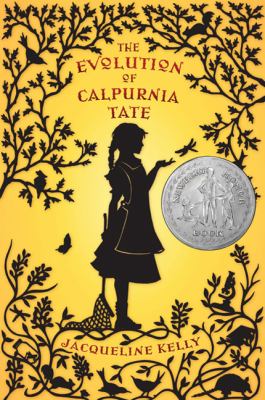
“One day I would have all the books in the world, shelves and shelves of them. I would live my life in a tower of books. I would read all day long and eat peaches. And if any young knights in armor dared to come calling on their white chargers and plead with me to let down my hair, I would pelt them with peach pits until they went home.”
A Tree Grows in Brooklyn, by Betty Smith.

“From that time on, the world was hers for the reading. She would never be lonely again, never miss the lack of intimate friends. Books became her friends and there was one for every mood. There was poetry for quiet companionship. There was adventure when she tired of quiet hours. There would be love stories when she came into adolescence and when she wanted to feel a closeness to someone she could read a biography. On that day when she first knew she could read, she made a vow to read one book a day as long as she lived.”
To Kill a Mockingbird, by Harper Lee.

“Until I feared I would lose it, I never loved to read. One does not love breathing.”
Coraline, by Neil Gaiman.
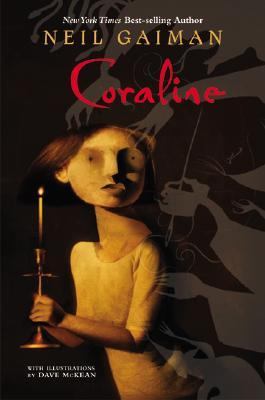
“Fairy tales are more than true: not because they tell us that dragons exist, but because they tell us that dragons can be beaten.”
A Light in the Attic, by Shel Silverstein.

“If you are a dreamer come in
If you are a dreamer a wisher a liar
A hoper a pray-er a magic-bean-buyer
If youre a pretender com sit by my fire
For we have some flax golden tales to spin
Come in!
Come in!”
Charlotte’s Web, by E.B. White.

“Do you understand how there could be any writing in a spider’s web?”
“Oh, no,” said Dr. Dorian. “I don’t understand it. But for that matter I don’t understand how a spider learned to spin a web in the first place. When the words appeared, everyone said they were a miracle. But nobody pointed out that the web itself is a miracle.”
“What’s miraculous about a spider’s web?” said Mrs. Arable. “I don’t see why you say a web is a miracle-it’s just a web.”
“Ever try to spin one?” asked Dr. Dorian.”
Matilda, by Roald Dahl.

“From then on, Matilda would visit the library only once a week in order to take out new books and return the old ones. Her own small bedroom now became her reading-room and there she would sit and read most afternoons, often with a mug of hot chocolate beside her. She was not quite tall enough to reach things around in the kitchen, but she kept a small box in the outhouse which she brought in and stood on in order to get whatever she wanted. Mostly it was hot chocolate she made, warming the milk in a saucepan on the stove before mixing it. Occasionally she made Bovril or Ovaltine. It was pleasant to take a hot drink up to her room and have it beside her as she sat in her silent room reading in the empty house in the afternoons. The books transported her into new worlds and introduced her to amazing people who lived exciting lives. She went to Africa with Ernest Hemingway and to India with Rudyard Kipling. She traveled all over the world while sitting in her little room in an English village.”
The Book Thief, by Markus Zusak.

“I like that every page in every book can have a gem on it. It’s probably what I love most about writing—that words can be used in a way that’s like a child playing in a sandpit, rearranging things, swapping them around. They’re the best moments in a day of writing—when an image appears that you didn’t know would be there when you started work in the morning.”
The Tale of Despereaux, by Kate Di Camillo.

“The story is not a pretty one. There is violence in it. And cruelty. But stories that are not pretty have a certain value, too, I suppose. Everything, as you well know (having lived in this world long enough to have figured out a thing or two for yourself), cannot always be sweetness and light.”
Brown Girl Dreaming, Jacqueline Woodson.
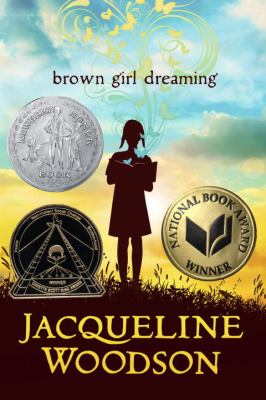
“If someone had taken that book out of my hand said, You’re too old for this maybe I’d never have believed that someone who looked like me could be in the pages of the book that someone who looked like me had a story.”
Here Lies the Librarian, by Richard Peck.

“What, in your opinion, Miss Ridpath, makes a great librarian, “the judge wondered.”
Irene pinched off her spectacles, “I can only quote the words of Melville Dewey of the Dewey Decimal Classification.” She stood then and began to quote, “To my thinking, a great librarian must have a clear head, a strong hand, and above all, a great heart. And when I look into the future, I am inclined to think that most of the men who will achieve this greatness will be women.”
Good Books, Good Times! A Poetry Anthology, by Lee Bennett Hopkins.

I Met a Dragon Face to Face, by Jack Prelutsky
I met a dragon face to face
the year when I was ten,
I took a trip to outer space,
I braved a pirate’s den,
I wrestled with a wicked troll,
and fought a great white shark,
I trailed a rabbit down a hole,
I hunted for a snark.
I stowed aboard a submarine,
I opened magic doors,
I traveled in a time machine,
and searched for dinosaurs,
I climbed atop a giant’s head,
I found a pot of gold,
I did all this in books I read
when I was ten years old.
That’s it. Off I go. South, perhaps, where there are not eight months of snow. As Jerry Seinfeld once memorably said, “My parents are in Florida. They didn’t want to go, but they’re sixty. It’s the law.” I am hoping for some new adventures. I am hoping to have time to read books. I am hoping to learn a new language (Spanish is what I have in mind), and may be to tell some stories to surprised people who think that stories only live in books.
Be good, be happy. Maybe we’ll talk again.
-Written by Lois Rubin Gross, Senior Children’s Librarian


