Tag Archives: science fiction

The Ultimate Book Lovers’ List (for Kids and Parents, Too)

29 Apr

If you haven’t heard, I’m heading off into the Hudson River sunset at the end of this month. It’s been my pleasure to have worked with you and your families for the past six years as the Children’s Librarian. I’ve especially enjoyed working on this blog to help you learn about new books to share with your children, expound on my own special favorites in books and film, and perhaps help you, through bibilotherapy, to support your children as they deal with issues such as bullying, separation anxiety, adding new siblings to the family, or moving away.

Now, Kerry Weinstein, the wonderful editor of this page, has asked me to put together one last post to share with you. Rather than just recommending books as I usually do, I thought that I’d pull out quotes from some of my favorite books that are specifically about characters and authors who love reading, books, and libraries. If the book is included in this list, I recommend it. I hope that some of these books will be new discoveries for you, or remind you to revisit some joyful celebrations of the world of books:

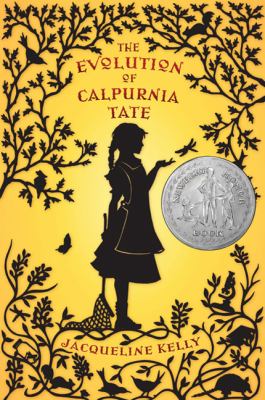
The Evolution of Calpurnia Tate, by Jacqueline Kelly.

evolution-of-calpurnia-tate

“One day I would have all the books in the world, shelves and shelves of them. I would live my life in a tower of books. I would read all day long and eat peaches. And if any young knights in armor dared to come calling on their white chargers and plead with me to let down my hair, I would pelt them with peach pits until they went home.”

A Tree Grows in Brooklyn, by Betty Smith.

tree-grows-in-brooklyn

“From that time on, the world was hers for the reading. She would never be lonely again, never miss the lack of intimate friends. Books became her friends and there was one for every mood. There was poetry for quiet companionship. There was adventure when she tired of quiet hours. There would be love stories when she came into adolescence and when she wanted to feel a closeness to someone she could read a biography. On that day when she first knew she could read, she made a vow to read one book a day as long as she lived.”

To Kill a Mockingbird, by Harper Lee.

to-kill-a-mockingbird

“Until I feared I would lose it, I never loved to read. One does not love breathing.”

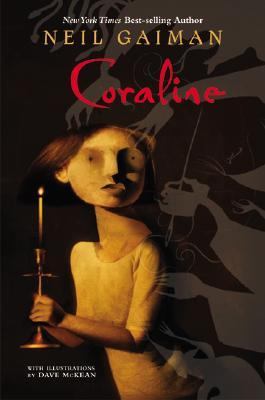
Coraline, by Neil Gaiman.

coraline

“Fairy tales are more than true: not because they tell us that dragons exist, but because they tell us that dragons can be beaten.”

A Light in the Attic, by Shel Silverstein.

a-light-in-the-attic

“If you are a dreamer come in
If you are a dreamer a wisher a liar
A hoper a pray-er a magic-bean-buyer
If youre a pretender com sit by my fire
For we have some flax golden tales to spin
Come in!
Come in!”

Charlotte’s Web, by E.B. White.

charlottes-web

“Do you understand how there could be any writing in a spider’s web?”
“Oh, no,” said Dr. Dorian. “I don’t understand it. But for that matter I don’t understand how a spider learned to spin a web in the first place. When the words appeared, everyone said they were a miracle. But nobody pointed out that the web itself is a miracle.”
“What’s miraculous about a spider’s web?” said Mrs. Arable. “I don’t see why you say a web is a miracle-it’s just a web.”
“Ever try to spin one?” asked Dr. Dorian.”

Matilda, by Roald Dahl.

matilda

“From then on, Matilda would visit the library only once a week in order to take out new books and return the old ones. Her own small bedroom now became her reading-room and there she would sit and read most afternoons, often with a mug of hot chocolate beside her. She was not quite tall enough to reach things around in the kitchen, but she kept a small box in the outhouse which she brought in and stood on in order to get whatever she wanted. Mostly it was hot chocolate she made, warming the milk in a saucepan on the stove before mixing it. Occasionally she made Bovril or Ovaltine. It was pleasant to take a hot drink up to her room and have it beside her as she sat in her silent room reading in the empty house in the afternoons. The books transported her into new worlds and introduced her to amazing people who lived exciting lives. She went to Africa with Ernest Hemingway and to India with Rudyard Kipling. She traveled all over the world while sitting in her little room in an English village.”

The Book Thief, by Markus Zusak.

book-thief

“I like that every page in every book can have a gem on it. It’s probably what I love most about writing—that words can be used in a way that’s like a child playing in a sandpit, rearranging things, swapping them around. They’re the best moments in a day of writing—when an image appears that you didn’t know would be there when you started work in the morning.”

The Tale of Despereaux, by Kate Di Camillo.

tale-of-despereaux

“The story is not a pretty one. There is violence in it. And cruelty. But stories that are not pretty have a certain value, too, I suppose. Everything, as you well know (having lived in this world long enough to have figured out a thing or two for yourself), cannot always be sweetness and light.”

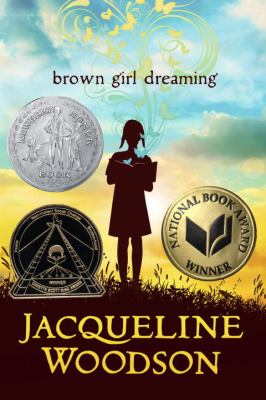
Brown Girl Dreaming, Jacqueline Woodson.

brown-girl-dreaming

“If someone had taken that book out of my hand said, You’re too old for this maybe I’d never have believed that someone who looked like me could be in the pages of the book that someone who looked like me had a story.”

Here Lies the Librarian, by Richard Peck.

here-lies-the-librarian

“What, in your opinion, Miss Ridpath, makes a great librarian, “the judge wondered.”

Irene pinched off her spectacles, “I can only quote the words of Melville Dewey of the Dewey Decimal Classification.” She stood then and began to quote, “To my thinking, a great librarian must have a clear head, a strong hand, and above all, a great heart. And when I look into the future, I am inclined to think that most of the men who will achieve this greatness will be women.”

Good Books, Good Times! A Poetry Anthology, by Lee Bennett Hopkins.

good-books-good-times

I Met a Dragon Face to Face, by Jack Prelutsky

I met a dragon face to face
the year when I was ten,
I took a trip to outer space,
I braved a pirate’s den,
I wrestled with a wicked troll,
and fought a great white shark,
I trailed a rabbit down a hole,
I hunted for a snark.

I stowed aboard a submarine,
I opened magic doors,
I traveled in a time machine,
and searched for dinosaurs,
I climbed atop a giant’s head,
I found a pot of gold,
I did all this in books I read
when I was ten years old.

That’s it. Off I go. South, perhaps, where there are not eight months of snow. As Jerry Seinfeld once memorably said, “My parents are in Florida. They didn’t want to go, but they’re sixty. It’s the law.” I am hoping for some new adventures. I am hoping to have time to read books. I am hoping to learn a new language (Spanish is what I have in mind), and may be to tell some stories to surprised people who think that stories only live in books.

Be good, be happy. Maybe we’ll talk again.

-Written by Lois Rubin Gross, Senior Children’s Librarian

Out of Time: Kage Baker, Connie Willis, and Groundhogs Day

21 Jan

A popular thought experiment is to decide where you would like to travel in time (my top three would be: back to see the dinosaurs, Victorian England, or a future moon colony on Mars).  Elements of time travel have been used in classic works like Charles Dickens’s A Christmas Carol, Mark Twain’s A Connecticut Yankee in King Arthur’s Court, and H.G. Wells’s The Time Machine.  Right now we have the hugely popular Outlander series by Diana Gabaldon and the continuing phenomenon of Doctor Who.  So if you are like me and can’t get enough of the “wibbily wobbly timey wimey” stuff as David Tennet’s Doctor would say, check out time travel works by two of my favorite Science Fiction Authors and my favorite time travel movie, Groundhog Day.

Kage Baker’s The Company Series

garden-of-iden

Kage Baker is one of my favorite authors.  She unfortunately passed away too soon in January of 2010 at the age of 41.  Some of the unfinished works she left behind were published after her passing, but I’m sure she had many more amazing works in her.  We are, however, lucky that she concluded her excellent science fiction series The Company.  The novels chronicle the tales of cyborgs who are created when members of Dr. Zeus Inc (or “The Company”) travel back in time and grant immortality through technology to children who would have been killed at a young age.  The operatives’ mission is then to live forward in time and to preserve objects of art and endangered species for future generations.  The company’s efforts are not simply altruistic though and these efforts create a vast fortune for the organization in the future.

The first book, The Garden of Iden, is set during Renaissance England and centers around Mendoza, a new operative who has just come of age and is on her first mission.  She is trained as a botanist and because she had to live through the Spanish Inquisition during her mortal life she expects to want nothing to do with the regular humans around her, but that changes when she meets the passionate Nicholas Harpole, Sir Walter Iden’s secretary who also resides at the estate where Mendoza has been stationed.  This book packs inside a love story, a coming of age tale, science fiction, and historical satire.  The series in later books continues to explore in greater depth the mysterious Company and follows the stories of a variety of the operatives; the next novel in the series focuses on Mendoza’s mentor and father figure, Joseph, but fans of Mendoza will be pleased to know that she reappears throughout the books.  She plays a pivotal role in the last Company novel, The Sons of Heaven, which reveals what happens in July 9, 2355 when all transmissions from Dr. Zeus to its operatives mysteriously stop.

Connie Willis’ Time Traveling Historians

to-say-nothing-of-the-dog
Connie Willis is another favorite author of mine.  She has written several time travel books that while not a “series” all take place in the same alternate universe: Doomsday Book, To Say Nothing of the Dog, Blackout, and All Clear.  Willis first wrote about her time travelers in her short story Fire Watch set during the Blitz, which is available in several short story collections available at BCCLS libraries including The Best of Connie Willis, The Winds of Marble Arch and Other Stories, and Fire Watch.  The stories feature historians who go back in time to study history from a first-hand perspective.  The time travelers are generally prevented from making alterations to history since the equipment will not function or send them to a different time than originally selected if it will cause an alteration in history or a paradox.  This leads to some of the drama since the historians may not be fully prepared for the situation they encounter, this is especially true of my favorite of her works Doomsday Book, which is set during the Middle Ages.  Within Doomsday Book there is an interesting parallel between the Influenza outbreak that is occurring in the future with the bubonic plague that is happening in the past; the story feels very relevant today with the recent Ebola outbreak.  To Say Nothing of the Dog: or, How We Found the Bishop’s Bird Stump at Last, is much lighter and more comedic in tone than the other novels.  Jerome K. Jerome, whose Three Men in a Boat, To Say Nothing of the Dog, inspired the title of the work makes a cameo appearance in Willis’s work.  Although the books are set in the same universe and contain a few of the same characters, in general the books do not need to be read in any order and can be enjoyed individually, with the exception of Blackout and All Clear which were intended as a two volume work set during World War II in England.  Blackout definitely leaves the reader hanging, so you may want to check out both books at once so you don’t have to wait to learn what happens next; the six months I had to wait between them when they first came out seemed like an eternity without a time machine to jump me ahead.

Groundhog Day

groundhog-day
The movie Groundhog Day unlike the novels mentioned above doesn’t feature purposeful time travel, but instead features a jaded weatherman, played by Bill Murray who must relive the same day over and over and over again.  I’ve watched the movie almost as many times as Larry relived his visit to Punxsutawney, PA for Phil, the groundhog’s big reveal.  The redemption story and romance between Bill Murray’s Larry and Andie MacDowell’s Rita, are sweet, but it is the humor that makes this a repeat viewing favorite.  It is fun to see how Larry interacts with the town’s people each day and how gradually even if the day doesn’t change, he does.  For me if not exactly in storyline, in spirit it captures a bit of A Christmas Carol.  Tim Minchin and Matthew Warchus who created Matilda the Musical, are planning to adapt Groundhog Day as a musical this year.  I can see some very funny songs coming from the setup, but not sure how I feel about a singing groundhog.  Since Groundhog’s Day is coming up next month (February 2) it is the perfect time to check out this classic fun film.  And for a tasty treat while you watch, you could also celebrate in my family’s favorite traditional way with crepes.  In French tradition if you can flip a crepe fully over in one toss in the frying pan while holding a coin on Groundhog’s Day, you will have good luck for the rest of the year (and if you don’t succeed you are still lucky enough to have some tasty French style pancakes to eat).

-Written by Aimee Harris, Head of Reference