November is Family Stories Month, so I thought I would take the opportunity to highlight one of my all-time favorite types of stories: the generational saga. A generational saga is a story that unfolds through several generations. We not only learn about certain characters, but we also follow the stories of their children and their children’s children. It’s fascinating to see how both interwoven each family member’s stories are and at the same time, unique. Each generation may face similar struggles, but the world around them evolves and that affects how their lives evolve, too. When I read books like these, I can’t help but think about my mother’s life and her mother’s life and how little I really know about them.
One Hundred Years of Solitude
by Gabriel Garcia Marquez
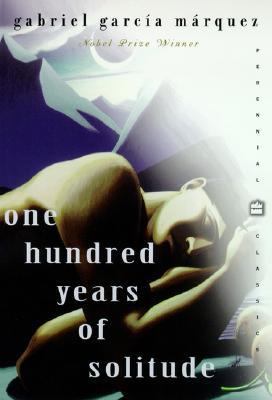
This is usually the first book that comes to people’s mind when they hear the words “generational saga”. It is also renowned as an example of magical realism, a literary genre that combines the real world with magical elements. It tells the tale of the Buendía family and begins with the character José Arcadio Buendía who founded the fictitious town of Macondo in the country of Colombia. The story follows José Arcadio’s life and subsequently, six more generations of his family’s life in Macondo. It is an enthralling read, though I will warn the reader: most copies of this book contain a family tree and you will absolutely keep returning to it throughout your read. Not only are seven generations of characters a lot to keep track of, but this is a family that likes to repeat names…a lot. It’s one of those books that are on many must-read lists, and I can say that it rightfully belongs on those lists. You can borrow it as a digital audiobook from eLibraryNJ or eBCCLS.
The House of Spirits
by Isabel Allende

This is another classic Latin American generational saga with a healthy dose of magical realism as well. This story follows four generations of the Trueba family in what is implied to be Chile. What really moved me the first time I read this book years ago was that in contrast to books like One Hundred Years of Solitude which mostly focuses on the men of the family and leaves the women as background characters or just as objects of desire, The House of Spirits captures the lives, desires and troubles of women. Women have never had it easy throughout history, and most of their stories have been erased or forgotten. It is stories like these that honor the bravery and resilience of women. You can also stream the movie adaptation on Hoopla or borrow it from BCCLS libraries on DVD.
Homegoing
by Yaa Gyasi
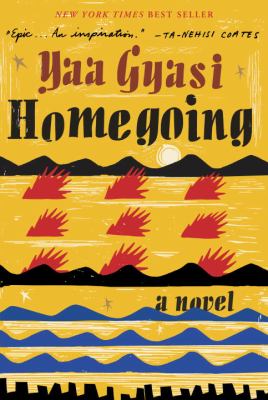
Homegoing is a remarkable novel that follows the descendants of an Asante woman in West Africa named Maame. Maame has two daughters who are half sisters and end up leading completely different lives, never meeting each other. One is married to the British governor in charge of Cape Coast Castle (a slave castle) while the other is a slave held captive in the aforementioned castle. The story then follows the descendants of each of these women, leading to stories in modern-day Ghana and the United States. What marks this book a little different from other generational sagas is that it does not focus too long on each character. Rather, we get only a chapter in each person’s life, making it seem more like a collection of short stories woven together. While that does not let the reader know each character in depth, it does successfully illustrate how the trauma experienced in a generation can resonate for years and years in a family and how difficult it is to break that chain. The story takes us through several parts of history including the slave trade, slavery in the US, and segregation. It is an excellent illustration of how racism leaves marks that may not always be visible in the present time. It is available in ebook and digital audibook format from eBCCLS and eLibraryNJ.
Pachinko
by Min Jin Lee
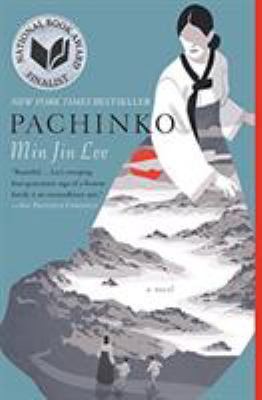
Pachinko is another excellent generational saga that I devoured in a short time. It tells the story of a Korean family that eventually moved to Japan. In this story, there is a lot of focus on Sunja, the daughter of the first character introduced to us. Though the story goes through two more generations, she is still very present in the story. Pachinko details a history that is not very familiar to many in the Western World—that of Koreans in Japan and the racial discrimination that they faced. The story takes us from the early 20th century to the late 1980s and therefore includes the Japanese occupation of Korea and World War II. It is interesting to see the war through a different lens than we usually do in history class, and like The House of Spirits, I was once again moved by how women, despite being oppressed, and shamed, find the strength to carry on and raise entire families. You can borrow it as an ebook or digital audiobook from eBCCLS or eLibraryNJ.
Generational sagas, or family sagas, are great reads. Not only are they great insights into family relationships, they are also interesting ways of learning about history through fiction.
If you are a fan of family stories, than you might also enjoy our special presentation of the play Motherhood Out Loud starring Florence Pape on Thursday, November 14 at 7 PM at the main branch of the Hoboken Public Library, 500 Park Ave. The play connects stories of motherhood by 14 different authors.
Written by:
Samantha Evaristo
Adult Programming and Outreach Assistant


