In celebration of the New Year we decided to look back at a few of the library staff’s favorites you can check out from Hoboken and other BCCLS libraries! I’ve linked to the print editions, but Hoboken Library Patrons can check out many of the books as ebooks and digital audiobooks from eLibraryNJ, Hoopla, or eBCCLS.
Favorite Fiction: Lost Empress by Sergio de la Pava and
Social Creature
by Tara Isabella Burton

I read a lot of good books in 2018. My favorite was Lost Empress by Sergio de la Pava. I wrote about it for the blog earlier this year. I loved this book for the intricate plot, the stunning prose and dialog, and the way it made me laugh out loud.
Another book I greatly enjoyed was Tara Isabella Burton’s Social Creature, about a toxic friendship between Lavinia, a well-off New York party girl, and Louise, who dreams of living Lavinia’s lifestyle, but barely manages to live hand to mouth as she pursues her dream of becoming a writer in New York. I loved the decadence, the homage to social media, the upscale product placement (Cristal! Agata and Valentina!), not to mention the sex and the drugs. Some of the craziness stretched credibility, but Social Creature is definitely not easily put down.
Written by:
Victoria Turk
Reference Librarian
Favorite Nonfiction: American Prison: A Reporter’s Undercover Journey into the Business of Punishment
by Shane Bauer
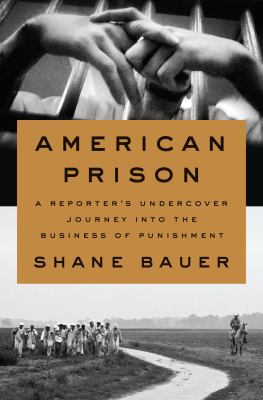
In 2014, Shane Bauer spent four months working undercover as a $9-an-hour prison guard at Louisiana’s notorious Winn Correctional Center, a private prison run by the Corrections Corporation of America (CCA). Bauer’s experiences at Winn will horrify most readers as he documents his experiences working in a severely understaffed private prison where guards are poorly trained and inmates live in appalling conditions. American Prison is not only an incredible piece of first-person journalism; Bauer also provides a history of private prisons, interspersing his narrative with an expose on the era of “convict leasing” in which prison labor replaced slave labor on plantations and free labor in many industries. Bauer’s history has made me reevaluate my understanding of America’s justice system more than any other book I have read.
Written By:
Karl Schwartz
Young Adult Librarian
Favorite Mystery: An Act of Villainy
by Ashley Weaver

My favorite mystery this year was An Act of Villainy by Ashley Weaver. The book is part of Weaver’s Amory Ames series which I had written about in a blog about her previous novel The Essence of Malice. I think this is my favorite in the series I’ve read so far. The book is set in the backstage theatrical world of London in the 1930’s; Amory is asked to investigate when a leading lady (and mistress of a friend) begins receiving menacing letters. In addition to an intriguing mystery, I thought it was interesting to see Amory react to the relationship troubles of another couple in light of some of her own marital complications. Honorable mystery mentions go to Diane Andrew’s Toucan Keep a Secret and Rhys Bowen’s Four Funerals and Maybe a Wedding.
Other books I have loved this year and previously blogged about include for science fiction: Catherynne M. Valente’s funny fanciful Space Opera which takes Eurovision Song Competition to a galactic level; best fiction would be The Last Cruise by Kate Christensen, with it slow building suspense and well written characters; and for fantasy Kill The Farm Boy by Kevin Hearne & Delilah S. Dawson which gives a refreshing new spin on the classic hero’s quest.
Written By:
Aimee Harris
Head of Reference
Favorite Video Game: Super Smash Bros. Ultimate
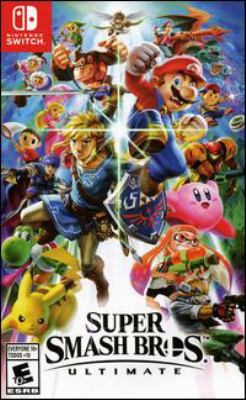
I’m an avid gamer and have been since childhood, so I was really looking forward to the newest installation of Super Smash Bros., especially since I’m old enough to have been around and playing since the first Smash Bros. game was released in the 1990s. Super Smash Bros. Ultimate, which was just released on December 7, absolutely lives up to the hype of its predecessors, and since acquiring it I haven’t been able to put it down and trying to unlock a roster of 74 video game characters so I can play as whoever I want. Smash Ultimate, the fifth installment of the series, is highly recommended.
Written By:
Steph Diorio
Local History Librarian
Curious what other library patrons have been enjoying this past year? Here are the ten most frequently circulated fiction and nonfiction works of 2018 compiled by Head of Circulation Rosary Van Ingen:
Top Circulating Fiction 2018
- Little Fires Everywhere
- An American Marriage
- The Woman in the Window
- The Immortalists
- The Great Alone
- Manhattan Beach
- Still Me
- The Lying Game
- All We Ever Wanted
- The Woman in Cabin 10
Top Circulating Nonfiction 2018
1. Fear: Trump in the White House
2. The Last Black Unicorn
3. Educated: A Memoir
4. Fire and Fury: Inside the Trump White House
5. Hillbilly Elegy: A Memoir of a Family and Culture in Crisis
6. Killers of the Flower Moon: the Osage Murders and the Birth of the FBI
7. The Subtle Art of Not Giving a Fu*k: A Counterintuitive Approach to Living a Good Life
8. A Higher Loyalty: Truth, Lies, and Leadership
9. Evicted: Poverty and Profit in the American City
10. Hands-On Machine Learning with Scikit-Learn and TensorFlow: Concepts, Tools, and Techniques to Build Intelligent Systems
What were some of your favorite items this year? Let us know in the comment section!